






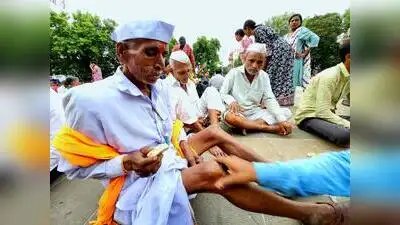
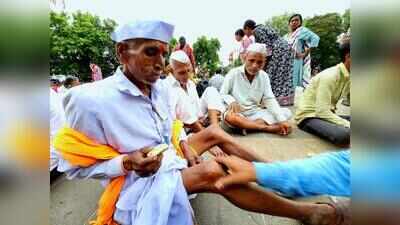
Pune: The city’s schools, temple premises, community halls and open grounds transform into temporary homes for lakhs of warkaris of the Sant Dnyaneshwar Maharaj and the Sant Tukaram Maharaj palkhis halting in Pune, before they resume their journey to Pandharpur. While devotees spend the day resting, singing abhangs and attending bhajans and kirtans, thousands of volunteers, civic officials and charitable organisations work behind the scenes to ensure that every pilgrim is cared for, fed and ready for the next leg of the pilgrimage.This year, the Pune Municipal Corporation (PMC) introduced German hangars for the first time to house wellness facilities. Only three could be erected in time, although more were planned, because of the heavy rains.“Each hangar had around 50 physiotherapy students from colleges across Pune providing foot massages and stretching sessions. Warkaris walk for several hours every day over long distances, so muscle release and stretching become essential. Similar recovery methods are routinely used at marathon events,” said PMC additional commissioner Prajit Nair.The foot massage initiative was introduced on a smaller scale last year and expanded after receiving an encouraging response.Nair said the civic body had also upgraded sanitation facilities by introducing QR codes at PMC-managed toilets. “If someone found a toilet dirty or faced any problems, they could scan the QR code and register a complaint — allowing us to respond immediately. People usually use the first toilet they come across, resulting in those units becoming overused and dirty. This year, we focused on restoring all toilets, ensuring these are regularly cleaned, jet-washed and there is continuous water supply,” he said.Nair responded to a video widely circulated online on Friday alleging warkaris were charged to use a public toilet near Sonawane Hospital in Ganj Peth. He said not every public toilet is managed by the PMC. “Several facilities are operated by NGOs and private contractors, who are permitted to charge users for cleaning and maintenance.”Serving the warkaris is a tradition that stretches back decades for many organisations.A group of warkaris visit and offer prayers at the samadhis of Sadhu Vaswani and Dada JP Vaswani as part of their annual halt. Naresh Singhani from the Sadhu Vaswani Mission said, “Didi Krishna welcomed them and joined them in singing the abhang Vitthal Majha, Mi Vitthalacha. We served fasting refreshments and presented them with eco-friendly care hampers containing fruits, towels, snacks and other essentials for the onward journey.”The Shreemant Dagdusheth Halwai Ganapati Trust also continued its annual seva. “We welcomed the palkhis into Pune by distributing 25,000 packets of boondi and showering flowers on the procession,” said Mahesh Suryawanshi, trust treasurer. “On Friday morning, nearly 30,000 warkaris were served breakfast of poha, upma and tea. Around 25,000 pilgrims also benefited from health camps offering eye check-ups, cataract screening, reading glasses, blood sugar tests, acupressure therapy and treatment for common ailments like cough, cold and vomiting.”Suryawanshi said nearly 275 doctors from hospitals across Pune came together for the initiative. “Our service doesn’t end in Pune. Ambulances with doctors, medicines and medical staff accompany the Sant Dnyaneshwar, Sant Sopankaka and Sant Tukaram palkhis all the way to Pandharpur. We are also sending three water tankers with the procession and have arranged bhojan-prasad for 25,000 warkaris at Walha near Jejuri,” he added.The wari has also become an occasion for citizens to reconnect with tradition in different ways. Event organiser Jayeesha Parkhe organised a visit for a group of 10 senior citizens to Nana Peth on Friday morning. “Many of them have been walking with the wari since childhood, but age and the growing crowds have made it difficult to undertake the journey now. We wanted them to experience the wari differently by sitting with the warkaris, listening to their stories and participating in seva by distributing raincoats.”