










Hyderabad: Polishing millets removes important nutrients such as fibre, protein, fats and minerals, potentially reducing their nutritional value, according to a study by researchers from Hyderabad-based ICMR-National Institute of Nutrition (ICMR-NIN) and ICAR-Indian Institute of Millets Research (ICAR-IIMR), along with the Madras Diabetes Research Foundation (MDRF).In a study published in the Indian Journal of Medical Research (IJMR), the researchers said that although polished millets are whiter, softer, cook faster and have a longer shelf life, these advantages come at the cost of nutrition. Polishing removes the bran, aleurone layer and part of the germ, leaving behind the starchy endosperm.
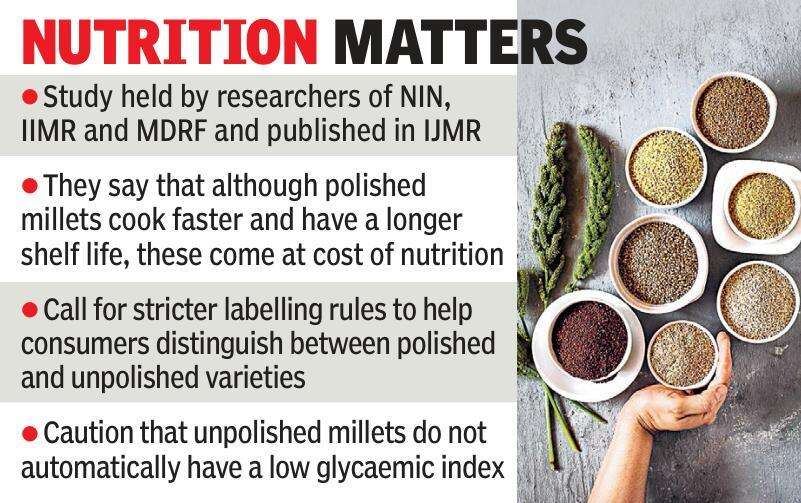
They also raised concerns over products being marketed with claims such as “whole grain”, “rich in dietary fibre” and “diabetes friendly” when they contain polished millets. They called for stricter labelling rules to help consumers distinguish between polished and unpolished varieties.India has an estimated 10.1 crore people living with type 2 diabetes, while Telangana’s diabetes prevalence is estimated at 9.9%, or nearly one in 10 people. The study also flagged the possibility that polished millets may cause a higher rise in blood sugar levels than unpolished varieties. However, it noted that direct evidence was limited, as studies on the glycaemic index (GI) of polished millets are still lacking.The GI measures how quickly a carbohydrate-containing food raises blood sugar levels after consumption. Foods with a high GI cause blood sugar levels to rise faster, while those with a low GI result in a slower and more gradual increase. The researchers cited a study that recorded a high GI for upma made from polished finger millet, along with other research indicating greater carbohydrate digestibility in polished millets. However, they said more studies directly comparing the two forms were needed before drawing firm conclusions.The authors also cautioned that unpolished millets do not automatically have a low GI, as the response also depends on fibre content, starch digestibility, processing, cooking methods and the form in which the food is consumed. Consuming millets with pulses and vegetables can help lower the overall blood sugar response, they noted.Bharati Kulkarni, director, NIN, and one of the authors, said food labels should clearly declare the proportion of millets used in products and provide consumers with greater awareness of the nutritional differences between polished and unpolished grains. “India should promote unpolished millets before consumers become accustomed to polished varieties, drawing a parallel with the shift from brown rice to white rice,” said Chellapilla Tara Satyavathi, ICAR-Indian Institute of Millets Research, Hyderabad.