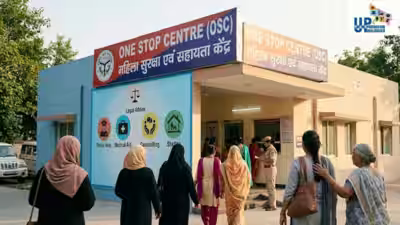









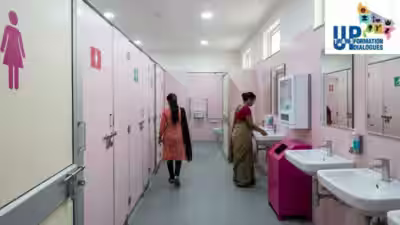
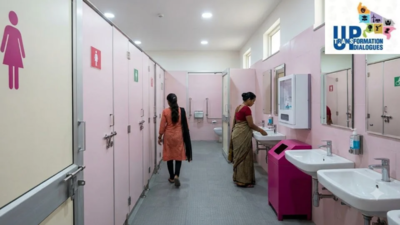
The idea behind Pink Toilets is rooted in a simple but important principle: women should not have to compromise on their dignity, comfort or safety because of the lack of clean and accessible toilets in public places. For women travelling to work, shopping in markets, visiting government offices, accompanying children or spending extended periods outside their homes, access to a hygienic toilet is an essential public facility rather than a luxury.Recognising this need, the Uttar Pradesh government under Chief Minister Yogi Adityanath has placed greater emphasis on women-centric sanitation infrastructure as part of its broader urban development and cleanliness agenda. Through the Swachh Bharat Mission-Urban and the efforts of urban local bodies, Pink Toilets are being developed in markets, busy public spaces and other locations where women and girls need convenient access to sanitation.The initiative reflects a broader understanding of urban cleanliness. A city cannot be considered truly clean, accessible and inclusive if half its population faces difficulties in meeting a basic biological need while moving through public spaces. Pink Toilets seek to address this gap by making sanitation planning more responsive to the everyday experiences of women.As many as around 950 Pink Toilets have already been constructed across urban local bodies in Uttar Pradesh. Construction of another 275 Pink Toilet blocks is underway in 189 urban local bodies. Together, the ongoing projects will add 1,100 seats, significantly expanding the network of dedicated sanitation facilities for women.The programme’s significance lies not only in the number of facilities being created but also in the changing approach to urban infrastructure: planning public amenities around the needs of women, improving their access to essential services and making cities more convenient for everyone.
The idea: Dignity, hygiene and safety in public spaces
For many women, the lack of accessible toilets has long been a practical barrier to participating fully in public life. Women vendors and shopkeepers, office workers, students, daily commuters, domestic workers and visitors to crowded markets may spend hours away from home. When clean public toilets are unavailable, some are forced to shorten their outings, postpone using a toilet or depend on unsuitable facilities.The consequences extend beyond inconvenience. Inadequate sanitation can undermine personal dignity, make menstrual hygiene management more difficult and create additional challenges for pregnant women, older women and women with disabilities. It can also affect women’s willingness to travel, work or access public services. Pink Toilets respond to this problem by creating dedicated sanitation facilities for women at suitable public locations. Their purpose is to make access to toilets easier, more comfortable and more dependable.The central concept is that sanitation infrastructure should account for differences in users’ needs. A standard public toilet may not always provide the privacy, accessibility or additional arrangements women require. Dedicated facilities can help bridge that gap when they are appropriately located, designed and maintained.The word ‘Pink’ gives the initiative a recognisable identity associated with women-friendly public amenities. However, its real value is not the colour of the building. It is the availability of a clean, usable and safe toilet when a woman needs one.
From cleanliness to inclusive urban development
The expansion of Pink Toilets is closely connected with the wider transformation in the approach to sanitation under the Swachh Bharat Mission-Urban. The mission brought cleanliness, waste management and sanitation into the mainstream of urban governance. Over time, the challenge has increasingly involved not just creating infrastructure but ensuring that it serves different sections of society.In Uttar Pradesh, the emphasis on women-centric sanitation adds a gender-sensitive dimension to this agenda. Public toilets are important components of urban infrastructure, just like roads, streetlights, drinking water systems and public transport. Their absence can make otherwise developed public spaces difficult to use, particularly for women who spend long hours outside their homes.The Yogi government’s approach seeks to strengthen this basic layer of urban convenience through the construction of dedicated facilities and the expansion of existing sanitation networks. The Urban Development Department has emphasised that Pink Toilets should be developed wherever there is a requirement, based on demand from urban local bodies.This demand-based approach is important because sanitation needs vary considerably between cities and neighbourhoods. A busy commercial market, a major road junction, a crowded public area and a residential neighbourhood may have different requirements. Identifying the right locations is therefore as important as constructing the facilities themselves.The objective is to make sanitation more accessible at the places where women actually need it, rather than limiting provision to a few prominent urban centres.
Nine years of change: Expanding the reach of urban amenities
Since 2017, urban development in Uttar Pradesh has increasingly been framed around improving public services, strengthening civic infrastructure and making cities more liveable. Within this larger development agenda, women-friendly sanitation represents an important area of focus.The Pink Toilet programme is part of a wider shift from viewing sanitation merely as a cleanliness issue to recognising it as a question of public health, dignity and access to urban life. The construction of around 950 Pink Toilets across urban local bodies represents the existing infrastructure base, while the 275 blocks now under development indicate that the state is continuing to expand the network.The latest construction programme covers 189 urban local bodies, with 1,100 additional seats planned. This provides an important indication of the geographical reach being targeted by the government. Rather than concentrating only on a few large cities, the programme is extending to a broad range of urban local bodies, where women also need dependable access to public sanitation.The expansion is particularly relevant for smaller cities and towns, where busy markets, transport points and public spaces may experience substantial daily footfall but lack adequate dedicated sanitation facilities. Women in these areas face many of the same challenges as their counterparts in larger cities, yet the availability of suitable public amenities can vary considerably.By encouraging urban local bodies to identify demand and develop facilities accordingly, the government is seeking to make women-centric sanitation a more integral part of municipal planning.
Reaching block levels: Why decentralised implementation matters
One of the most important aspects of the programme is its implementation through urban local bodies. These institutions are closest to the sanitation requirements of local residents, traders and commuters. They are also better placed to identify crowded locations where existing facilities are insufficient.The decision to undertake 275 additional Pink Toilet blocks across 189 urban local bodies reflects the importance of decentralised implementation. Instead of treating women-friendly sanitation as an isolated project for a handful of major cities, the programme provides a framework through which local authorities can identify requirements and expand facilities in their respective areas.The phrase ‘block-level reach’ is significant from a development perspective. In urban governance, local implementation enables public infrastructure to respond to specific needs rather than relying entirely on centralised planning. However, the latest figures specifically identify urban local bodies, not rural development blocks. The current expansion should therefore be understood as a broadening of municipal coverage, rather than evidence that Pink Toilets have been established in every development block of Uttar Pradesh.This distinction matters because the needs of urban markets and public spaces differ from those of rural settlements. The Pink Toilet initiative described by the Urban Development Department is focused on urban sanitation. Any expansion into rural areas would require a separate assessment of facilities and the institutions responsible for them.For municipal authorities, the next task is to identify appropriate locations, ensure adequate water and sanitation connections, maintain cleanliness and make the facilities easy to locate and use. The programme’s success will ultimately depend on how effectively these responsibilities are carried out locally.
Markets and crowded areas are the priority
The decision to prioritise markets, major roads and crowded public places reflects a practical understanding of women’s mobility. Commercial areas attract women shoppers, street vendors, workers, entrepreneurs and visitors throughout the day. Transport corridors and other busy public spaces similarly bring together people who may have limited access to toilets.For a woman running a small shop, access to a nearby toilet can make it easier to remain at work for longer periods. For a student or office worker, it can make daily travel more convenient. For an older woman or a mother accompanying young children, the availability of a clean facility can determine how comfortably she uses public spaces.Pink Toilets can therefore contribute to women’s participation in economic and social activities by reducing one of the everyday barriers associated with being outside the home.Their benefits also extend to the broader urban environment. Properly designed and maintained public toilets can reduce dependence on unsuitable alternatives, support hygienic practices and improve the overall experience of visiting commercial and civic areas.
Beyond construction: Maintenance and accountability
The Urban Development Department has directed urban local bodies to expand gender-friendly sanitation facilities while ensuring that existing assets remain usable and well maintained. This emphasis is crucial because the quality of public sanitation depends as much on daily operations as on capital investment.A newly constructed toilet that lacks water, is poorly cleaned or remains locked during operating hours does little to meet women’s needs. As per their mandate, the Municipal authorities therefore treat maintenance as an ongoing public service responsibility.Regular cleaning, timely repairs, functioning water connections, proper disposal of sanitary waste and accessible complaint mechanisms can help ensure that Pink Toilets deliver their intended benefits. Where feasible, authorities should also consider the needs of women with disabilities and ensure that facilities are accessible to a wider range of users.Monitoring should go beyond counting buildings. Indicators such as operational status, cleanliness, availability of water, frequency of maintenance and feedback from women users would provide a more meaningful assessment of performance.The government’s demand-based approach offers an opportunity to connect construction planning with local feedback. Urban local bodies can use information from markets, resident groups, women’s organisations and sanitation workers to identify gaps and improve service delivery.
A measure of women’s dignity in the urban landscape
The Pink Toilet initiative represents an important principle of inclusive governance: public infrastructure must be designed around the people who use it. Safe and convenient sanitation is not an additional privilege for women; it is a basic requirement for their dignity, health and full participation in public life.With around 950 Pink Toilets already constructed and another 275 blocks under development across 189 urban local bodies, Uttar Pradesh is expanding its women-centric urban sanitation network. The additional 1,100 seats planned through the ongoing projects will further strengthen this effort as the facilities become operational.Over the past nine years, the state’s wider urban development agenda has placed growing emphasis on civic amenities, cleanliness and more responsive public services. Pink Toilets give this agenda a distinctly human dimension by addressing a basic need that directly affects women’s daily experiences in cities and towns.The next stage must focus on ensuring that every facility is conveniently located, safe, clean and functional, with special attention to underserved areas. Equally important is the need for transparent monitoring so that the number of toilets constructed translates into reliable services for women.Ultimately, the success of Pink Toilets will be measured not simply by the colour of their walls or the number of structures completed, but by whether a woman can enter a public space with confidence, carry out her work or daily activities without unnecessary discomfort, and access a clean toilet whenever she needs one. That is the larger idea behind women-friendly sanitation—and the standard against which its progress should be judged.(Long Format)