








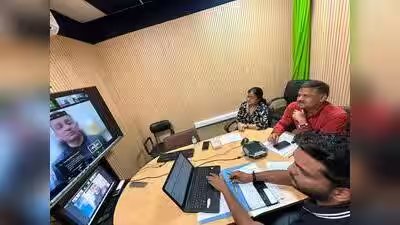
Chandigarh: A cutting-edge simulation laboratory is set to be established at either PGIMER or the IIT Ropar campus, laying the groundwork for crucial research ahead of India’s indigenous human spaceflight mission, Gaganyaan. The research was highlighted during the inaugural session of “Space Med Talks” webinar series, organised by PGI and ISRO on Monday.“A specialised bed designed to simulate microgravity effects has already been purchased for the facility, where healthy volunteers will be placed under simulated space conditions,” said Prof S K Bhadada, co-principal investigator from PGI. Researchers will collect and analyse their biological samples to study how gut microbes change in microgravity and use these findings to develop tailored nutrition for Indian astronauts travelling to space.The connection between human physiology and the wider cosmos also featured during Monday’s webinar, when Gaganyaan astronaut-designate Group Captain Angad Pratap expressed his belief in extraterrestrial life and urged the audience to explore the Drake equation. He emphasised that, mathematically, the universe is too vast for Earth to be the only world harbouring life, while this did not mean scientists had intercepted messages from aliens.The online event drew an enthusiastic response, securing more than 500 registrations from students and researchers across India, including participants from Telangana, Tamil Nadu and Haryana, as well as premier institutions such as the IITs, ICMR, CSIR and PGIMER. Even curious seventh-grade students tuned in.The astronaut shared his experiences of rigorous astronaut training, physical fitness demands, hydration strategies and complex spacecraft operations, including docking systems. His discussion on the mathematical probability of extraterrestrial life sparked considerable curiosity, demonstrating how space exploration connects science, technology and fundamental questions about life beyond Earth.