





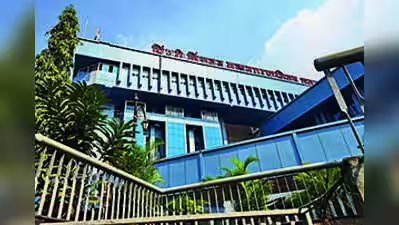
Pune: The Pimpri Chinchwad Municipal Corporation (PCMC) has prepared a comprehensive long-term parking policy covering both on-street and off-street parking facilities across the city. The proposal has now been placed before the standing committee for approval.The policy aims to address traffic congestion, regulate parking and provide dedicated parking spaces across Pimpri Chinchwad. “It is the first such long-term policy prepared for the PCMC and will cover almost all areas across the city,” said Bapu Gaikwad, joint city engineer, PCMC.Gaikwad said the draft was prepared after a detailed survey and incorporates changes based on shortcomings identified in the civic body’s earlier parking initiatives. PCMC had introduced a parking policy before the Covid-19 pandemic, but it failed to achieve the desired results due to the pandemic and subsequent enforcement issues. At the time, the newly formed Pimpri Chinchwad police commissionerate did not have permission to tow vehicles parked in no-parking zones, weakening enforcement and discouraging motorists from using paid parking facilities.The civic body later attempted to implement revised parking policies at several locations, but these too failed to receive the expected response. At present, paid parking facilities are operational at three locations, though they have received a poor response.Under the new policy, unused and undeveloped open amenity spaces can be temporarily converted into off-street parking facilities. Zonal offices have been told to identify such spaces, particularly those along busy roads and stretches prone to traffic congestion, and make them available for temporary parking.Different operators will be appointed for various areas and will be responsible for managing both on-street and off-street parking facilities in their respective zones. “The aim is to discourage on-street parking and promote parking at off-street locations such as amenity spaces or dedicated parking land. So, charges for off-street parking have been kept lower,” Gaikwad said.The proposed policy provides for differential parking charges based on demand and location. In high-demand areas, on-street parking for two-wheelers will cost Rs 10 per hour, while light four-wheelers will be charged Rs 40 per hour. In low-demand areas, the proposed rates are Rs 5 per hour for two-wheelers and Rs 20 per hour for private four-wheelers.For off-street parking, the proposed rates are Rs 5 per hour for two-wheelers and Rs 10 per hour for four-wheelers. Rates for commercial vehicles, heavy vehicles and three-wheelers have also been finalised for both on-street and off-street facilities.The policy also proposes a monthly pass system, particularly for residential areas where motorists often struggle to find parking spaces. A monthly pass for a two-wheeler at an off-street parking facility will cost Rs 1,800, while a four-wheeler pass will cost Rs 3,600. Concessional rates have also been proposed for certain areas and under specific conditions, depending on local requirements.Gaikwad said the policy aims to bring greater discipline among motorists while ensuring adequate parking facilities. The civic body also plans to encourage residents to shift to public transport as part of its broader traffic management strategy. Once approved by both the standing committee and general body, the policy will come into effect.The move comes as state govt explores new public transport options for Pimpri Chinchwad. Last month, chief minister Devendra Fadnavis directed Maha Metro to prepare a detailed project report (DPR) for an Electric Rapid Transit System (e-RTS) bus service on a pilot basis in the city. The system, similar to a mini-Metro but operating on conventional roads, has been proposed as the first such pilot project in Maharashtra.Gaikwad said Visakhapatnam and Hubballi-Dharwad have begun exploring the system, although there is currently no operational e-RTS bus service in India. The system has, however, been used in several European countries.PCMC has a BRT network spanning nearly 60km. Of this, a 17-km stretch connecting Godown Chowk in Moshi to Wakad has been proposed for the trial service. If successful, the model could subsequently be expanded to other parts of Pimpri Chinchwad and potentially to other urban areas in Maharashtra.