











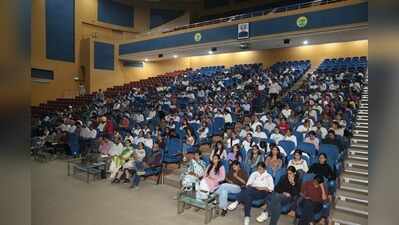
Ludhiana: Taking the fight against stubble burning beyond farms and into Punjab’s youth network, Punjab Agricultural University (PAU) has roped in 350 NSS volunteers to carry the message of sustainable crop residue management to farmers and rural communities.At a special training and awareness camp, the volunteers were familiarised with alternatives to setting crop residue on fire and encouraged to act as grassroots messengers, spreading awareness about incorporating stubble into the soil and adopting PAU-recommended farm practices.PS Sandhu, additional director of extension education, said the initiative was aimed at motivating young volunteers to discourage stubble burning and familiarise farmers with the university’s crop residue management initiatives. He said proper management of residue could also help reduce dependence on chemical fertilisers.The volunteers were introduced to different techniques being promoted for managing paddy straw within fields. Experts also discussed wheat sowing using the Super Seeder and stressed seed treatment with biofertilisers before sowing.Rupinder Kaur, associate director (skill development), underlined the need to move towards environmentally sustainable agricultural practices and urged participants to encourage farmers to manage crop residue in fields rather than burn it.Broadening the discussion beyond stubble management, experts also sensitised the volunteers to direct seeded rice as a way of conserving Punjab’s depleting groundwater resources, linking crop residue management with the larger challenge of sustainable farming.Harmeet Sarlach administered an oath to the volunteers, who pledged to make efforts to prevent stubble burning and help protect the environment from pollution.By putting NSS volunteers at the centre of the awareness drive, the university is seeking to take the message from the campus to villages, with youngsters expected to engage farmers and advocate cleaner crop-residue management practices.