








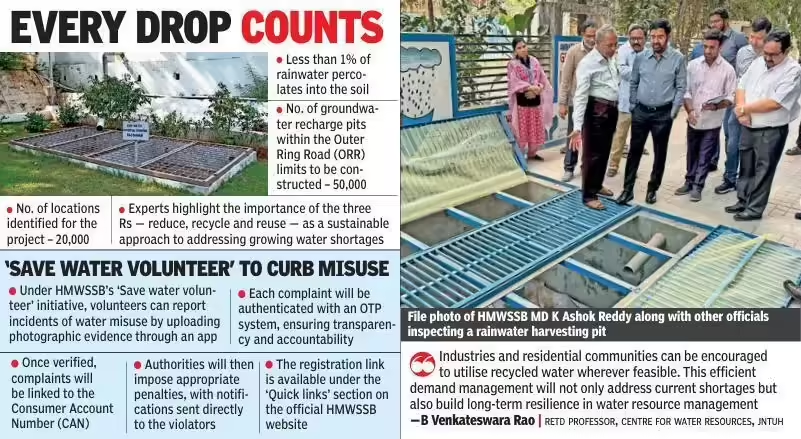
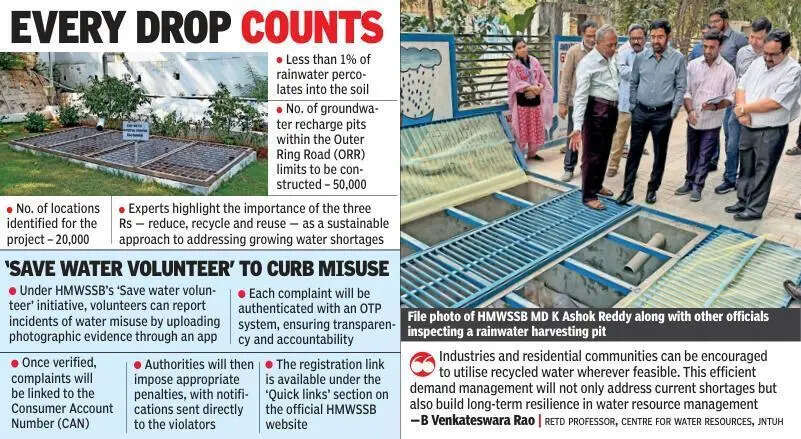
Hyderabad: With nearly one-fourth of the city already facing a drinking water shortage and projections suggesting the crisis may extend to one-third of the metro by next year, Hyderabad Metropolitan Water Supply and Sewerage Board (HMWSSB) has initiated a multi-pronged strategy to address the growing concern before Godavari phase III & IV will be ready by 2028. Currently, the city gets 575 million gallons per day (MGD) with a shortfall of 150 MGD. By next summer, projections tend to indicate a further shortfall of 230 MGD. As part of its efforts, the board plans to construct 50,000 groundwater recharge pits within the Outer Ring Road (ORR) limits. The initiative aims to recharge an estimated 5 to 10 thousand million cubic feet (TMC ft) of groundwater, which is expected to exceed the combined storage capacity of Osmansagar and Himayatsagar. So far, around 20,000 locations, including schools and community halls, have been identified for the water harvesting project. Citing an example, HMWSSB says that a 15-flat apartment at Kakatiya Hills, Madhapur, had adopted an injection borewell system that has effectively addressed its water needs. It described the initiative as a model example of community-led water conservation aligned with the Board’s objectives. According to HMWSSB, despite receiving an average annual rainfall of 85-89 cm, less than 1% of rainwater percolates into the soil, while the rest is lost as runoff into drains and the Musi. 4 types of recharge systemsTo strengthen water conservation efforts, the board is rolling out four types of groundwater recharge systems — rooftop rainwater harvesting, conversion of unused borewells into injection wells, construction of recharge pits in residential and commercial premises, and installation of community-level harvesting systems in public spaces.“Special focus will be given to both old and new buildings, including gated communities, educational institutions and commercial complexes. If rainwater is effectively conserved and directed underground, it could significantly reduce the need for water supply projects. If every residential complex adopts recharge systems, it will potentially eliminate the need for future projects like additional phases of the Krishna drinking water scheme,” HMWSSB managing director K Ashok Reddy said. Focus on treated waterIn addition to groundwater recharge measures, the board has introduced the sale of treated water at a nominal price of 20 per 1,000 litres, encouraging non-potable usage and reducing pressure on drinking water supplies. The objective of the initiative is to reduce misuse of drinking water and curb excessive groundwater extraction. By offering recycled water at a nominal cost, the water board also plans to mandate its use in construction activities.