








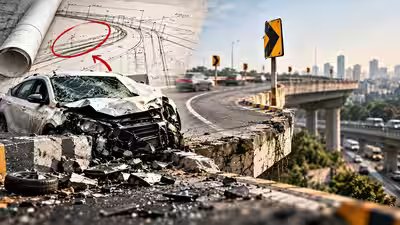
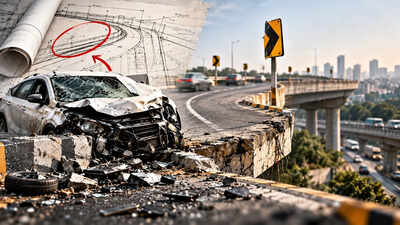
NEW DELHI: Even seven years after a penal provision was introduced to hold road contractors, designers and road-owning agencies accountable for crashes caused by faulty road design, construction or maintenance resulting in death or disability of victims, not a single agency has been penalised so far under this provision of Motor Vehicles Act.Last week experts flagged this issue at a conference on the impact of amendments that govt made to the Motor Vehicles Act in 2019 while pointing out the need to carry out detailed and proper investigation into all serious crashes across all types of roads. However, there have been few instances where agencies and courts have pulled up road owning entities for failure on their part for serious crashes.Only this year, govt increased the penalty for agencies found responsible in such cases by 50 times — from earlier provision of up to Rs 1 lakh “fine” to up to Rs 50 lakh “penalty” through an amendment to Jan Vishwas (Amendment of Provisions) Act.While fines can be imposed by courts after trial, which is a lengthy process, penalties can be levied directly by administrative, regulatory, or governing authorities for non-compliance without a court trial. Sources said this change is likely to have its impact on govt authorities taking action against agencies responsible for poor design, construction and maintenance where these factors resulted in a serious crash.
Share your thoughts in the comments
Be respectful · TOI community guidelines
Some officials of the state road owning agencies admitted that one of the biggest hurdles is establishing a direct causal link between a road engineering defect and a crash as in almost all cases multiple reasons contribute to accidents. This has resulted in accountability remaining confined largely to drivers, with agencies responsible for planning, constructing and maintaining roads escaping scrutiny.The MV Act amendments in 2019 specified that while imposing the fine, courts must consider the road’s design, expected traffic, applicable maintenance standards, the condition in which users could reasonably expect to find the road, whether the designated authority knew or should have known about the hazardous condition, and whether adequate warning signs had been displayed.