









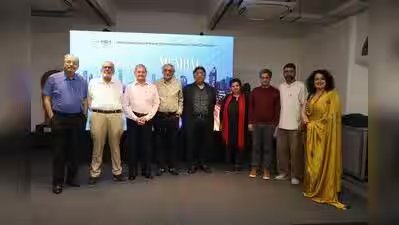
Mumbai: The Chhatrapati Shivaji Maharaj Vastu Sangrahalaya (CSMVS) organised the ‘Futures of Mumbai’ symposium on Aug 29 at the Nalanda Learning Centre. The symposium examined if the city will endure its urban anxiety, climate pressures and transformation. Cyrus Guzder, the chairperson of the board of trustees at CSMVS told TOI, “A museum should be a centre of public dialogue, it is no longer just a repository of objects.”Developed under the Digital Library of Mumbai’s Built Heritage Project and supported by the Bank of America, the symposium invited keynote speaker Sidharth Bhatia, journalist and author of the book Mumbai A Million Islands, Bittu Sahgal, the founder of Sanctuary Nature Foundation and the editor of Sanctuary Asia, Hussain Indorewala, professor at the Kamla Raheja Vidyanidhi Institute for Architecture, Shilpa Phadke, sociologist and co-author of the book ‘Why Loiter? Women and Risk on Mumbai Streets’, artist Sameer Kulavoor and Mustanir Dalvi, professor of architecture in Mumbai.With a rich architectural legacy, it is crucial to preserve its past. But, in order to keep the island city afloat, it is even more necessary to focus on the future. Bhatia asked, “Will every citizen of Mumbai get a chance to take part in the future?” He stated that roughly over 50% of the city’s population will be displaced. As towers rise, affordability shrinks, but he said the wealth of Mumbai is not its real estate, but nature.According to Sahgal, “The future of Mumbai is going to be decided by its biosphere”. With infrastructure push, garbage-dumping on beaches, and construction waste, the biosphere is struggling to provide the city what it wants. Nevertheless, Sahgal was positive. “We still have just a little time. Allow nature to fix itself.”Indorewala and Phadke suggested reclaiming the public realm as a start. Even though Mumbai struggles to breathe, Phadke re-emphasised the importance of infrastructure and reminded it represents existence. She ended with a question: “Can we imagine a city built for citizens rather than consumers?”The symposium concluded with a panel session with the speakers, chaired by journalist Fiona Fernandez, and the release of Dalvi and Smita Dalvi’s book ‘Glossary of Architecture of Bombay’.