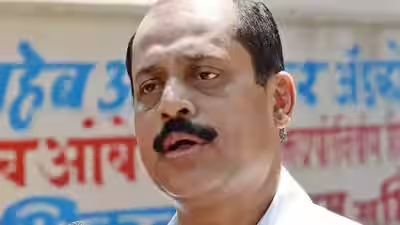










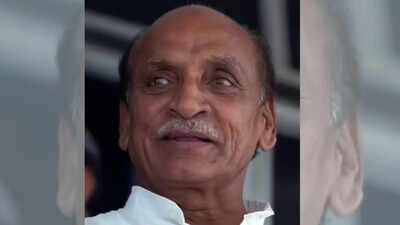
MUMBAI: A special court is likely to deliver its verdict today in the 2006 murder of Congress leader Pavanraje Nimbalkar and his driver, Samad Kazi. The case involves nine accused including state deputy chief minister Sunetra Pawar’s brother Padamsinh Patil. Patil, also a senior NCP leader and former state minister is alleged to have orchestrated the murder of his cousin, due to political and business rivalries. The nine accused standing trial include Padmasinh Patil, Satish Mandade, Mohan Shukla, Parasmal Jain, Dinesh Tiwari, Mahatam Chaudhary, Kailash Yadav, Gyanendra Pandey, and Shashikant Kulkarni. While 128 witnesses deposed during the trial, 29 among them were declared hostile. CBI’s special public prosecutor Ejaz Khan cited the consistency of the approver’s account and the supporting documentary evidence.Nimbalkar was shot dead in his car near the Kalamboli Steel Market on the Mumbai-Pune Expressway on June 3, 2006. According to the prosecution, the motive was driven by Nimbalkar’s opposition to the management of the Terna Sugar Factory and his political contest against Padmasinh Patil in the 2004 legislative assembly elections. The prosecution alleged that Padmasinh Patil engaged associates to facilitate the contract killing, specifically citing financial mismanagement and misappropriation of funds at the Terna Sugar Factory as a central point of conflict.The Kalamboli Police initially registered an FIR against unknown persons, and the investigation was subsequently transferred to the Navi Mumbai Crime Branch. The victim’s wife, Anandibai Nimbalkar, however, filed a writ petition in the Bombay High Court seeking an independent probe, citing a history of political rivalry and previous assaults involving her husband and Padamsinh Patil. On Oct 23, 2008, the Bombay High Court transferred the investigation to the CBI, noting that the state police’s probe was “desultory and lackadaisical”. The trial was originally conducted at the Alibaug Sessions Court. However, the Supreme Court ordered its transfer to the City Sessions Court. This move followed a petition filed by Anandibai Nimbalkar, who alleged that the prime accused, Padmasinh Patil, was exerting undue influence over the proceedings. Her petition mentioned that nine witnesses had turned hostile during the Alibaug phase of the trial. A key component of the prosecution’s case was the deposition of Parasmal Jain, who initially accepted the contract for the murder, later confessed, and was granted a pardon to become an approver for the prosecution. Jain deposed that he was recruited by co accused Mohan Shukla and Satish Mandade, both alleged associates of Padmasinh Patil, to coordinate the hit. He detailed the recruitment of shooters from Uttar Pradesh, the purchase of a vehicle under a false alias, and the tracking of Nimbalkar’s movements leading up to the murder. The investigation also relied on forensic reports, ballistic evidence linking the weapons used to the crime scene, and call detail records that tracked communication between the accused. The victim’s wife Anandibai Nimbalkar, and son, Omprakash Nimbalkar, also deposed on the long-standing threats and harassment faced by the late leader, including the denial of police protection and the obstruction of firearm license renewals. The prosecution further presented evidence from medical officers confirming the cause of death from close-range firearm injuries and from administrative officials detailing financial irregularities within the Terna Sugar Factory.