









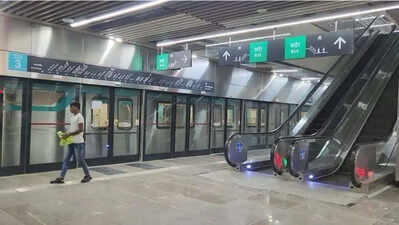
Mumbai: The Mumbai Metro Rail Corporation Ltd (MMRCL) has not received any bids for the telecom infrastructure contract on the underground Metro 3 Aqua Line, leaving the project without a clear near-term solution for ensuring seamless mobile connectivity inside tunnels and stations.The request for proposal, floated on March 13, 2023, to appoint a neutral in-building solution (IBS) provider, failed to attract bidders despite the project’s scale and importance. The contract is meant to enable uninterrupted mobile network coverage across the 33.5km fully underground corridor with 26 underground and one at-grade station.MMRCL has maintained that due to severe space constraints within tunnels and stations, only one telecom infrastructure provider can be accommodated, which would act as a neutral host for all telecom operators.“We will now write to the state government explaining the entire sequence of events and subsequently approach the central government to seek guidance on the way forward,” an MMRCL official said.The lack of bidder interest comes against a backdrop of strong opposition from telecom operators to MMRCL’s pricing and tender structure. In a joint communication to managing director Ashwini Bhide, Reliance Jio, Bharti Airtel and Vodafone Idea flagged the steep reserve price of around Rs 1,000 per sq ft — even for non-usable areas — as “exorbitant” and not aligned with the principle of just compensation, warning it could delay rollout of services.The operators also indicated that no telecom company would issue comfort letters to any IBS vendor under the current terms, effectively discouraging participation unless the pricing framework is rationalised. This followed MMRCL’s decision to terminate its earlier IBS contract with ACES and float a fresh tender.Telecom firms offered to acquire the already installed ACES infrastructure instead of rebuilding networks, to avoid duplication of costs and speed up deployment. The companies have backed a shared network model, with Reliance Jio also seeking right-of-way permissions to roll out common telecom infrastructure, a proposal supported by other operators.However, MMRCL has maintained that it cannot grant selective access to any one operator and that the project must proceed through a competitive bidding route with a single neutral provider, leaving the issue unresolved for now.