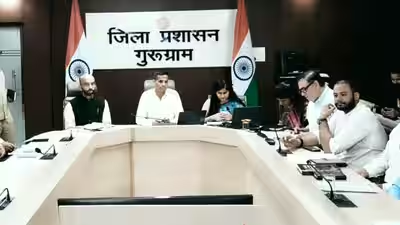









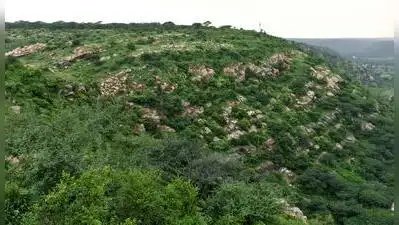
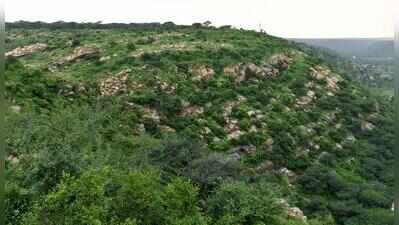
Gurgaon: Days before a high-powered committee submits its report on the Aravalis, environmental experts and representatives of rural communities have alleged that the panel did not cover several key areas.The Supreme Court-appointed panel — which visited nine districts across Delhi, Haryana and Rajasthan from Aug 6 to 11 — is expected to submit its report to the apex court by Aug 31.Raising questions over the adequacy of its assessment of the mountain range, the stakeholders — who have written to the committee in recent days — said several areas affected by mining, stone crushing, waste dumping and burning were left out of the field exercise.The committee held public hearings in the city, Alwar, Ajmer and Udaipur, according to Aravali Virasat Jan Abhiyaan (AVJA). However, the stakeholders — including AVJA members — said the committee didn’t visit affected areas in Gurgaon, Faridabad and Nuh, or mining- and stone-crushing-affected areas in Bhiwani, Charkhi Dadri and Mahendragarh.The concerns extend beyond Haryana. Representatives from Gujarat have also criticised the committee for not visiting any Aravali district in the state during its recent field exercise. In Rajasthan, stakeholders have questioned the absence of mining- and stone-crushing-affected areas in Sikar and Kotputli.In the representations, the stakeholders have urged the panel to seek an extension to undertake a more detailed scientific assessment and broaden its consultation process across the Aravali range. The committee was constituted by SC in its continuing proceedings on the Aravalis amid a larger dispute over how the mountain range should be identified and protected.Environmental expert Ravi Chopra, who has chaired two Supreme Court-appointed high-powered committees, said detailed investigations undertaken by the committees he headed had required extensions of their terms. He urged the Aravali panel to seek additional time rather than rush its assessment.Vice-president of All India Kisan Sabha Inderjit Singh said, “Communities living along the 700-km Aravali range had traditionally depended on farming and cattle rearing. Excessive mining had affected water availability, while dust from stone crushers had affected agricultural land. Grazing areas had also been lost because of mining and dumping of mining waste.”The 100-metre criterion has been at the centre of the recent legal debate over the identification of Aravali hills, with environmental groups warning that areas falling outside a height-based definition could lose protection despite their ecological importance.Earth scientist CP Rajendran, who is serving on a Kerala govt committee examining the Wayanad landslide, also urged the panel to broaden its methodology. “A 100-metre elevation threshold could leave fragile slopes and buffer areas vulnerable to mining and real estate development,” he said.Ecological restoration practitioner Pradip Krishen said, “The Aravalis required a cumulative environmental and social impact assessment covering the entire mountain range.” He proposed that the assessment be undertaken by independent institutions with expertise in ecology, geology, public health and wildlife. Such a study, he said, would help establish the carrying capacity of the Aravalis and provide a scientific basis for decisions on mining and development.In its May 25 order, the court had said that a fair, impartial and independent expert opinion should be obtained and considered after associating the requisite stakeholders to resolve critical ambiguities and provide definitive guidance on the issues before it.The issue assumes significance for Haryana, where large stretches of the Aravalis in Gurgaon, Faridabad and Nuh have faced sustained pressure from mining, construction, land-use changes and waste-related activities. The wider southern Haryana belt, including Bhiwani, Charkhi Dadri and Mahendragarh, also has extensive mining and stone-crushing activity.