






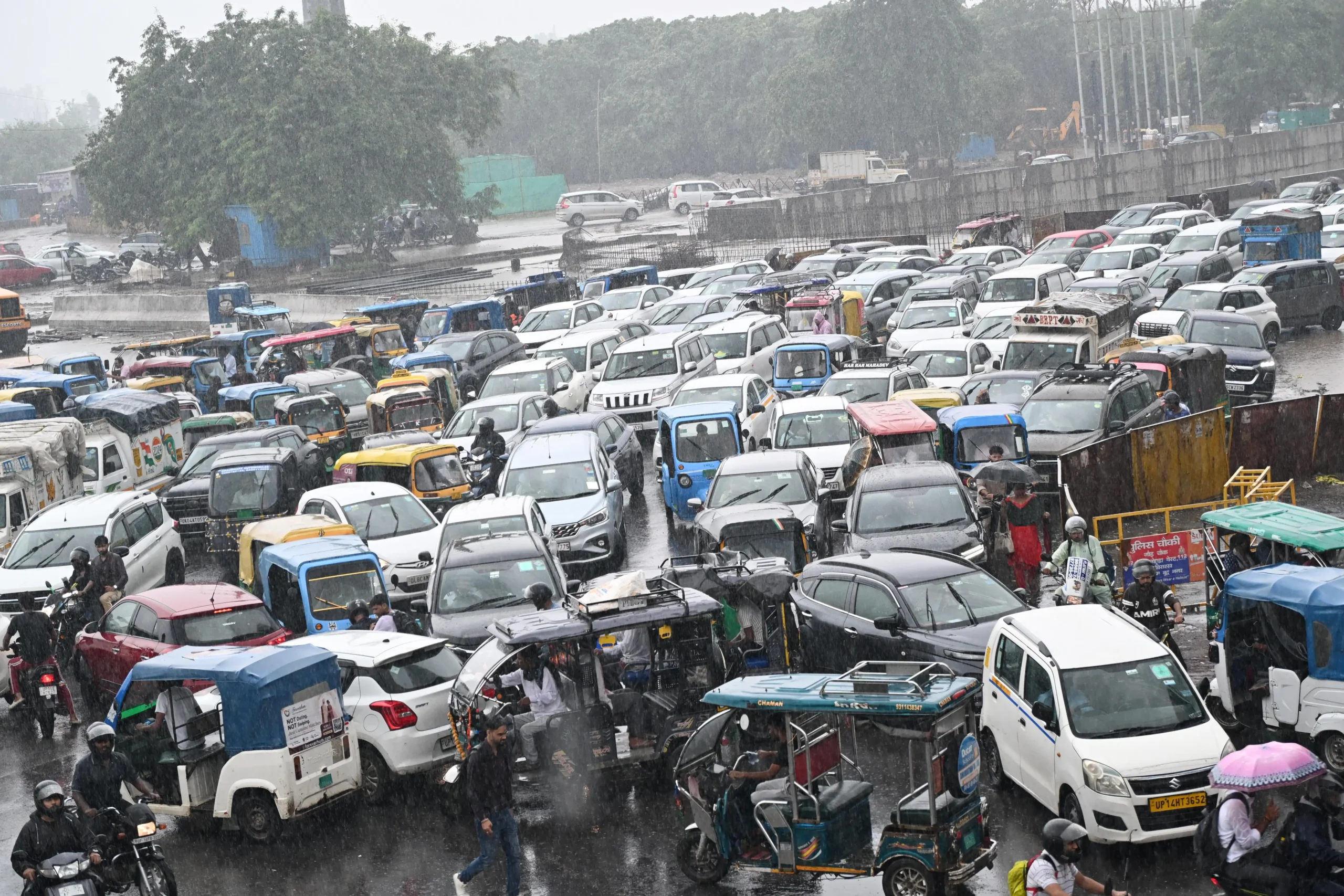
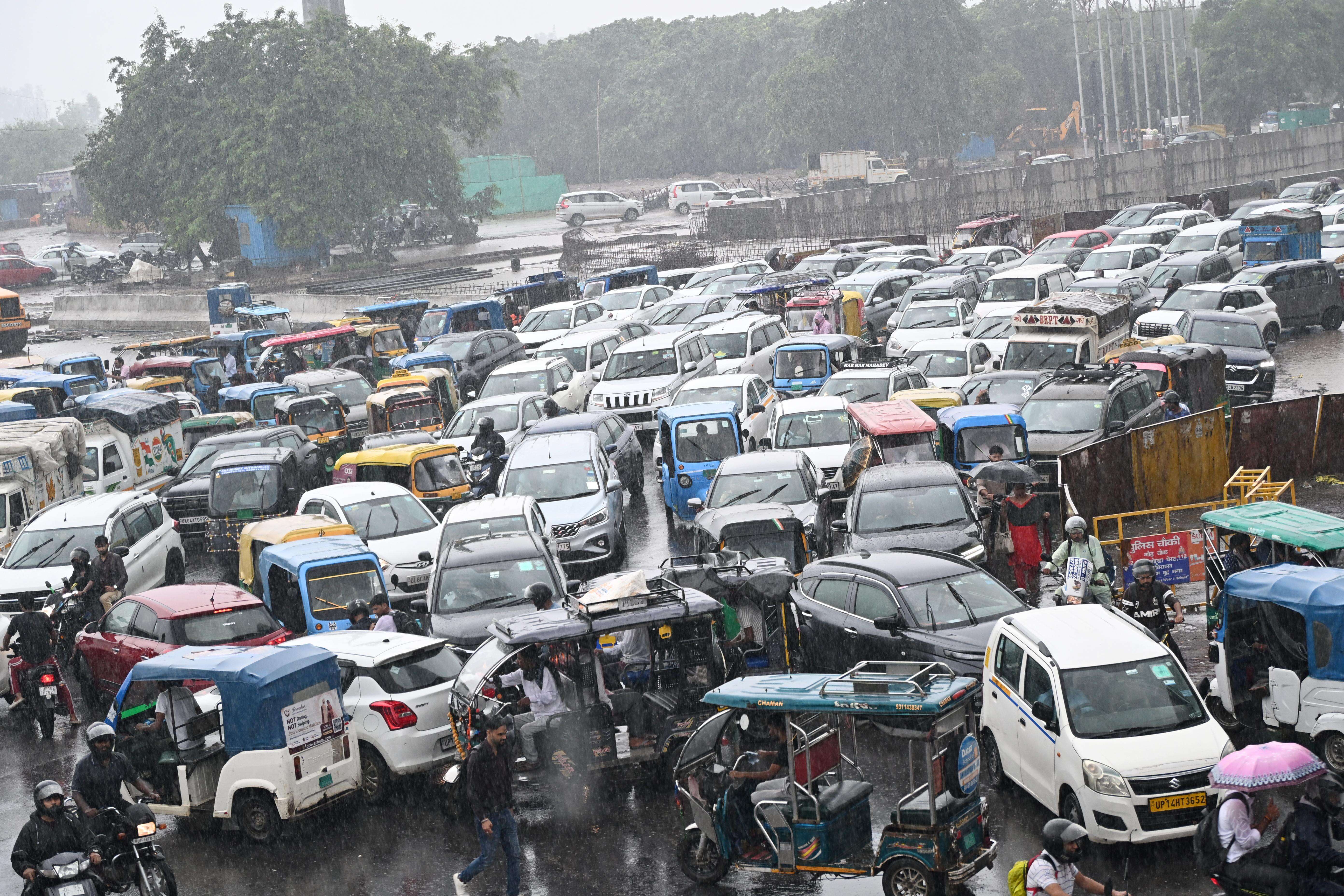
Noida: In a city of more than 10 lakh people, living mostly in condominiums, Greater Noida West’s struggle with traffic and the lack of public transport and civic infrastructure began the moment residents started moving in. Handover of flats began as late as 2010, yet the snarls arrived almost at once and have grown with every new tower.Planned in the early 2000s and spread across around 3,635 hectares from Noida’s Sector 121, Greater Noida West has fast transformed from a stretch of farmland and villages into a bustling urban hub with over 100 highrises and malls. Despite connectivity to NH-9, Yamuna Expressway and FNG Expressway, heavy daily traffic overwhelms key junctions, including Gaur Chowk, Ek Murti Chowk, Hanuman Mandir and Shahberi, particularly during peak hours.Nowhere is this clearer than Gaur Chowk, also called Char Murti roundabout, where vehicles crawl every day as traffic from Delhi-Meerut Expressway, Crossings Republik, Noida and Surajpur intersects. A newly built underpass along Taj Highway is expected to ease the bottleneck on the DME to Surajpur corridor, but its impact remains to be tested.The underpass opened for trials on Nov 5, just ahead of Diwali, when traffic had dipped as many office-goers took leave and schools were on holiday.“The Chaar Murti Chowk underpass has provided considerable relief to residents and commuters. However, some finishing work, particularly the uneven road surface, still needs attention,” said Bhawna Gaur of Leisure Park.Encroachment of roads and footpaths by vendors adds to the obstruction. “Gaur City area is full of encroachment as street vendors and shops spill onto the roadsides, leading to daily traffic snarls,” Abhishek Kumar, president of New Era Flat Owners Welfare Association (NEFOWA), said.A road behind Gaur City has vanished under food carts and remains littered with plastic and waste, residents said. In early 2026, residents of more than 20 societies submitted over 10,000 signatures to the Authority demanding action, but they say sustained action is still lacking.Devender Singh, a resident of Amrapali Centurion Park, said the lack of public transport was another challenge that has left residents at the mercy of autos, e-rickshaws, cabs or their own vehicles.On Nov 11, after years of struggle, Union Cabinet approved an Aqua Line extension linking Sector 51 with Sector 4 in Greater Noida West through Gaur Chowk. The corridor will have a station at Sector 61 that will serve as an interchange with Delhi Metro Blue Line corridor. But it is unlikely to be ready before 2031.NEFOWA, which has led the demand and held weekly Sunday protests at Gaur Chowk, welcomed the approval, saying it will improve public transport in an area with limited connectivity, but said it had come late. “At present, the combined rural and urban population of the region that will be covered by the metro is approximately 10 lakh. By 2031, this population is expected to reach around 14-15 lakh. The question, therefore, is whether the proposed metro infrastructure will be sufficient to cater to the transportation needs of such a large population in 2031,” Kumar said.Punit Kohli, a resident of Saya Zion in Greater Noida West, said the metro and bus network has been a longstanding demand. “The demand for a metro connection to Greater Noida West dates back to 2010, when highrise residential societies started coming up in the area. The project has faced repeated delays and often gained attention before elections, only to lose momentum afterwards. With the Union cabinet now clearing it, we hope the work will be completed within the promised timeline,” he said.A Supertech Ecovillage 1 resident pointed out that while e-buses operate from Gaur and Ek Murti roundabouts, these services are mostly infrequent. In the absence of regular bus connectivity, Greater Noida West commuters depend mostly on private buses to travel to Noida and Delhi to save money and travel safely.Drainage is another sore point. During the monsoon, inadequate drains cause waterlogging, mud and damaged roads, particularly around ACE Divino, Flora Heritage, AIG Royal, Antriksh Golf View and Krishna County in Sector 1. About 80% of the major drains remain open despite frequent accidents.“There have been instances of cattle falling into open drains, apart from the risk posed to pedestrians, particularly children and elderly residents, posing a serious safety concern,” said Manish Kumar, a resident of Ecovillage 1.On roads leading to Devsai Sports Home, Apex Alphabet and many other highrises in Techzone 4 in Sector 1, there are open drains with dust and garbage heaped alongside them.Civic amenities have not kept pace either. Residents want a stadium, a dedicated Ramlila ground, a cremation ground and firefighting facilities for the high-rise cluster. Streetlights are out on newly widened roads where cables were damaged during repair works. Near Itahera village, the problem has persisted for over four months.“How can we live without streetlights for up to 6 months or more?” said Singh.Ajit Patel, senior manager of the electrical and maintenance department at GNIDA, said the lights would be fixed once road works are complete. He said an estimate was being prepared for approval.Residents have pointed out that major roads, including the 130-metre roads, 45-metre roads linking societies and 60-metre link roads, had remained blocked for years by legal disputes or construction before being widened in recent months. “Had these road-widening works not been undertaken in time, the traffic situation would have been much worse,” said Kumar.Residents also want another underpass near Panchmukhi Hanuman Temple in Sector 1 and a third bridge over Hindon to Noida, besides the existing two. A proposed 7-km double-decker flyover on the Shahberi stretch is also expected to help.