






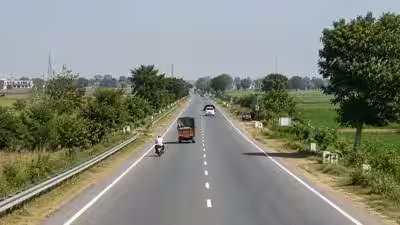
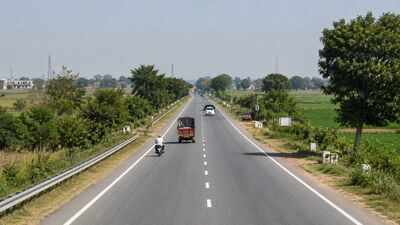
Mainpuri district in Uttar Pradesh has witnessed a steady transformation in its economic and developmental landscape post-2017. Traditionally known as an agriculture-dominated district with a strong cultural identity and rich craft heritage, Mainpuri is increasingly benefiting from improved connectivity, government-backed entrepreneurship, rural infrastructure and a renewed focus on environmental and heritage assets.The transformation is part of the broader development trajectory witnessed across Uttar Pradesh since 2017, where the emphasis has been on integrating districts with major economic corridors, strengthening local products through the One District One Product (ODOP) programme, improving basic infrastructure and ensuring that development reaches rural and semi-urban regions. For Mainpuri, the combination of the Agra-Lucknow Expressway, the revival of the historic Tarkashi craft, agricultural support and new public infrastructure has created fresh opportunities for growth.The expressway: A game changerOne of the most important factors influencing Mainpuri’s economic landscape has been improved regional connectivity. The Agra-Lucknow Expressway, inaugurated in 2016, provided a high-speed corridor linking western and central Uttar Pradesh and strengthened access to major commercial centres. For Mainpuri and its neighbouring regions, the expressway has significantly reduced travel time and improved access to Agra, Lucknow and the wider National Capital Region. Better connectivity is particularly important for a district whose economy remains closely linked to agriculture and small-scale trade.Farmers and agricultural traders benefit when transportation becomes faster, more reliable and less expensive. Mainpuri produces a range of agricultural commodities, including potatoes, garlic, maize and other crops. Improved road connectivity has helped producers and traders reach larger wholesale markets and consumption centres more efficiently. Faster movement of agricultural produce is especially important for commodities vulnerable to storage losses and price fluctuations.The expressway has also contributed to the emergence of new economic activity along the broader transport corridor. Improved accessibility creates opportunities for warehouses, logistics facilities, fuel stations, restaurants, commercial establishments and other support services. As economic corridors develop, land that was previously considered distant from major markets can acquire greater commercial value.For a district like Mainpuri, this integration with the wider expressway economy represents an important structural shift. Connectivity is no longer simply about easier travel; it is increasingly becoming a foundation for investment, employment and market expansion.Strengthening local identity through ODOPAnother important pillar of Mainpuri’s development has been the revival and promotion of its traditional craft under the Uttar Pradesh government’s One District One Product programme. Mainpuri is known for Tarkashi, an intricate and distinctive form of decorative craftsmanship involving the inlaying of fine brass, copper or other metallic wires into wooden surfaces. The craft represents generations of artistic knowledge and has traditionally provided livelihoods to skilled artisan families.However, like many traditional crafts, Tarkashi faced challenges related to limited market access, inadequate modern equipment, shortage of working capital and competition from mass-produced products. The ODOP initiative has sought to address these structural problems by connecting local crafts with finance, skill development, technology, branding and wider markets.Through financial assistance and entrepreneurship-linked support, artisans and small entrepreneurs have received opportunities to establish or expand production units. The availability of margin-money assistance and easier access to institutional finance has helped reduce some of the barriers faced by traditional craftsmen. Training programmes, improved tools and Common Facility Centre-based infrastructure have also played an important role. Modern equipment can improve precision and productivity while allowing artisans to retain the traditional character of the craft. The objective is not merely to preserve Tarkashi as a cultural symbol but to make it economically sustainable for the next generation.The ODOP model has given Mainpuri’s craft a stronger identity in exhibitions, trade fairs and digital marketplaces. This has helped shift the perception of traditional handicrafts from being purely local products to potential premium and export-oriented goods.The revival of Tarkashi also carries a wider social significance. Craft-based development generates employment within communities, supports family-based enterprises and can provide opportunities for women and young people to participate in local economic activity without necessarily migrating to larger cities.New infrastructure and development projectsThe transformation of Mainpuri is also visible in the continued investment in public infrastructure. A major package involving 111 development projects worth approximately Rs 682 crore has reflected the government’s emphasis on strengthening roads, public utilities, education and civic infrastructure in the district.Among the important infrastructure initiatives is the expansion and improvement of key road corridors, including the Shikohabad-Bhogaon route. With an estimated investment of around Rs 292 crore for major road expansion works, such projects are expected to improve movement between Mainpuri, Karhal, Bhogaon and neighbouring regions.Road infrastructure has a multiplier effect on the local economy. Better roads reduce transportation costs for farmers, traders and businesses, while also improving access to hospitals, educational institutions and government services. Rural connectivity is particularly important in districts where a significant proportion of the population lives outside the main urban centre.Alongside roads, investments in drinking-water infrastructure and educational facilities are strengthening the district’s social infrastructure. Modern government schools and improved public facilities can help reduce the developmental gap between urban and rural areas. Agriculture has also received support through measures aimed at reducing the cost of cultivation. Free electricity for eligible agricultural tube-well consumers, along with other agricultural and irrigation-related initiatives, can provide relief to farmers and contribute to more predictable farm economics.The larger objective is to create an ecosystem in which infrastructure, welfare and economic development reinforce one another. A farmer with better irrigation, improved roads and access to larger markets is better positioned to increase productivity and income.Agriculture remains the foundationDespite the emergence of new economic opportunities, agriculture continues to form the backbone of Mainpuri’s economy. Therefore, the district’s transformation cannot be understood without recognising the importance of the rural economy. Improved roads and expressway connectivity have strengthened the link between farms and markets. Government initiatives related to irrigation, electricity, crop support, agricultural mechanisation and farmer welfare have further contributed to improving the overall agricultural ecosystem.The expansion of transport infrastructure is particularly important for potato and other agricultural producers who depend on timely movement to mandis, cold-storage networks and processing centres. Over time, improved connectivity could also encourage greater investment in food processing and agricultural value addition.This transition from simply producing crops to creating value through storage, processing, packaging and organised marketing could become one of Mainpuri’s next major growth opportunities.Eco-tourism and environmental conservationMainpuri also possesses an important natural asset in the form of its wetlands and biodiversity. The district and its surrounding landscape are associated with the Sarus Crane, Uttar Pradesh’s state bird, providing an opportunity to combine environmental conservation with rural development. Wetland conservation and village-level participation can create new possibilities for eco-tourism. The involvement of Gram Panchayats and rural communities in protecting water bodies and natural habitats can generate supplementary income while simultaneously preserving biodiversity.Sites associated with wetlands and migratory or resident bird populations have the potential to attract researchers, birdwatchers, photographers and environmentally conscious tourists. The development of such tourism must, however, remain sensitive to ecological sustainability.Heritage conservation offers another avenue for Mainpuri. Investments in museums, cultural spaces and the preservation of historical assets can strengthen the district’s identity and create a more diversified tourism economy.A district moving towards diversified growthMainpuri’s development over the past nine years reflects a broader shift from a predominantly agriculture-based local economy towards a more diversified development model.The expressway has improved Mainpuri’s access to major markets. ODOP has brought renewed attention to Tarkashi and traditional entrepreneurship. Infrastructure projects are strengthening roads, public utilities and educational facilities, while agricultural support continues to sustain the district’s rural foundation. At the same time, wetlands, biodiversity and heritage are opening new possibilities for eco-tourism and cultural development.The real significance of this transformation lies in the way these sectors can complement one another. Better roads help farmers reach markets and artisans access customers. Financial support encourages local entrepreneurship. Improved public infrastructure makes districts more attractive for investment, while tourism and cultural promotion can create additional employment opportunities.Mainpuri’s journey is therefore not defined by a single mega-project. Rather, it represents the cumulative impact of connectivity, local enterprise, agricultural support, infrastructure investment and the recognition of traditional and environmental assets.As Uttar Pradesh continues its push towards becoming a major economic powerhouse, districts such as Mainpuri will play an increasingly important role. The challenge ahead will be to convert improved infrastructure into sustained private investment, expand food processing and logistics, strengthen the Tarkashi value chain and develop eco-tourism without compromising environmental sustainability.The foundations for this transformation are steadily being laid. From expressways to artisan workshops, from agricultural fields to wetlands, Mainpuri is gradually building a development model that combines its traditional strengths with new economic opportunities. The district’s progress over the past nine years demonstrates how focused connectivity, local-product promotion and sustained public investment can help bring historically agriculture-dependent regions into the wider growth story of Uttar Pradesh.