









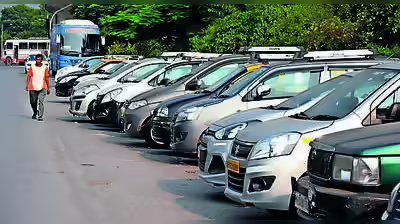
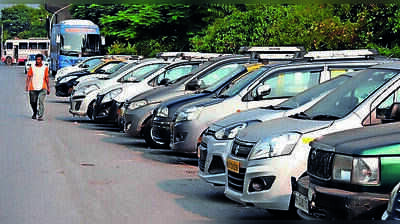
Mumbai: The Maharashtra government on Thursday implemented a comprehensive aggregator policy aimed at regulating app-based taxi such as Ola, Uber and Rapido. One of the key provisions makes it compulsory for any aggregator cab driver to obtain a badge by proving Maharashtra residency and demonstrating practical knowledge of Marathi.This could possibly lead to a section of cab drivers going off roads as they do not possess the state domicile certificate mandatory for a badge.“The rule is now stringent — unless you have a domicile certificate and have obtained a Public Service Vehicle Authorisation (PSVA) badge, you cannot legally drive an app-based cab in Mumbai or anywhere in state,” said transport minister Pratap Sarnaik, adding that those with domicile are drivers who already have basic knowledge of Marathi.The move has raised concerns among drivers’ groups, particularly migrant drivers who form a significant share of the app-based taxi workforce in Mumbai, Pune and other urban centres. Industry stakeholders fear that many existing drivers may struggle to obtain domicile certificates, potentially leading to a temporary reduction in the number of cabs on the road. This, in turn, could result in longer waiting times for commuters and increased fares due to a shortage of available vehicles. How the state plans to enforce the requirement and whether existing drivers will be given a transition period remains to be seen.Aggregator cab drivers’ union leader Keshav Kshirsagar said drivers should be given sufficient time to obtain badges through a simple, transparent and hassle-free process, instead of facing immediate enforcement.As per new policy, aggregators must ensure drivers receive at least 80% of the total fare, limiting excessive commission deductions by platforms. Drivers cannot be on duty for more than 12 consecutive hours, possess valid licences, undergo training.To address long-standing complaints over fare volatility, the policy has prescribed a structured pricing framework. The base fare will be applicable for a minimum distance of three kilometres to compensate drivers for dead mileage and fuel costs incurred while reaching passengers. Surge pricing has been capped at 1.5 times the normal fare, while discounts cannot exceed 25% below the base fare.Women’s safety features include an option for female passengers using ride-pooling services to choose women drivers or co-passengers.The policy brings app-based mobility services under a formal regulatory framework, requiring every aggregator operating in the state to obtain a licence from the State Transport Authority. Operators will be assigned unique licence identification numbers and will be required to comply with state-prescribed norms.The policy places significant emphasis on passenger safety. Aggregators will have to maintain 24×7 call centres, appoint grievance redressal officers and ensure complaints are resolved within stipulated timelines. Insurance coverage for drivers and passengers has also been mandated.Apps and websites will also be required to operate in Marathi, Hindi and English.The policy additionally encourages electric and alternative-fuel vehicles, grants legal recognition to non-profit carpooling, and introduces a real-time government monitoring portal for GPS tracking, driver verification and enforcement.Calling it a balanced framework, Sarnaik said the policy seeks to protect passengers, improve driver earnings and create a safer, more accountable transport ecosystem in Maharashtra.Service charges will also be regulated to ensure fair pricing.