









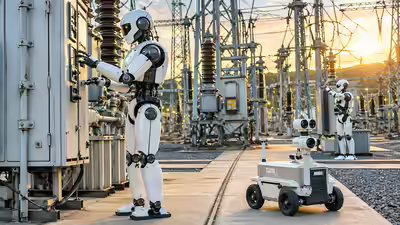
China is accelerating the use of robotics in one of its most critical systems: the national power grid. The state-owned State Grid Corporation of China has outlined plans to invest about $1 billion (roughly 6.8 billion yuan) to procure around 8,500 robots, with deployment expected to scale through 2026. These machines will assist with inspection and maintenance across substations and transmission networks, including in remote or hazardous environments. The move reflects a broader effort to improve efficiency, safety and reliability in electricity delivery as demand rises, while also advancing China’s ambitions in industrial robotics and AI-enabled infrastructure.
What China’s $1B robot rollout involves
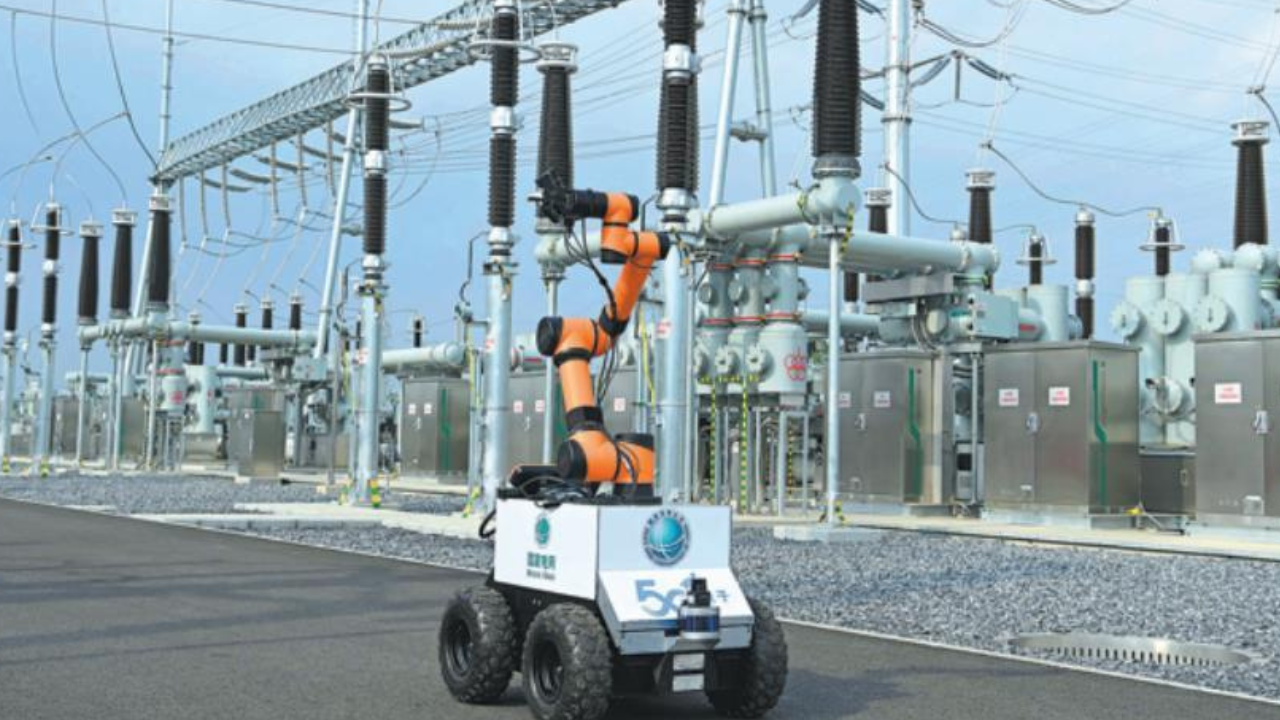
The planned fleet includes a mix of machine types already being tested or deployed in grid operations. Quadruped robots, often referred to as robot dogs, are designed for patrol and inspection in challenging terrain and large substations. Wheeled robots equipped with robotic arms are being developed for controlled maintenance work requiring precision handling. Humanoid robots are also part of the broader vision, although they remain in limited and largely experimental roles. Domestic companies such as Unitree Robotics, Deep Robotics and UBTech Robotics are contributing to the development of these systems. Current deployments are still focused mainly on inspection rather than complex repair work, particularly in structured substation environments.
What these robots are designed to do
Grid robots are used to support routine and high-risk operations within the power network. They can detect faults using thermal imaging and other sensors, monitor equipment conditions and identify anomalies that may not be immediately visible to human inspectors. They are also deployed to inspect transmission lines in mountainous or hard-to-access areas, reducing the need for personnel to enter hazardous locations. In controlled settings, some robots can carry out basic, repetitive maintenance tasks. These functions are already being trialled in multiple regions and are helping reduce reliance on manual inspection where risks are highest.
Changing how work is done
Despite the scale of the rollout, robots are not expected to replace human maintenance crews. Their role is to complement existing workforces by reducing exposure to dangerous conditions, improving consistency in inspections and enabling faster fault detection across large networks. Human technicians remain essential for complex repairs, system-level decisions and emergency management. The shift represents an evolution in how work is carried out, with machines handling specific tasks while people retain overall control.
Why China is investing heavily in grid automation
China operates one of the largest and most complex electricity networks in the world, spanning vast geographic areas that include remote and difficult terrain. Maintaining this system presents significant logistical challenges, particularly as electricity demand continues to grow due to industrial expansion, urbanisation and the rising energy needs of digital infrastructure. The development of ultra-high-voltage transmission systems has further added to this complexity. Robotics offers a practical way to improve efficiency, reduce risk and enable more consistent monitoring across the network.
A push into industrial robotics
The grid automation initiative forms part of a wider national strategy to expand capabilities in robotics and artificial intelligence. Industrial environments such as power networks provide structured conditions suited to automation and generate continuous operational data that can be used to refine AI systems over time. Large-scale deployments in such settings allow companies and state operators to develop technologies beyond laboratory conditions, accelerating their practical application.
What it means for the future of power systems
China’s approach highlights how critical infrastructure is becoming a testing ground for robotics and AI technologies. While full automation of power grids remains some distance away, the growing use of machines for inspection and routine maintenance is likely to influence how utilities operate globally. The transition is gradual, with robots taking on defined roles within existing systems, improving efficiency and safety while human oversight remains central.