








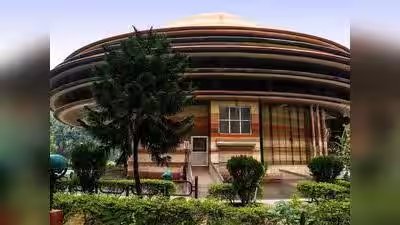
Lucknow: A faint point of light seen through a telescope can be turned into a sharp photograph of a planet or distant object through careful camera settings, multiple exposures and digital processing, students learnt during a practical astrophotography training held on Monday.Seventeen astronomy students from Lucknow University took part in hands-on sessions at the university’s Astronomy Lab and Indira Gandhi Planetarium, where they photographed Moon and Jupiter and processed their own images.Scientific officer Sumit Srivastava said the training went beyond basic observation and focused on operating different telescopes and mounts, connecting DSLR cameras with T-ring adapters and adjusting ISO, aperture, exposure time and focus for night-sky imaging.A key method taught was image stacking, in which several frames are combined to enhance detail and reduce noise. LU student Utkarsh said participants worked with multiple frame types, including light, dark, flat and bias frames, to improve the final output.Students were introduced to commonly used processing tools including Astro Photography Tool, DeepSkyStacker, AutoStakkert, PIPP and RegiStax to align, stack and sharpen their photographs.LU Prof Alka Mishra said the practical sessions enabled participants to process images captured during the programme and produce final astronomical photographs, offering insight into how amateur astronomers create detailed pictures of celestial objects.The programme was organised by Indira Gandhi Planetarium, Lucknow, under Council of Science & Technology, Uttar Pradesh, in association with UP Amateur Astronomers Club and Department of Astronomy, Lucknow University.