










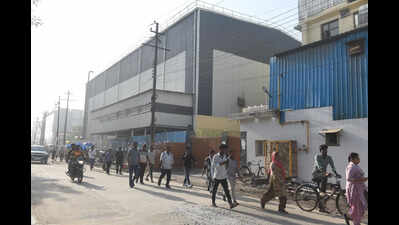
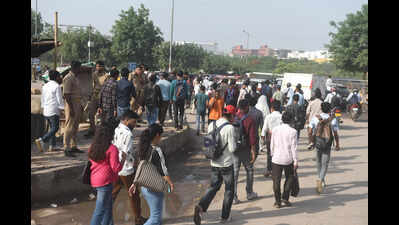
The supervisor’s words had a bigger chilling effect than the bevy of cops who stood near the factory gate. “Aisa kaam karna hai toh kal se kaam pe mat aiye (No need to come to work if you do anything like this).”Two days before this advice, Pushparaj Singh walked out in solidarity with fellow workers at his factory in Noida, responding to calls to join protests demanding higher wages. Personally, it channelled three years of frustration since dropping out of his BSc (agriculture) course and coming to Noida from Kanpur for a job, hoping to cash in on the post-Covid economic rebound.With his spoken fluency, Pushparaj hoped for an office job. But the best that came his way was that of an “unskilled worker” at the factory floor of pen manufacturer Luxor. Now a line reader who checks finished products, Pushparaj earns a fixed wage of Rs 11,313 a month, with which he must support himself in Noida and his family back home in Kanpur.
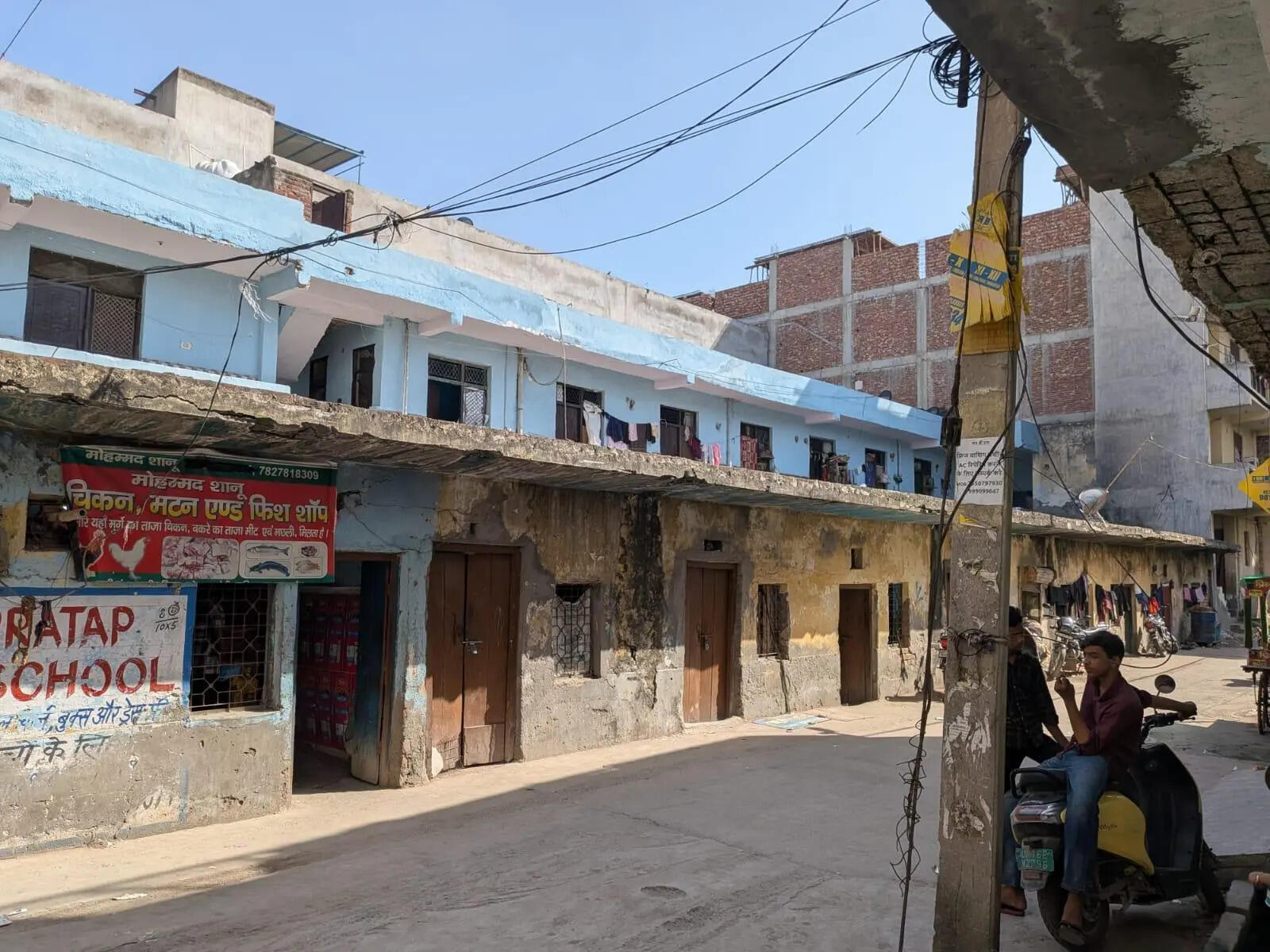
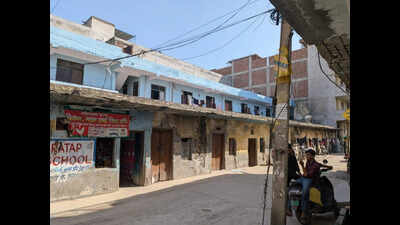
One-room sets in colonies are available for a minimum Rs 7,000 a month but turn into ovens during summer
The protest was the most hopeful Pushpara (26) felt in three years for things to change. The contractor’s words — after the agitation took a violent turn and police made many arrests — were a harsh reality check. Pushparaj and others were easily replaceable.As govt looks into causes behind the protests, answers are not hard to find. Thousands of workers live their lives on shoestring budgets stretched to breaking point, and pick up any available overtime — beyond the standard eight-hour shift — to add a few thousand rupees to their income. This means working seven days a week most of the time. Being tired is not an option. Falling sick isn’t either because it means a lower income.“After spending Rs 3,500 on rent, Rs 4,000 on food and Rs 2,000 on general living expenses and commuting, I am left with almost nothing at the end of the month,” says Pushparaj, who shares a small room with a co-worker on the top floor of a four-storey building, with barely enough space for two single charpoys and a kitchenette, and sleeps on the roof during summers when the room heats up like an oven. “On months when I take no offs and do overtime, I’m able to earn up to Rs 17,000. When these savings add up to Rs 40,000, I send the money home to my parents and grandparents. With two senior citizens at home, there are medical bills to take care of, so I’m pulling in overtime often,” he adds.For Poonam and Awdesh, the cost of the decision to live together was sacrificing school for their older daughter. “She is 5 and looks after our younger one (1) because both of us are away at work,” says Poonam, who moved from Bhagalpur to Noida to work at the manufacturing unit of Samsung.Awdesh, an unskilled worker at a metal factory, only agreed to Poonam and the daughter joining him when she found a job. At Bhangel, where they live in a single room, the rent is Rs 7,000, nearly two-thirds of Awdesh’s salary. Fixed monthly wages were revised effective April 1 by the UP govt for workers in Noida and Ghaziabad after the April 13 protest — for unskilled workers, it went up to Rs 13,690 from Rs 11,313, for semi-skilled workers to Rs 15,059 from Rs 12,445 and for skilled workers to Rs 16,868 from Rs 13,940.
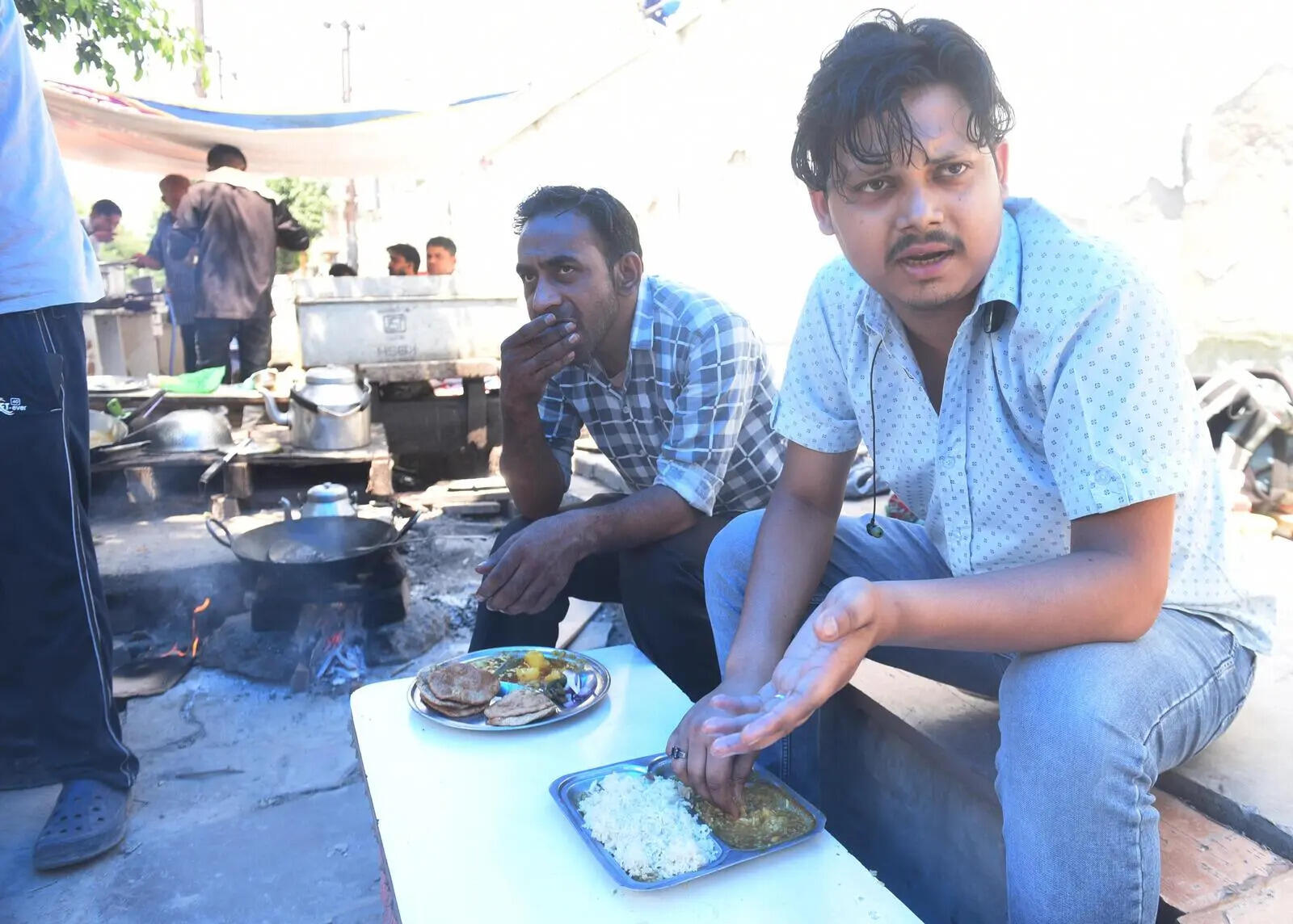
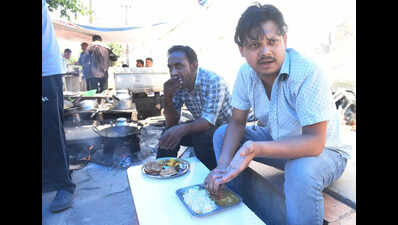
The cost of basic meals has shot up after LPG supply was hit by the Iran war and cylinders sold for Rs 3,000-4,000 in the black market
Noida is a large contract manufacturing hub for readymade garments, electronics and auto parts. It has around 12,000 units that employ around 13 lakh workers, of whom 10 lakh are factory floor workers at different levels, according to industry estimates. Noida Entrepreneurs Association (NEA) President Vipin Malhan says nearly 60% would be unskilled workers. Together, they form the workforce that has helped turn the city into a major export goods producer, serving global majors like Zara, Puma, Nike, Target, GAP, Ralph Lauren and many others. Auto component makers like Motherson have a large global clientele.Lives of the workers, meanwhile, are very unlike the customers of the products they help make. For Awdesh and Poonam, the household arithmetic is one of fine balances, where all expenses and the occasional family outing can be accommodated within the assured combined income of Rs 23,000 a month. When the Iran war sent LPG prices in the grey market skyrocketing, it threw all the calculations haywire. In colony after colony where migrant industrial workers live, LPG distress is foremost among “unmanageable expenses”. It acted as a catalyst for the protest. In their own carefully calibrated ways, all segments of industrial workers worked out a way to get by on their salary. To the LPG problem, they have no answer.“The Rs 900 cylinder is now coming for Rs 3,000-4,000. We cannot afford it,” says Poonam. That alone has taken the family’s food budget from Rs 6,000 a month to Rs 10,000. The solution for now is a makeshift chulha, that three families now share.“I feel bad,” Poonam says, “about my daughter not going to school. Maybe next year. School will mean an additional expense of at least Rs 2,000 a month.”Aspirations hinge entirely on overtime, and overtime relies on work orders. Over the last few months, first with US tariffs and protracted Washington-Delhi negotiations on a trade deal and later the West Asia conflict, exporters have been negotiating headwinds and overtime work isn’t guaranteed. “We can only do overtime when the factory has a requirement of additional work. So, whenever I can earn extra money from overtime, we use it for buying things,” says Awdesh.It becomes easier when one sees it for what it is — a compulsion, not a choice. “Nobody will leave their home and come to live in a big city in poor conditions unless they have problems back home,” says Shivam (23) a skilled worker employed as an SMT (assembling unit) operator at Nixon. His salary is close to Rs 14,000. There are months he can make Rs 19,000, thanks to overtime. “It’s this extra Rs 5,000 that I send to my family at my village in Gorakhpur,” he says. “There is no time or money to fall sick. If I fall sick and take a day off, my salary will be cut. So, you keep working to lead a decent life.”Sahil Kumar, a skilled embroidery worker at a garment exporter, is trapped in a loan-repayment cycle because his family expenses are greater than his income. “I take a loan then repay people as soon as I get my salary. I’m so deep in debt that I have asked this eatery for a credit,” he says, talking to TOI while eating his lunch on Saturday afternoon. “It was anyway difficult to live with the limited money I got. The LPG price rise made things bad,” he adds, refusing to talk about the protests, not wanting to court any trouble, especially with cops deployed in large numbers at factory hubs like Phase 2.Others at the eatery shared the sentiment — that they simply had no means to cope with the LPG problem and hoped UP’s revised wages would bring some respite. “But even the revised wages won’t make much of a difference. How do you live for Rs 11,000 or Rs 14,000 in a place like Noida? Rents are going up every year because of the IT industry. Their employees can pay higher rents,” says a worker who refused to share his name.Shreya Ghosh, member of Sangrami Gharelu Kamgar Union, says the protest was more than a demand for an increase in wages. “What workers are fighting for is their right to live a decent, dignified life, which is not possible in the wages that they have been receiving so far. Through the Noida workers’ protest, people have got to know that factory workers are working for wages as low as Rs 11,000 a month. Given the inflation, they cannot survive in this, and as a result, they are compromising on dignified living,” says Ghosh, adding the compromise includes health and hygiene.(Names of some workers have been changed on request)“The Rs 900 cylinder is now coming for Rs 3,000-4,000. We cannot afford it,” says Poonam. That alone has taken the family’s food budget from Rs 6,000 a month to Rs 10,000. The solution for now is a makeshift chulha, that three families now share.“I feel bad,” Poonam says, “about my daughter not going to school. Maybe next year. School will mean an additional expense of at least Rs 2,000 a month.”Aspirations hinge entirely on overtime, and overtime relies on work orders. Over the last few months, first with US tariffs and protracted Washington-Delhi negotiations on a trade deal and later the West Asia conflict, exporters have been negotiating headwinds and overtime work isn’t guaranteed. “We can only do overtime when the factory has a requirement of additional work. So, whenever I can earn extra money from overtime, we use it for buying things,” says Awdesh.It becomes easier when one sees it for what it is – a compulsion, not a choice. “Nobody will leave their home and come to live in a big city in poor conditions unless they have problems back home,” says Shivam (23), a skilled worker employed as an SMT (assembling unit) operator at Nixon. His salary is close to Rs 14,000. There are months he can make Rs 19,000, thanks to overtime. “It’s this extra Rs 5,000 that I send to my family at my village in Gorakhpur,” he says. “There is no time or money to fall sick. If I fall sick and take a day off, my salary will be cut. So, you keep working to lead a decent life.”
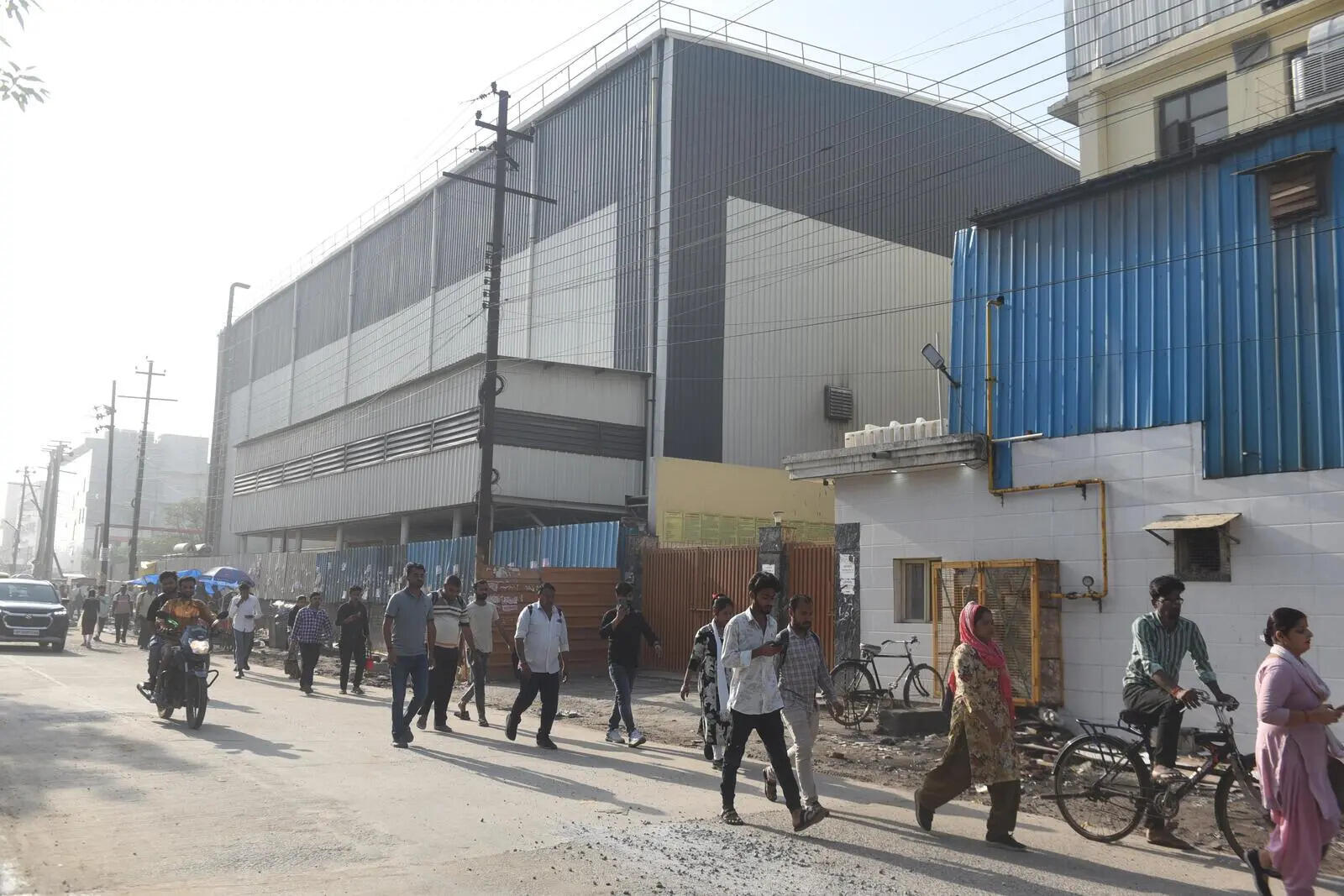
Noida is a large export hub, employing around 13 lakh people in its industrial units, according to industry estimates
Sahil Kumar, a skilled embroidery worker at a garment exporter, is trapped in a loan-repayment cycle because his family expenses are greater than his income. “I take a loan then repay people as soon as I get my salary. I’m so deep in debt that I have asked this eatery for a credit,” he says, talking to TOI while eating his lunch on Saturday afternoon. “It was anyway difficult to live with the limited money I got. The LPG price rise made things bad,” he adds, refusing to talk about the protests, not wanting to court any trouble, especially with cops deployed in large numbers at factory hubs like Phase 2.Others at the eatery shared the sentiment – that they simply had no means to cope with the LPG problem and hoped UP’s revised wages would bring some respite. “But even the revised wages won’t make much of a difference. How do you live for Rs 11,000 or Rs 14,000 in a place like Noida? Rents are going up every year because of the IT industry. Their employees can pay higher rents,” says a worker who refused to share his name.Shreya Ghosh, member of Sangrami Gharelu Kamgar Union, says the protest was more than a demand for an increase in wages. “What workers are fighting for is their right to live a decent, dignified life which is not possible in the wages that they have been receiving so far. Through the Noida workers’ protest, people have got to know that factory workers are working for wages as low as Rs11,000 a month. Given the inflation, they cannot survive in this, and as a result, they are compromising on dignified living,” says Ghosh, adding the compromise includes health and hygiene.(Names of some workers have been changed on request)