









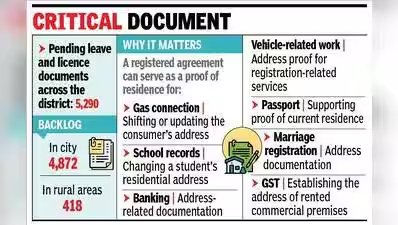
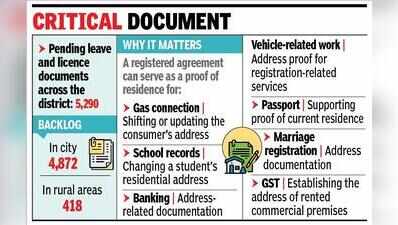
Pune: Delays in processing online rent agreements are causing severe inconvenience to many residents, leaving them unable to secure the vital proof of residence needed to shift gas connections or update their children’s school records.With over 5,000 agreements currently pending across Pune district, applicants are forced to make repeated follow-ups with registration offices, while landlords are caught between systemic delays and police mandates to furnish tenant details.Priya Chavan, an IT professional, has been waiting for her registered leave-and-licence agreement just to shift her gas connection after moving into a new house. “I applied online and I wonder why it is taking so long. I need to move my cylinder from my previous rental accommodation to the new one, and I also need to submit the document to the housing society. Furthermore, the registered document needs to be shared with the police department, which helps the owner too. The registration department should have made better arrangements,” she said.For homemaker Medha Kaushik, the document is urgently needed to update her son’s address in school records. “Since early this week, I have been waiting for the new registration to share with the school authorities. I have been continuously reaching out to the sub-registrar office,” she said.Working professional Aniruddh Gaddewar, who submitted his agreement online, also had to make repeated follow-ups before it was finally cleared on Wednesday. “This unnecessary delay should have been avoided, especially since it poses a risk for the owners,” he said. For residents, the delay is not merely an administrative inconvenience.A registered leave-and-licence document is a critical requirement for everyday transactions, including updating utility connections, school records, and bank accounts. The backlog has also sparked anxiety among landlords amid tightening police checks on tenant verification in Pune. Landlords are legally required to furnish tenant details promptly, and recent police action against property owners for non-compliance has significantly added to their urgency.A Kondhwa resident who was planning to lease out his flat said he was waiting for the system to streamline before proceeding with the agreement. “I was told by my agent about the pendency. I prefer to wait a bit and then go ahead rather than put myself in trouble,” he said.Real estate agents and registration service providers said the problem was particularly visible at high-volume urban registration offices. They attributed the backlog to a combination of a surge in online applications, technical glitches and staff shortages.The Association of Service Providers, in a representation submitted to Pune DIG of Registration on Wednesday, alleged that over 6000 online leave-and-licence agreements were pending for registration in Pune and Pimpri Chinchwad. The association said some documents had been awaiting clearance for 15 to 20 days.Association president Sachin Shinghavi alleged that applicants seeking faster processing were being asked for additional payments. They had previously said the association had previously raised the issue of technical glitches with the department. “We have now sought an independent inquiry into the pending documents, including scrutiny of token histories, dates and times of submission, processing records, the period for which documents remained pending, login details and digital logs. We have asked for a detailed inquiry into the issue,” Shinghavi said. The association has also sought scrutiny of complaints, messages, emails, screenshots and other records submitted by applicants and service providers. It has sought surprise inspections and action against anyone found responsible after an impartial inquiry.The Registration and Stamps Department has begun deploying staff from rural registration offices to assist high-volume urban offices and clear pending applications. DIG (IT) Abhay Mohite said the total pendency across Pune district stood at 5,290 late on Wednesday, including 4,912 in Pune city offices and 378 in other registration offices.“If the department needs more staff, it should engage more people to ensure there is no delay,” Shinghavi added.