








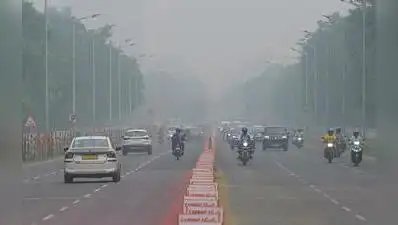
Kolkata: The onset of winter has begun to tighten its grip on Kolkata’s air, with falling temperatures, sluggish winds and unfavourable atmospheric conditions trapping pollutants closer to the ground. On Tuesday, four of the city’s seven continuous ambient air quality monitoring stations slipped into the ‘poor’ category by late afternoon, signalling a sharp deterioration as the seasonal temperature inversion began restricting the dispersal of pollutants.The Central Pollution Control Board’s AQI classification warns that prolonged exposure to ‘poor’ air quality, corresponding to readings between 201 and 300, can cause breathing discomfort to most people.South Kolkata bore the brunt of the pollution surge. Ballygunge, already in the ‘poor’ category with an AQI of 225 at 9 am, deteriorated further to 246 by 4 pm. Jadavpur, which began the day at 198, crossed the ‘poor’ threshold by early afternoon and climbed to 228.More worrying was the deterioration at two monitoring stations flanking the Maidan, often described as Kolkata’s green lung. Fort William’s AQI rose from 181 at 9 am to 206 at 4 pm, while Victoria Memorial recorded an identical rise from 175 to 206. Both stations crossed from ‘moderate’ into ‘poor’ air quality during the afternoon.Consequently, the number of stations recording ‘poor’ AQI doubled from two in the morning to four by late afternoon. Atmospheric conditions associated with the onset of winter appear to have aggravated the pollution build-up. As the ground cools, particularly during the night and early morning, a layer of warmer air can form above the colder air near the surface. This phenomenon, known as temperature inversion, acts like an atmospheric lid, preventing vehicle exhaust, construction dust and other pollutants from dispersing vertically.Weak winds further restrict horizontal dispersion, allowing pollution to accumulate over densely built-up neighbourhoods. Overcast conditions can also affect atmospheric heating and mixing, said a WBPCB scientist.“With the onset of winter, falling night-time temperatures cool the air close to the ground, while a relatively warmer layer above creates a temperature inversion. This acts like an atmospheric lid, suppressing vertical mixing and preventing pollutants from dispersing. The problem is compounded by weakening winds and a reduction in the atmospheric mixing height, allowing fine particulate matter, particularly PM2.5, to accumulate near the surface,” said Abhijit Chatterjee, atmospheric scientist at Bose Institute.Vehicular emissions, along with dust from construction and roads, are major local contributors to Kolkata’s particulate pollution. The deterioration around busy traffic corridors in south Kolkata has raised concerns about pollution exposure as the city enters the winter season.Particularly worrying is the dominance of PM2.5 — fine particulate matter measuring 2.5 micrometres or less in diameter — which can penetrate deep into the lungs, with some particles and their constituents potentially entering the bloodstream.The consequences are already being felt in hospitals. “Already there is a sudden spurt in respiratory diseases in our hospital,” said Dr Arup Halder, pulmonologist at CMRI Hospital.The impact extends beyond respiratory health to livelihoods, particularly among people who spend long hours outdoors. Shikha Srivastava, head of urban poverty alleviation at Tata Trusts, said, “Pollution affects the health, livelihoods and incomes of construction workers, street vendors and sanitation workers, who often have little choice but to work in hazardous conditions.” She emphasised the need for clean-air policies that protect vulnerable workers without jeopardising their livelihoods.