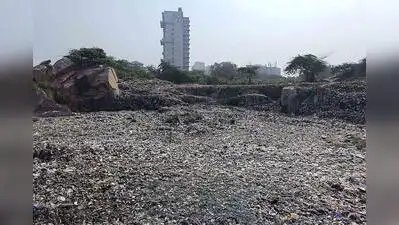









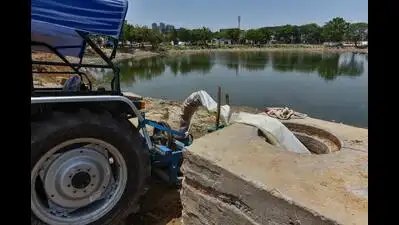
Gurgaon: Basai pond, which supports rich biodiversity despite growing environmental pressure, is plagued with several crises.A seven-day independent study, conducted between May 16 and 22, identified multiple ecological stressors at Basai pond: fish deaths, sewage inflows concern, ritual food offerings, livestock pressure, invasive vegetation and mounting solid waste. The assessment recorded six fish mortality incidents over five days, including deaths of mangur and rohu fish across different parts of Basai pond (or johad — a small water body, which is also used for religious practices).The study attributes the ecological stress to a combination of factors. Environmental researcher Gaurav Kumar told TOI, “Daily disposal of atta balls and puffed rice into the pond as part of religious practices was identified as a major source of nutrient loading. Also, the pond faces sewage overflow that local residents said discharges wastewater into the johad during periods of heavy rainfall.”The concerns have now reached multiple govt agencies after the assessment of the johad was submitted to Haryana State Pollution Control Board (HSPCB), MCG and the deputy commissioner. Complaints have also been filed with Haryana State Wetland Authority and Haryana Pond Authority, seeking intervention to protect and restore the waterbody.The report recommends immediate action to investigate and stop sewage inflows, improve scientific monitoring of water quality, remove accumulated waste, clear invasive vegetation, regulate livestock access and create awareness about the ecological impacts of direct food offerings into the pond. TOI found that the pond is currently being de-watered for the upcoming monsoon.The researcher said the objective of the study was not only to document environmental decline but also to establish a scientific baseline for future conservation efforts. Kumar conducted the research involving twice-daily monitoring across three GPS-mapped zones of the johad — an open-water zone, a livestock interaction zone and a cultural offering zone. The researcher measured water temperature, pH and total dissolved solids while documenting biodiversity, human activity and environmental conditions around the pond.The first fish mortality was documented on May 18, when a 2-2.5-foot mangur and a rohu were found dead near the shoreline. Additional fish deaths were subsequently recorded across all three study zones, leading the report to conclude that the problem was not localised to a single section of the pond.Water temperatures reached 32.5 degrees Celsius during the study period, while pH levels peaked at 9.3. The report says such conditions can place significant stress on aquatic life, particularly during summer months.The eastern shoreline, identified as the most degraded section of the pond, was found littered with plastic waste, thermocol, glass bottles, flowers, polythene, ash, wooden structures and other debris. The study also estimated that 40-50 buffaloes and cattle enter the pond daily for bathing and cooling, disturbing sediments and adding organic waste to the waterbody.He noted that invasive congress grass (Parthenium hysterophorus) now occupies an estimated 70-80% of the pond’s perimeter, suppressing native vegetation and contributing to shoreline degradation. Yet, despite these pressures, Basai Johad continues to function as an important urban biodiversity refuge in a rapidly urbanising landscape.An HSPCB official told TOI, “The matter will be examined and a field inspection will be conducted. If any sewage discharge, pollution violation or environmental concern is found during the investigation, appropriate action will be taken as per the provisions of the Water Act and other applicable regulations.”Environment activist Vaishali Rana told TOI, “After the loss of much of the Basai wetland ecosystem, the village johad has become one of the last remaining open-water habitats in the area. That makes every ecological stressor, whether sewage inflow, pollution, invasive species or habitat disturbance, far more significant. What may appear to be a small community pond today is actually supporting biodiversity that has already lost most of its historical habitat. The findings deserve serious attention from both conservation and regulatory agencies.”The week-long survey documented 20 bird species, including great cormorants, Indian spot-billed ducks, white-throated kingfishers, greater egrets, pond herons, wire-tailed swallows, green bee-eaters, Asian koels, rose-ringed parakeets and red-wattled lapwings. White-browed wagtail, black kite and rufous treepie were among the species recorded during the assessment.Large flocks of great cormorants, with counts reaching up to 35-40 birds, were observed using the pond for feeding. The study also documented native tree species including peepal, banyan, neem, sheesham, karanj, pilkhan, gular and ber, highlighting the johad’s ecological significance.