







NEW DELHI: Every evening, Delhi loves to “car-o-bar”, turning private vehicles into mobile taverns. The practice is prevalent not just in the vicinity of residential colonies, but also in lanes housing offices of govt and private companies. As the sun sets, rows of cars can be seen parked in the shadows of dimly-lit service lanes or bustling market peripheries, their cabins hazy with smoke and the clinking of glass.An entire ecosystem has come up around the “car-o-bar” culture. Small, enterprising eateries have pivoted their entire business models to cater to this clientele, dispatching servers to car windows with menus of chakhna and heavy snacks. They even bring ice, disposable cups and cigarettes.To facilitate a more comfortable experience, many vendors provide custom-made wooden or plastic platforms. These ingenious makeshift tables are designed to wedge perfectly between seats or rest atop the steering wheel, providing a stable surface for whiskey bottles and plates of kebabs, effectively neutralising the ergonomic challenges of drinking in a cramped space.Instagram is flooded with reels advertising places that “allow” such practices. “Why enjoy with your hands occupied, we even provide trays to keep them free. For Rs 499, you get a 20-piece snacks platter,” reads a post by an eatery in west Delhi.
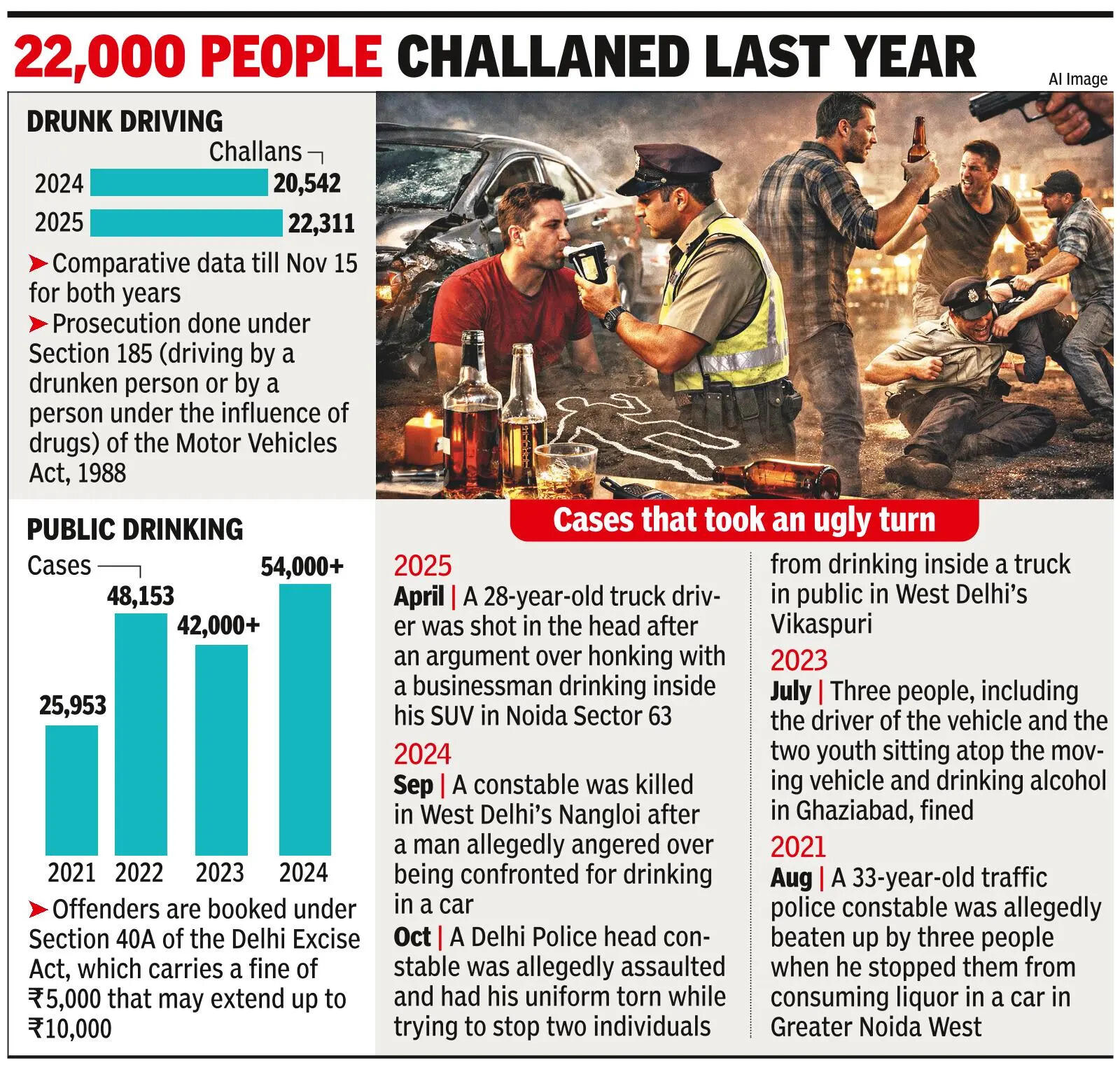
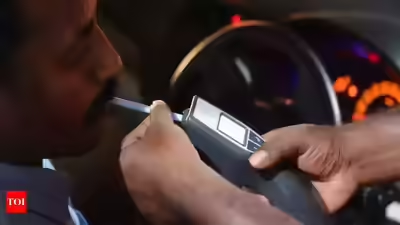
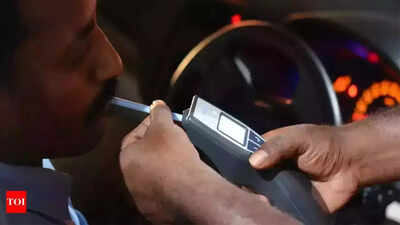
From time to time, Delhi Police and district administrations launch drives against public drinking, deploying breathalysers and heavy fines to deter motorists.“Between 2021 and 2024, we prosecuted over 1.7 lakh people found drinking in or around their cars. Last year, about 50,000 people were found drinking in their cars and fined. We take swift action after receiving a PCR call on 112,” a senior cop said, adding they will restart the drive in the coming days.The officer said people often claim that they could not drink at home due to family restrictions, and so they chose to drink in the car instead. Some say they were running low on money and could not afford spending at a restaurant. “Many say they had to attend a party, so they were just ‘pre-boozing’,” the officer added.Boots on the ground said they often face resistance from violators, who accuse them of harassing them for bribes. “Once a man threw a Rs 500 note at me when I asked him and his friends to come to the police station as they continued to drink in their sedan despite being asked not to,” said an ASI posted in central Delhi.Several years ago, cops had launched a helpline where citizens were encouraged to photograph “car-o-bar” sessions and report them in real-time. However, the initiative was eventually shelved as it became a frequent trigger for brawls, with drinkers confronting those they suspected of filming them, leading to more chaos than police could manage.Over time, intensive crackdowns by police inevitably lose momentum. What begins as a mission to reclaim public spaces often fizzles out into a routine exercise, which many locals cynically view as a revenue-generating tool rather than a genuine safety measure.