









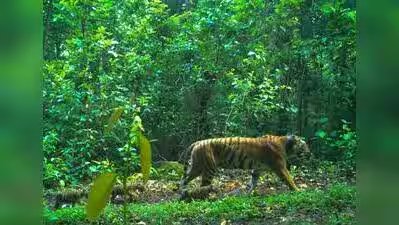
Hyderabad: The National Tiger Conservation Authority (NTCA) has identified Kawal Tiger Reserve in Telangana as a ‘priority recipient site’ for tiger recovery, placing it among the reserves to be considered for tiger reintroduction or population augmentation following scientific assessment and planning.The recommendation is part of the ‘Roadmap for Active Management of Tigers in India’, released jointly by the NTCA and the Wildlife Institute of India (WII) in June 2026.Kawal, which recorded no resident tiger in the All India Tiger Estimation (AITE), has been placed in Stage 1 – Habitat and Prey Recovery – of the ecological recovery continuum. The report states that the reserve historically supported tigers and continues to receive dispersing individuals from neighbouring source populations, but does not have a resident population.‘Low prey base, fragmented corridors’The report categorises Kawal’s tiger population as absent, while describing both its prey base and habitat quality as depressed. Low prey abundance and fragmented connectivity have been identified as the principal constraints to the recovery of a viable tiger population.Kawal comprises tropical dry deciduous forests, teak-dominated woodlands, bamboo patches and riverine habitats. It occupies a strategic location between tiger populations in Central India and the Eastern Ghats. It is also linked to the Tadoba–Andhari landscape through fragmented forest corridors across Maharashtra and Telangana.As the Kawal reserve has no resident tigers, it has been prioritised for tiger reintroduction or population augmentation programmes. However, any such intervention would follow a comprehensive assessment of habitat quality, prey availability, protection measures and landscape connectivity.The roadmap identifies Kawal as an opportunity under India’s Vision 2047 to establish a self-sustaining tiger population. Its recovery strategy would initially require improvements in prey populations and habitat quality, as well as the restoration and protection of corridors that enable dispersing tigers to reach the reserve.The 2022 assessment estimated prey densities in Kawal at 3.9 chital per sq km, 4.17 nilgai per sq km and 3.5 wild pigs per sq km. Sambar, chousingha and gaur were also recorded in the reserve.Amrabad placed on natural recovery pathThe Amrabad Tiger Reserve, Telangana’s other tiger reserve, has been placed in Stage 3 – Tiger and Prey Recovery. The assessment described Amrabad’s tiger population, prey base and habitat quality as depressed, indicating that all three remain below their ecological potential or are under stress. However, the reserve is considered capable of supporting a breeding tiger population.The report states that its tiger population could recover through continued protection and natural dispersal from adjoining source areas. The roadmap recommends enhancing Amrabad’s prey base through targeted interventions, strengthening protection to reduce anthropogenic pressures and improving connectivity with source populations to facilitate the natural movement of tigers.The report places both reserves within the Central India and Eastern Ghats landscape, described as the world’s largest tiger conservation region. It also notes that Indravati Tiger Reserve in Chhattisgarh is connected to forested landscapes in Telangana through the Dandakaranya region, providing scope for wildlife movement. The AITE 2026 exercise, conducted over eight months from Nov 2025 to June 2026, has preliminarily identified 42 individual tigers, including breeding females, males, sub-adults and cubs.