









Kasganj could easily have been regarded as one of the jewels of Western Uttar Pradesh. Located in a region with strong agricultural potential, a rich cultural and religious heritage, skilled artisans and proximity to important markets, the district possessed many of the ingredients necessary for growth. Yet, for years after its creation in 2008, Kasganj appeared to lag behind on several important development parameters. Basic infrastructure remained inadequate, administrative facilities were incomplete, connectivity required significant improvement and the district struggled to realise its economic and cultural potential.Before 2017, Kasganj presented the picture of a district whose potential had not been fully translated into development. Political and administrative neglect had left visible gaps in infrastructure and public facilities. The transformation witnessed during the last nine years, however, has sought to change this situation. Under the leadership of Chief Minister Yogi Adityanath, development in Kasganj has increasingly focused on law and order, infrastructure, drinking water, rural connectivity, tourism, education, digital governance and local enterprise.The emerging story of Kasganj is therefore one of a district attempting to move from the margins of development towards a stronger and more distinct identity.
Law and order: Building institutions for a new district
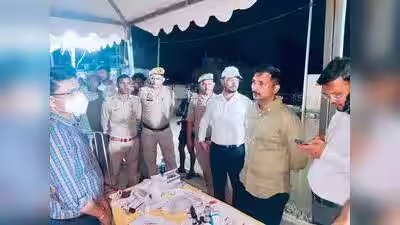
One of the most striking symbols of Kasganj’s transformation has been the strengthening of its policing infrastructure. Despite being created as a separate district in 2008, Kasganj had long lacked a proper police line. For years, land and financial resources for such an important institutional facility remained unavailable.This gap was addressed with the construction of a modern police lines complex. In 2025, the Yogi government inaugurated a state-of-the-art police lines spread over approximately 25.63 hectares and developed at a cost of around Rs 191 crore. The facility includes barracks capable of accommodating around 1,000 personnel, residential quarters and other modern infrastructure, including an auditorium. The project is important not merely as a construction achievement but as a symbol of institutional strengthening.The broader emphasis on law and order across Uttar Pradesh has also contributed to creating a more stable environment for citizens, traders and investors of Kasganj as well.
Rs 724 crore development push: Infrastructure takes centre stage
Infrastructure has emerged as another major pillar of Kasganj’s transformation. In May 2025, Chief Minister Yogi Adityanath inaugurated and laid the foundation stone for around 60 development projects worth approximately Rs 724 crore. These projects covered a broad range of sectors, including roads, bridges, drinking water, irrigation, urban development and rural infrastructure. The scale and diversity of these projects reflect an effort to address multiple development gaps simultaneously.Road widening and strengthening works have been particularly important. Improved connectivity between Kasganj and surrounding towns can directly benefit agriculture, trade, education and employment. Projects involving the Kasganj-Gangiri-Atrauli corridor and other local roads have aimed to improve traffic movement and reduce travel difficulties.For farmers and small entrepreneurs, improved roads mean faster access to markets. For students and workers, they mean easier commuting. For businesses, better connectivity reduces transport time and logistical costs. Infrastructure, therefore, becomes an important multiplier for the district’s economy.
Jal jeevan mission and better rural living
Access to safe drinking water is another important indicator of development. Under the Jal Jeevan Mission, Kasganj has made substantial progress towards providing functional household tap connections in rural areas, with connections reaching nearly 98 per cent of the targeted rural households.For villages where women and families traditionally depended on hand pumps or distant water sources, household tap connections can significantly improve quality of life. The programme also represents a broader shift in development priorities—from merely constructing physical infrastructure to improving essential services within households.The impact is especially significant for women, who have historically borne much of the responsibility for collecting water. Reliable household water supply can save time and reduce hardship, while also contributing to better hygiene and sanitation.
Better connectivity and new development possibilities
Kasganj is also expected to benefit from broader efforts to improve regional connectivity. Plans relating to new helipad infrastructure in the Aligarh division point towards an expanding transport vision that seeks to improve access between important administrative and economic centres.While road and rail networks will remain the backbone of the district’s transport system, such infrastructure initiatives indicate the growing importance of regional connectivity in Uttar Pradesh’s development strategy. kasganj’s location in Western Uttar Pradesh gives it the potential to connect more effectively with larger markets. Better infrastructure can help transform this geographical advantage into economic opportunity.
Soron: Transforming religious heritage into economic opportunity
Perhaps one of the most promising aspects of Kasganj’s future development is the effort to promote religious and cultural tourism. Soron, also known as Sukarkshetra, holds immense religious significance. Situated on the banks of the Ganga, the town is associated with ancient traditions and is an important centre of pilgrimage. For decades, however, its tourism potential remained far below what its religious importance could justify.The state government is now focusing on developing Soron and strengthening its tourism infrastructure. The broader objective is to bring greater visibility to the town and develop it as an important religious destination, drawing lessons from the transformation of pilgrimage centres such as Ayodhya, Mathura and Vrindavan.Tourism can create an economic ecosystem extending far beyond temples and monuments. Hotels, guest houses, restaurants, transport services, local handicrafts, guides and small shops all benefit when visitor numbers increase. Complementary initiatives, including the beautification of Nadrai bridge, development of Dariyavganj lake and proposals for preserving and showcasing the district’s mythological heritage, can further strengthen Kasganj’s tourism identity.The proposed development of cultural and heritage facilities, including a museum, is particularly important because it can help preserve the district’s historical memory while creating attractions for visitors and younger generations.
Education and human development
Infrastructure development alone cannot define transformation. The long-term progress of a district depends equally on the quality of its human capital. The foundation stone for a Chief Minister Composite School, offering education from the pre-primary level to Class 12, represents an important step in this direction. The objective is to provide modern and integrated educational facilities to children from different social and economic backgrounds.Such institutions can reduce the divide between rural and urban educational opportunities and provide students with better access to technology, laboratories, sports and modern learning systems. Healthcare services and welfare delivery have also continued to expand. Improved ambulance services, maternal health programmes and financial assistance under schemes such as the Janani Suraksha Yojana have strengthened access to public healthcare and social protection.
Digital Governance: Bringing government closer to citizens
Kasganj has also demonstrated how administrative efficiency can become an important dimension of district transformation. The district achieved the top position in Uttar Pradesh in one recent assessment for timely disposal of applications through the e-District portal, recording a success rate of around 98.55 per cent. This reflects the growing importance of digital governance in simplifying access to government services.Certificates relating to income, caste, residence and birth are essential documents for citizens seeking education, employment, welfare benefits and other services. Faster online processing reduces the need for repeated visits to government offices and helps limit delays.Digital governance is particularly important for ordinary citizens because it changes their direct interaction with the administration. When government services become faster, more transparent and accessible, the benefits of governance become visible in everyday life.
Zari-Zardozi: Kasganj’s economic and cultural signature
Kasganj’s transformation is not confined to roads and government buildings. One of its greatest strengths lies in its traditional craftsmanship. The district’s One District One Product is Zari-Zardozi, an intricate embroidery tradition involving metallic threads, sequins, beads, pearls and other decorative embellishments. The craft represents a combination of artistic heritage and economic activity.Around 65,000 artisans are associated with the broader Zari-Zardozi ecosystem in the district, making it an important source of livelihood and self-employment. The sector supports household-based production and provides opportunities for skilled workers, including significant participation by women.Under the One District One Product programme, launched in 2018, efforts have been made to provide skill development, improved tools and equipment, financial support, margin-money assistance and better market access. The focus has also expanded towards branding, packaging, e-commerce and participation in trade fairs. These interventions are important because traditional artisans often possess exceptional skills but lack access to organised markets and modern business networks.By connecting traditional craftsmanship with digital commerce and wider domestic and international markets, Kasganj’s artisans can potentially move from fragmented household production towards more organised and commercially sustainable enterprises. Zari-Zardozi also demonstrates how cultural heritage can become an instrument of modern economic development. Instead of allowing traditional skills to decline, policy support can transform them into sources of employment, entrepreneurship and exports.
A new identity for Kasganj
The broader success of Kasganj will ultimately depend on sustained implementation and the ability to connect infrastructure development with employment generation. The district now has an opportunity to build a development model around its three major strengths: connectivity, heritage and craftsmanship.Better roads and public infrastructure can support trade and investment. Soron can emerge as a stronger religious and cultural tourism destination. Zari-Zardozi can provide a foundation for artisan-led MSME growth and employment.The last nine years have established a foundation for this transition. From a district that once struggled with incomplete administrative infrastructure and visible development gaps, Kasganj is increasingly witnessing a more focused approach to governance.The Rs 191 crore modern police lines, the Rs 724 crore package of development projects, near-universal household tap-water coverage among targeted rural homes, new educational infrastructure, tourism development and improved digital service delivery together represent a wider change in priorities.Kasganj’s progress is an example of how focused leadership, institutional development and sustained public investment can expand the horizons of a district. The transformation is still a work in progress, but the foundation laid during the last nine years has the potential to give Kasganj a distinctly new identity. With continued investment in infrastructure, tourism, artisans, education and employment, Kasganj can increasingly emerge as a significant centre of cultural, economic and social development in Western Uttar Pradesh.