








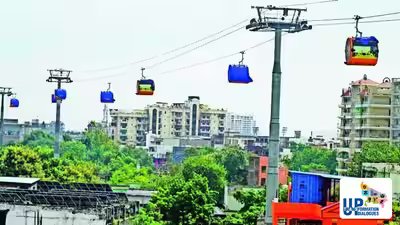
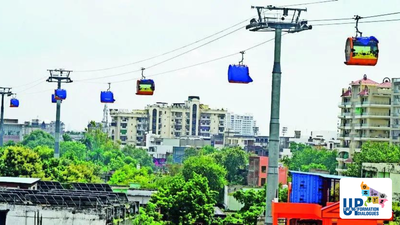
Varanasi, one of the world’s oldest continuously inhabited cities and the spiritual capital of India, is entering a new era of urban mobility. While the city has witnessed unprecedented infrastructure development over the past several years through new roads, highways, airport expansion, railway modernization, and river transport, one of its most ambitious projects is now nearing completion—the Urban Public Transport Ropeway. Developed under the guidance of the Government of Uttar Pradesh and the Government of India, this project is poised to become India’s first urban public transport ropeway and only the third such system in the world, placing Varanasi alongside a select group of global cities that use aerial ropeways as an integral part of urban mass transit.The project reflects the Yogi Adityanath government’s focus on introducing innovative transport solutions to tackle congestion while preserving the heritage character of ancient cities.A new chapter in urban transportationVaranasi has experienced an unprecedented increase in tourist arrivals over the past decade. Better air connectivity through Lal Bahadur Shastri International Airport, improved railway infrastructure, expansion of national highways, completion of ring roads, and the development of the Kashi Vishwanath Dham Corridor have significantly boosted visitor numbers.However, the city’s centuries-old narrow roads have struggled to accommodate the growing movement of residents, pilgrims, and tourists. Traffic congestion, especially on the Cantt–Godowlia corridor leading to the Kashi Vishwanath Temple, has become one of the biggest urban mobility challenges.Instead of widening roads—which would require large-scale demolition in the heritage zone—the government opted for a futuristic solution: an urban ropeway system that carries passengers above the city’s congested streets.
India’s first urban public transport ropeway
The Varanasi Ropeway is the first urban public transport ropeway project in India designed as a part of the city’s public transport network rather than merely a tourist attraction.Globally, only a handful of cities have successfully integrated ropeways into their urban transport systems. Varanasi is poised to beome the third city in the world to possess this kind of advanced urban ropeway transit system after Bolivia and a location in Mexico to have urban transport ropeway system.The project is being implemented by National Highway Logistics Management Limited (NHLML), a wholly owned company of the National Highways Authority of India (NHAI), while the ropeway technology is being provided by the renowned Swiss company Bartholet Maschinenbau AG, known for its expertise in cable transport systems across the world.
Route and stations
The ropeway has been strategically designed to connect Varanasi Cantonment Railway Station with Godowlia, one of the busiest intersections in the city and the main gateway to the Kashi Vishwanath Temple.The total length of the ropeway is approximately 3.85 kilometres, with four modern stations:·Cantt Railway Station·Vidyapeeth·Rath Yatra·GodowliaThese stations will integrate seamlessly with other modes of transport, allowing passengers to shift conveniently between trains, buses, auto-rickshaws, and pedestrian routes.
Faster than road transport
One of the biggest advantages of the ropeway will be the dramatic reduction in travel time.Currently, traveling from Cantt Railway Station to Godowlia often takes 40 to 45 minutes, depending on traffic conditions. During festivals and peak tourist seasons, the journey can become even longer.With the ropeway in operation, passengers will complete the same journey in approximately 15 minutes, reducing travel time by nearly 65 percent.The Cantt to Rath Yatra stretch, covering around 2.4 kilometres, will take only 6.5 minutes, providing commuters with a predictable and congestion-free journey irrespective of road traffic.
Advanced technology
The ropeway has been designed using world-class Swiss engineering standards.Some of its major technical features include:·148 modern gondolas·29 supporting towers·Operating height of approximately 45–50 metres above ground·Capacity of 10 passengers per gondola·Gondolas arriving every 1.5–2 minutes·Passenger capacity of 3,000 people per hour in one direction·Total carrying capacity of nearly 6,000 passengers per hour in both directions·Daily operational schedule of approximately 16 hoursThe continuous movement of gondolas ensures minimal waiting time for passengers while maintaining smooth and uninterrupted service.
A solution to traffic congestion
Traffic congestion has long been one of Varanasi’s biggest urban challenges. Every day, thousands of pilgrims, tourists, students, office-goers, and local residents use the Cantt–Godowlia route. Since the ropeway operates above existing roads, it completely bypasses traffic bottlenecks. This will significantly reduce the number of vehicles entering the city’s congested core while offering a faster and more comfortable travel option. The project is expected to ease pressure on roads, improve traffic flow, reduce fuel consumption, and lower vehicle emissions.
Boost to tourism
Tourism forms the backbone of Varanasi’s economy. Millions of pilgrims visit Kashi every year to seek blessings at the Kashi Vishwanath Temple, attend the Ganga Aarti at Dashashwamedh Ghat, and explore the city’s rich spiritual and cultural heritage.For many visitors arriving by train, reaching the temple area from Cantt Railway Station can be both time-consuming and stressful due to congestion. The ropeway will offer a quick, scenic, and hassle-free journey, making the overall travel experience far more convenient. Tourists will be able to reach the vicinity of the Kashi Vishwanath Temple within minutes after arriving in the city. This improved accessibility is expected to further strengthen Varanasi’s position as one of India’s leading religious and cultural tourism destinations.
Environment-friendly urban mobility
Apart from reducing congestion, the ropeway also contributes to sustainable urban transport. Electric-powered ropeways generate significantly lower emissions than conventional road transport. Its compact footprint also minimizes land acquisition and protects the heritage fabric of old Varanasi.
Symbol of new India
The Varanasi Urban Ropeway represents more than just a transport project. It symbolizes the government’s commitment to combining modern technology with heritage conservation. Rather than altering the ancient character of Kashi through large-scale road widening, the project introduces a globally proven mobility solution suited to densely populated historic cities. Together with the Kashi Vishwanath Dham Corridor, ring roads, smart city initiatives, improved railway stations, airport expansion, inland waterways, and other infrastructure projects, the ropeway reflects the broader transformation underway in Varanasi.The Urban Public Transport Ropeway in Varanasi marks a historic milestone in India’s urban transport journey. As the country’s first urban public transport ropeway and the third such system in the world, it showcases how innovative infrastructure can solve mobility challenges in heritage cities without compromising their cultural identity.By cutting travel time by nearly 65 percent, easing congestion, supporting sustainable transport, and improving access to one of India’s holiest destinations, the ropeway is set to redefine urban commuting in Varanasi. Once operational, it will not only enhance the daily lives of residents but also provide millions of pilgrims and tourists with a faster, safer, and more memorable gateway to the timeless city of Kashi.