









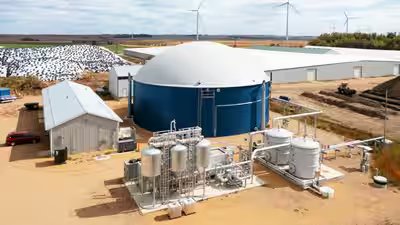
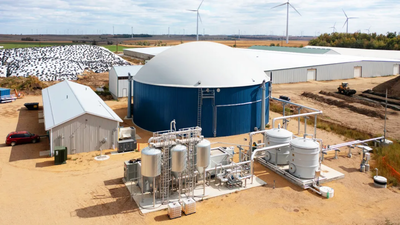
On a 55-acre dairy farm in rural Minnesota, manure from more than 2,000 milking cows is being turned into ultra-low-carbon vehicle fuel that is sent directly into interstate natural gas pipelines. The renewable natural gas (RNG) facility at Ash Grove Dairy near Lake Benton processes up to 60,000 gallons of cow manure every day. Built by Dynamic Renewables and funded through a $22 million joint venture led by Clean Energy Fuels Corp, the plant converts farm waste into clean biomethane for commercial transportation fleets across North America. At full capacity, the Minnesota facility is expected to produce around 480,000 gasoline-gallon equivalents of negative carbon-intensity fuel every year. The project was showed in industry reports by Biofuels Digest and Farm Progress after Clean Energy Fuels announced that the facility had officially connected to the national pipeline network.
Turning cow manure into pipeline fuel
Large dairy farms produce huge amounts of organic waste, which naturally releases methane as it breaks down in manure storage ponds. Methane is a powerful greenhouse gas that has a much stronger warming effect than carbon dioxide over shorter periods. At Ash Grove Dairy, manure is collected throughout the day and pumped into large sealed anaerobic digesters. Inside these oxygen-free tanks, microorganisms break down the organic material while capturing methane gas before it escapes into the atmosphere. The captured biogas is then sent through cleaning and upgrading equipment at the site. The system removes water, hydrogen sulphide, carbon dioxide and other impurities, producing biomethane that has the same chemical properties as conventional natural gas. The cleaned gas is pressurised and injected into the commercial pipeline system. From there, Clean Energy Fuels delivers it through its nationwide network of refuelling stations used by transit buses, municipal garbage trucks and long-haul freight vehicles.
Expanding cleaner fuel for transport
The Ash Grove project is the fifth renewable natural gas facility opened by Clean Energy Fuels within nine months, showing the growing demand for lower-emission fuel across agriculture and commercial transportation. Heavy-duty vehicles produce a significant share of transport-related emissions. As federal and state climate rules become stricter, many fleet operators are moving away from traditional diesel engines and adopting compressed natural gas and biomethane-powered vehicles. “Ash Grove is our fifth renewable natural gas facility to come online in the last nine months,” Clay Corbus, senior vice president at Clean Energy Fuels, said in the company’s official announcement. “With the growing demand for RNG, and interest really starting to take off as fleets realize how effective and immediate they can fuel cleanly, the RNG produced at Ash Grove will directly help with reducing carbon emissions across the country.” Because anaerobic digesters stop methane from dairy manure from being released directly into the atmosphere, fuel produced from cow waste receives a negative carbon intensity score under lifecycle environmental standards, including California’s Low Carbon Fuel Standard.
Benefits for dairy farmers and the environment
For dairy farms such as Ash Grove, anaerobic digestion provides benefits beyond reducing greenhouse gas emissions. After the manure completes the digestion process, the remaining material, called digestate, is separated into solid and liquid portions. The solid material can be reused as nutrient-rich animal bedding or processed into a soil conditioner, while the liquid portion is applied to farm fields as a more stable, lower-odour fertiliser. Farm Progress reports that turning manure into a renewable energy product gives family-owned dairy farms another source of income while also improving how nutrients are managed on agricultural land. Agriculture produces about 10 per cent of all greenhouse gas emissions in the United States, with livestock manure management contributing a noticeable share of that total. By capturing methane directly from farm waste, dairy producers and energy companies can transform an environmental challenge into a valuable source of cleaner transportation fuel.