







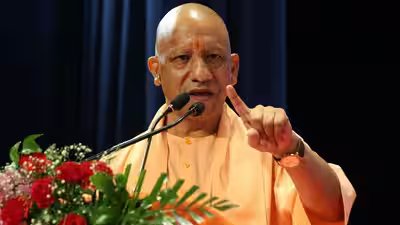
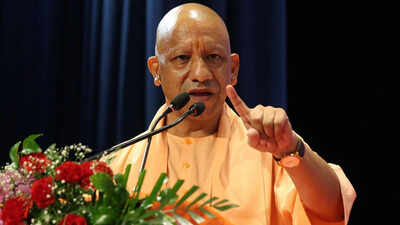
Over the past nine years, the Yogi Adityanath-led Uttar Pradesh government has demonstrated an unwavering resolve to transform animal husbandry from a traditional welfare obligation into a dynamic engine for rural economic growth. Since 2017, the administration has successfully integrated livestock management with women’s empowerment, sustainable agriculture, and rural entrepreneurship, turning state-wide cattle protection into a comprehensive economic revolution.At the core of this transformation is the state’s pioneering destitute cattle protection policy. Expanding from merely 100 cow shelters before 2017 to over 7,700 today, the government now protects over 1.25 million cattle. To ensure grassroots participation, the Mukhyamantri Sahbhagita Yojana provides a daily stipend of Rs 50 per animal to farmers willing to care for destitute cows. However, the administration’s vision extends far beyond sheltering. Under the modern ‘One District, One Innovation’ model, gaushalas are being converted into self-sustaining economic hubs that process massive amounts of cow dung and urine into bio-fertilizers, biogas, and natural products, thereby reducing agricultural reliance on chemical inputs and generating new income streams.Furthermore, the dairy and animal healthcare sectors have witnessed unprecedented advancements. Initiatives like the Nandini Krishak Samriddhi Yojana provide 50 percent subsidies for rearing high-yield indigenous cattle breeds, heavily boosting the state’s milk production and empowering rural women through self-help groups. Simultaneously, veterinary care has been decentralized through 520 Mobile Veterinary Units and the toll-free helpline. With record-breaking vaccination drives resulting in the lowest cattle mortality rate in the country, the Yogi government’s nine-year tenure serves as a robust national model—proving that compassionate animal welfare can actively drive systemic rural prosperity.From protecting destitute cattle and conserving indigenous breeds to promoting modern goat farming and creating new opportunities for rural entrepreneurs, the Yogi Adityanath government has increasingly placed animal husbandry at the centre of Uttar Pradesh’s rural economy.The approach goes beyond cattle protection. It combines animal welfare with breeding, veterinary care, fodder security, dairy development, modern livestock management, financial assistance and entrepreneurship. The objective is clear: protect animals, strengthen livestock keepers and turn animal husbandry into a sustainable source of income.
From cattle protection to economic empowerment
One of the most visible components of the state’s strategy has been the development of infrastructure for destitute cattle. The government has supported shelters where abandoned and vulnerable cattle can receive food, healthcare and protection. But the larger vision is to make livestock protection economically sustainable. Cow dung and urine can be used for organic manure, compost and biogas, while healthy and productive cattle can contribute to milk production and agricultural activities. This creates a circular rural economy in which animal welfare and farmer livelihoods reinforce each other.The Nand Baba Milk Mission represents an important step in this direction. With an allocation of Rs 1,000 crore, the mission seeks to strengthen milk production, dairy cooperatives and remunerative markets for milk producers. Its various interventions also focus on improving indigenous cattle breeds and increasing the productivity of dairy animals.
Conserving indigenous cattle breeds
The Mukhyamantri Swadeshi Gau-Samvardhan Yojana encourages farmers to rear improved indigenous breeds. Under the scheme, assistance of up to 40 per cent, capped at Rs 80,000 on an eligible project cost of Rs 2 lakh, is available for bringing two improved indigenous-breed cows. The initiative is significant because indigenous cattle conservation is being linked directly with farmer income. Breeds such as Sahiwal, Gir, Tharparkar and Gangatiri represent valuable genetic resources, and their promotion can simultaneously support dairy production and biodiversity.The Nandini Krishak Samriddhi Yojana and Mini Nandini Krishak Samriddhi Yojana further seek to encourage farmers to establish larger, professionally managed dairy units. Such initiatives are helping shift livestock rearing from a traditional household activity towards an organised rural enterprise.
Better breeding, healthcare and fodder
Animal protection cannot be separated from animal health. The state has therefore focused on veterinary services, artificial insemination, breed improvement, vaccination, disease control and better access to animal healthcare. Fodder security is equally important. Better nutrition improves both the health and productivity of livestock while helping farmers control feeding costs.Livestock insurance and other risk-management measures can further protect farmers from financial shocks caused by the loss of valuable animals. Together, these interventions seek to create a complete livestock ecosystem—from breeding and feeding to healthcare, production and marketing.
Goat farming: a new avenue for rural entrepreneurship
The government’s livestock-development approach extends beyond cattle. Goat farming has emerged as an important avenue for small farmers, women entrepreneurs and educated rural youth.Breeds such as Barbari, which are traditionally found across parts of Uttar Pradesh and neighbouring regions, are valued for their meat and milk potential. Goat farming can require comparatively modest land and resources, making it particularly attractive for households seeking to diversify their income.Through the National Livestock Mission (NLM), financial assistance, infrastructure development, training and technical support can help entrepreneurs move from traditional goat keeping towards modern commercial goat farming.Two inspiring success stories from Uttar Pradesh demonstrate how such support can translate into real economic empowerment.In Deoria district, Smt. Sangeeta Kushwaha has demonstrated how determination, hard work and institutional support can transform a woman’s economic life. Her life is a journey from struggle to self-reliance.Facing the challenges that often accompany rural entrepreneurship, she chose livestock farming as a path towards self-employment. With support from the Animal Husbandry Department, Uttar Pradesh, and a grant of Rs 28.50 lakh under the National Livestock Mission, she established a modern goat-farming enterprise.The project was supported by infrastructure such as a dedicated shed, along with technical assistance and continuous departmental guidance. Instead of treating goat rearing merely as a traditional activity, she adopted a more organised and modern approach to livestock management.Her journey is significant for another reason. It challenges traditional perceptions about women’s economic roles in rural society. By building her own enterprise and becoming financially self-reliant, Sangeeta Kushwaha has demonstrated that women can successfully enter capital-intensive and technically demanding livestock businesses. Her story carries a powerful message: when courage and hard work are combined with access to finance, infrastructure and technical knowledge, livestock can become a vehicle for women’s empowerment.For other rural women, her success offers a practical example of how animal husbandry can evolve from a supplementary household activity into an independent livelihood.Another inspiring example comes from Prayagraj district. Shri Narendra Pratap Singh, an engineer from Kohdar village in Meja, chose to pursue a different path. Instead of restricting his professional future to conventional engineering opportunities, he recognised the commercial potential of modern livestock farming.Under the National Livestock Mission, he received a Rs 50 lakh subsidy, along with financial assistance and continuous technical guidance from the Animal Husbandry Department, Uttar Pradesh. With this support, he established a modern goat-farming project equipped with advanced facilities.His story illustrates the changing profile of India’s livestock entrepreneur. Animal husbandry is no longer necessarily confined to farmers with generations of traditional experience. Educated professionals and young entrepreneurs can also bring technical knowledge, management practices and modern business thinking into the sector.Narendra Pratap Singh’s transition from engineering to commercial goat farming demonstrates that modern animal husbandry can attract educated youth when it is supported by technology, finance and professional guidance. His achievement also highlights the importance of government-industry-farmer partnerships. Financial assistance may provide the initial foundation, but technical guidance, scientific management and continuous institutional support can determine whether a livestock enterprise becomes sustainable.
Women at the heart of livestock development
One of the most promising dimensions of these initiatives is their potential to empower women. Women traditionally perform a major share of livestock-related work, including feeding, milking and animal care. Government schemes that provide women with access to finance, productive assets and training can convert this largely household-based contribution into an identifiable economic enterprise.The success of Sangeeta Kushwaha demonstrates precisely this transition—from participation in livestock care to ownership and entrepreneurship.This can have a multiplier effect. When women earn independently, household income rises, children’s education can receive greater attention and women’s participation in financial decision-making can increase.
From protection to prosperity
The broader livestock strategy of the Uttar Pradesh government can therefore be understood through three interconnected objectives: protection, productivity and prosperity. Protection ensures that destitute and vulnerable cattle receive shelter and care. Productivity focuses on improved breeds, scientific feeding, veterinary services and modern management. Prosperity comes through dairy enterprises, goat farming, value-added livestock products and market linkages.The two goat-farming success stories provide a human face to this transformation.Sangeeta Kushwaha represents the power of women’s determination and financial inclusion. Narendra Pratap Singh represents the potential of educated youth and modern technology in livestock entrepreneurship. Both stories demonstrate that government support becomes most meaningful when beneficiaries are able to convert assistance into productive assets, sustainable enterprises and long-term self-reliance.
Building a new rural economy
Uttar Pradesh has a vast livestock population and a deep-rooted culture of cattle and animal rearing. The challenge is to transform this traditional strength into a modern, productive and sustainable economic sector.The Yogi government’s emphasis on indigenous cattle conservation, dairy development, cattle protection, veterinary care and livestock entrepreneurship seeks to do precisely that. The emerging model is no longer limited to “protecting the animal.” It is about creating an ecosystem where animals are healthier, indigenous breeds are conserved, farmers have access to technology and finance, women become entrepreneurs, and educated youth see livestock as a viable business opportunity.From a woman entrepreneur in Deoria to an engineer-turned-goat farmer in Prayagraj, these stories demonstrate the possibilities that emerge when determination meets opportunity and government support meets enterprise.The larger message is clear: protect livestock, nurture indigenous breeds, empower livestock keepers and build profitable rural enterprises. With the right combination of finance, technology, training and institutional support, animal husbandry can become one of the strongest pillars of Uttar Pradesh’s journey towards rural prosperity and self-reliance.