










MUMBAI: From rising doctor fees and expensive diagnostic tests to the growing cost of caring for ageing parents, healthcare is putting increasing financial pressure on urban working households, according to a survey.
Healthcare costs outpace inflation
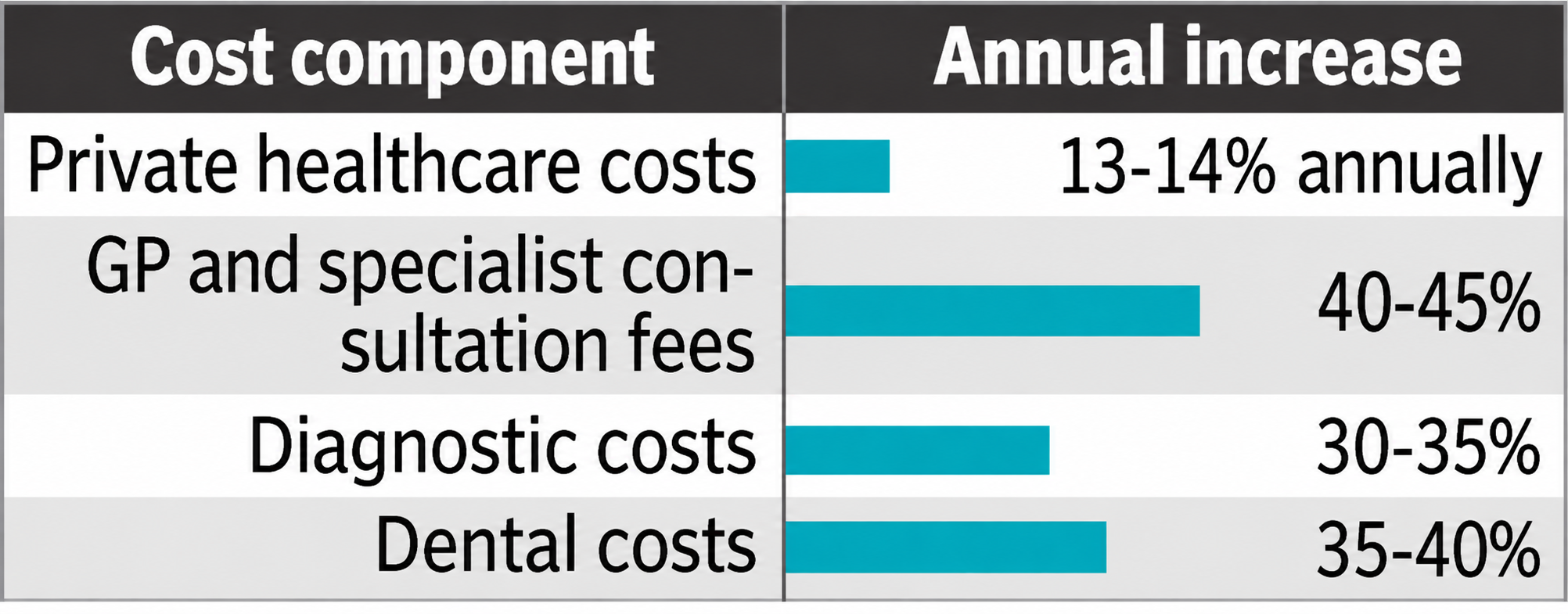
Cost component and annual increase
Rs 1,050-1,500 Average GP and specialist consultation fees in Tier-1 cities between 2023 and 2026.3 times: Private healthcare inflation compared with general Consumer Price Index inflation.25-50% Share of an employee’s annual corporate OPD cover that a single dental procedure or MRI can consume.
Preventive healthcare gains ground
87%: Employers now offer health benefits beyond basic hospitalisation.24%: Year-on-year increase in employers offering such benefits.Survey by: Prudent Insurance Brokers
Leading causes of hospitalisation in metro workforces
Infectious diseases 13%Digestive problems 12%Genitourinary conditions 11%Rs 55,000-87,000: Average hospitalisation costs for these conditions.
Workplace health alert
41% rise in suicide deaths among Gen Z employees between FY25 and FY26, according to claims data.16% increase in Employee Assistance Programme (EAP) adoption.Over 60% companies offer only basic phone or chat helplines under these programmes.
Eldercare squeeze
28%: Organisations offer no caregiving support, despite employees increasingly balancing childcare with caring for ageing parents.50-60%: Share of hospitalisation claims accounted for by elderly parents in sectors such as IT.10-20%: Co-payment on parental health claims introduced by some companies, requiring employees to bear part of the cost.
Gaps in women’s health cover
PCOS/PCOD management: 17%Menopause support programmes: 12%PCOS: Polycystic Ovary Syndrome. PCOD: Polycystic Ovarian DiseaseRs 50,000-75,000: Standard maternity cover offered by most companies.