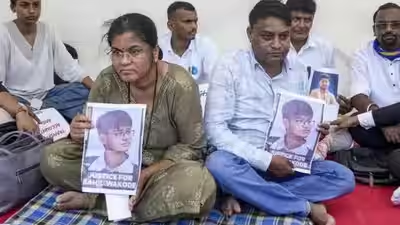








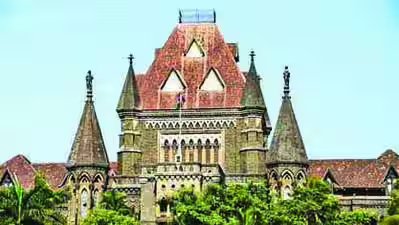
Mumbai: Ending a long-drawn legal battle spun around Swadeshi Mills, one of the leading textile mills founded in 1890, the Bombay high court paved the way for its revival and also the development of its 48-acre Chunabhatti plot.“The revival of the company would be conducive and not detrimental to commercial morality and to the interests of the public at large,” Justices AS Gadkari and Kamal Khata held on Sept 2, as the court allowed appeals filed by Grand View Estates Pvt Ltd and Forbes & Co, which together have over 53% of the share capital in Swadeshi Mills Company Ltd, which is in liquidation. Grand View is also a creditor, the HC noted.Both Grand View and Forbes had challenged a single Judge’s order of Feb 2026 that did not stay the winding-up proceedings ordered in Sept 2005.The Rashtriya Mill Mazdoor Sangh,workers’ union, as beneficiaries under the revival proposal, supported the appeals. Swadeshi Mills’ revival would benefit 2,834 mill workers, who the HC said, “endured tremendous loss and suffering for over two decades”.Founded by Jamsetji Tata in 1890, it earlier employed nearly 3,000workers; one of its prime assets was the 48-acre spread in Chunabhatti.The HC judgment said, “We see no reason to disregard the proposal of Grand View and Forbes. At present, apart from the workmen, no other class of persons has endured tremendous loss and suffering for over two decades. It would be insensitive to disregard the entire settlement agreement arrived at between the workers’ union, RMMS and the Appellants. If not the sole driving force, this is certainly one of the major considerations in securing a revival of the company. Their interests weigh most heavily with us at present, as numerous families are dependent on the outcome.”“Grand View, which belongs to the Shapoorji Pallonji Group, is also among the well-known developers in the country, a factor that would benefit the quality of construction ultimately delivered,” the HC said.The order under challenge by the single judge gave “undue credit” to claims of two minority shareholders who had objected to the revival and development and sought a public auction. They claimed an “entitlement to maximise the value of their 0.073% shareholding.” At best, the two shareholders would be entitled to a little over Rs 2 crore, said the HC, which said “there is more to their objection than what meets the eye. They are in all probability, a front to someone with an eye on the Company’s land.” The two shareholders had said “dues of Grand View are highly inflated” and their counsel argued that the test in law for revival of the company is the resumption of the business earlier carried on, and not setting up of an institution, as proposed by Grand View.”“Two shareholders cannot dictate how the Company should be run and what it should do; at best, they are entitled to dividends proportionate to their shareholding,” ruled the bench while allowing the appeals.The HC observed, “This entire objection and litigation arising therefrom amount to nothing but an elitist form of extortion. The Respondents have nothing to lose but the costs of litigation. Grand View and Forbes, on the other hand, having invested money, are losing crores of rupees every month that the proposal remains unimplemented; the resulting delay causes them huge commercial loss.”Courts cannot be a tool in the hands of unscrupulous litigants who are nothing more than opportunists, the HC said and held that the benefits that workmen stand to gain after two decades of winding up cannot be disregarded. For 21 years, workers awaited disbursement of dues, the HC said and noted that 2,000 were paid; others still await their share following marathon rounds of negotiations in the last two years and a public auction may not get their dues.The HC rejected a plea by the two shareholders to stay its order to enable them to go to SC.