









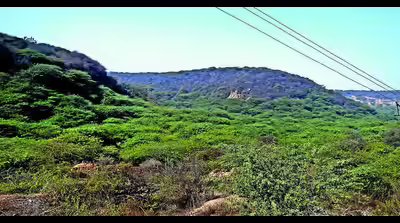
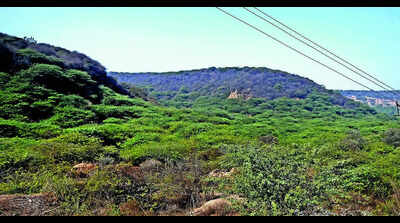
Gurgaon: Haryana lost 30 hectares of natural forest in 2025, generating an estimated 6.9 kilotonnes of carbon dioxide emissions, according to data released by Global Forest Watch (GFW), a platform that tracks forest change using satellite imagery.The loss is part of a longer trend. Between 2001 and 2025, the state lost 450 hectares of tree cover — equivalent to 1% of its total tree cover recorded in 2000.The numbers are more alarming in context. Haryana already has the lowest forest cover among Indian states, with only 3.6% of its geographical area officially classified as forest, according to the Forest Survey of India’s India State of Forest Report 2021. The same report recorded an 8% decline in tree cover between 2019 and 2021, from 1,565 sq km to 1,425 sq km. GFW estimates that Haryana had around 39,000 hectares of natural forest in 2020, covering just 0.89% of its land area.District-wise, Panchkula recorded the highest tree cover loss between 2001 and 2025 at 190 hectares, followed by Ambala (72ha) and Yamunanagar (51ha). Other districts reporting losses included Kaithal (27ha), Kurukshetra (22ha), Gurgaon (15ha), Jind (14ha), Faridabad (10ha), Jhajjar (8ha) and Palwal (7ha).Together, Panchkula and Ambala accounted for nearly 58% of the state’s total loss during the period. Agriculture was the biggest driver, responsible for 220ha of loss, followed by settlements and infrastructure (52ha) and hard commodity-related activities (7ha). Across these, 88% of losses occurred in areas where deforestation was permanent — meaning the land is unlikely to return to forest cover.Against this, the state’s official numbers show a net gain. Between 2000 and 2020, Haryana registered an increase of 8,700 hectares of tree cover — a 16% rise — with 54,000 hectares remaining stable and nearly 9,800 hectares showing fresh gain.But this apparent improvement masks a critical distinction: tree cover and natural forest are not the same thing. Plantations, farm trees and roadside greenery all count as tree cover in satellite data, and can offset losses on paper while natural, ecologically significant forest continues to shrink.“Large stretches of the Aravalis continue to remain outside formal forest records despite possessing all ecological characteristics of forests,” said RP Balwan, former conservator of forests, Gurgaon. “Unless these areas receive legal recognition and protection, they will remain vulnerable to fragmentation and diversion.”This is not a new concern. Following Supreme Court’s landmark 1996 judgment directing states to identify and record forest lands, environmental groups have repeatedly argued that significant portions of the Aravali landscape — despite functioning as natural forests — remain outside the ambit of legal protection.