








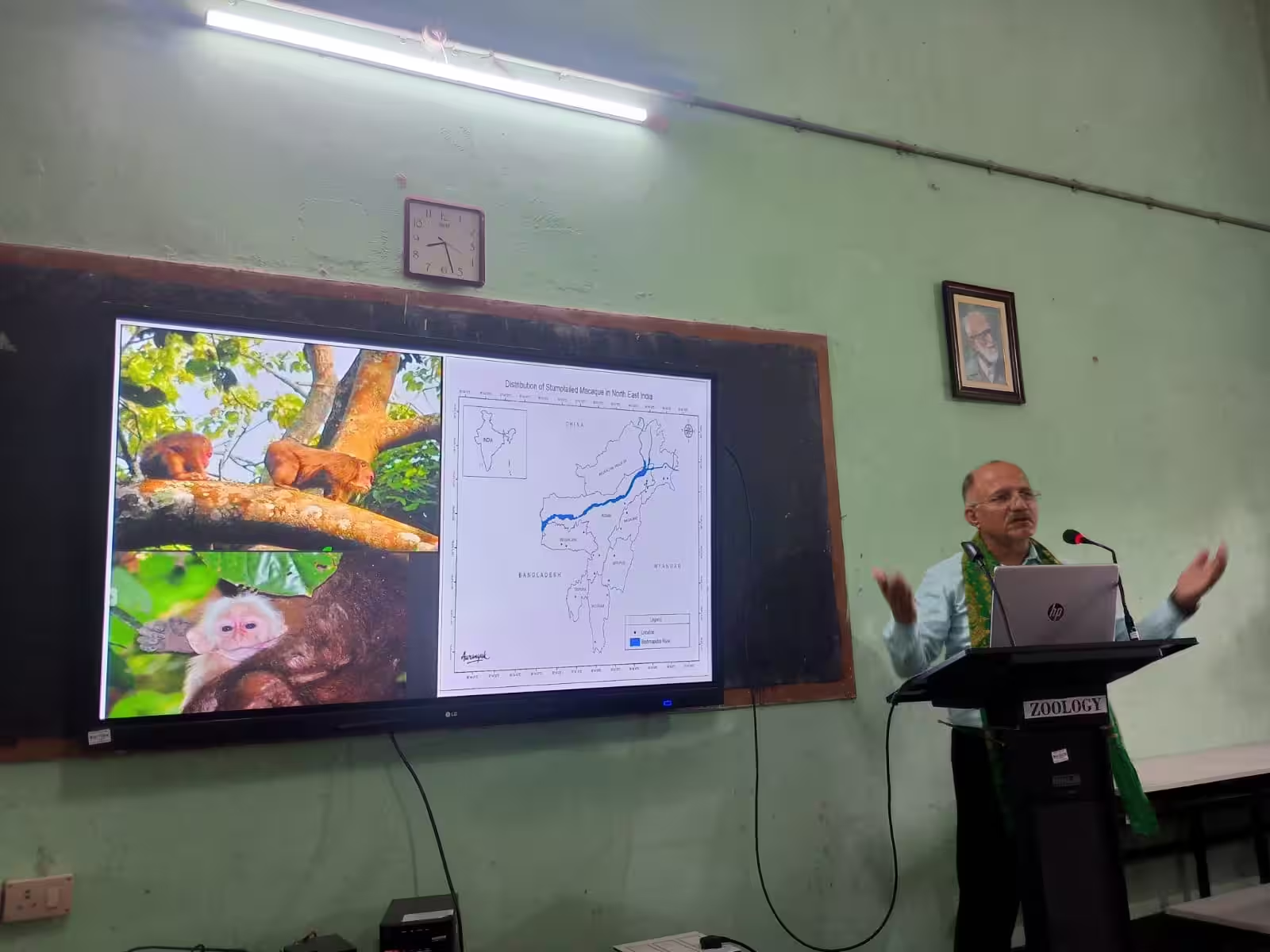
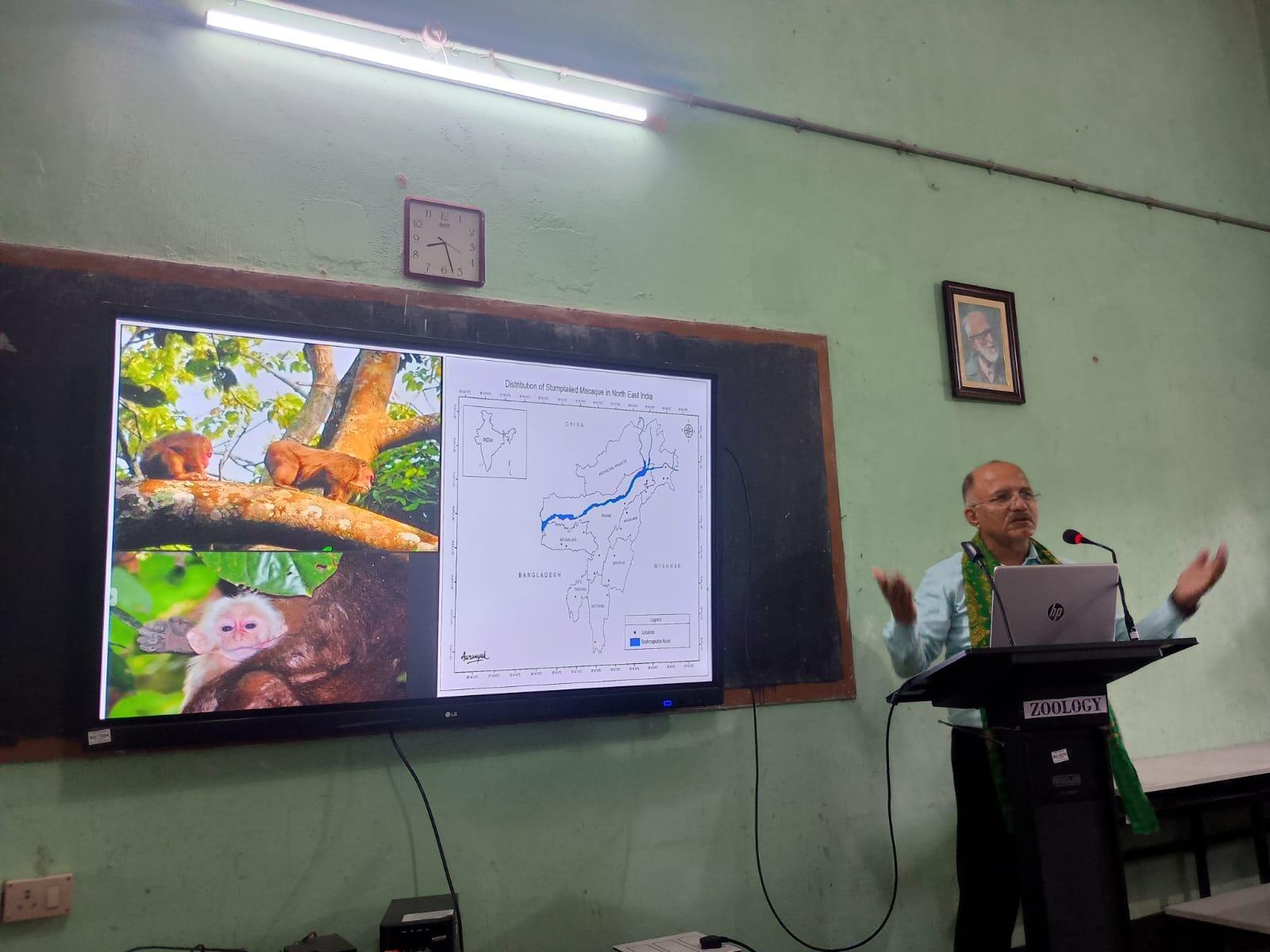
Dhubri: Habitat destruction, poaching, illegal wildlife trade, captivity and animal experimentation are posing serious threats to primate species, conservation experts said at a seminar held recently at Bodoland University.The seminar was organised by the Centre for Wildlife Research & Biodiversity Conservation (CWRBC) in association with the university’s department of zoology. It focused on habitat protection, conservation research and the need to increase scientific and public awareness about the challenges facing primates.The issue is particularly significant for Assam and the wider northeast, which form an important part of India’s primate-rich landscape. Experts stressed that sustained research, protection of natural habitats and local-community participation were essential for the long-term survival of species such as the western hoolock gibbon.Dilip Chetry, director and head of the primate research & conservation division at Aaranyak, addressed the seminar as the resource person. He is also vice-chairperson of the IUCN SSC Primate Specialist Group, South Asia Section, and an executive member of the group’s Small Ape Section.Chetry said nine of the world’s 535 recognised primate species were found in Assam and highlighted the western hoolock gibbon as a key primate species of the state.“The hoolock gibbon is especially significant for the region as India’s only ape species occurs in the country’s northeastern forests,” Chetry added.He underlined the need to protect forests and habitats supporting primate populations and called for stronger research and awareness initiatives to address conservation challenges.The programme was established by Animal Defenders International in 2005 to draw attention to threats faced by primates, including habitat destruction, poaching, illegal wildlife trade, captivity and animal experimentation.Students and research scholars of Bodoland University attended the seminar. The session was moderated by Deep Smita Nath, a PhD scholar in the department of zoology.Prof Hilloljyoti Singha, director of CWRBC, delivered the welcome address.The seminar sought to sensitise students and researchers to the ecological importance of primates and encourage greater scientific engagement and public participation in their conservation.