








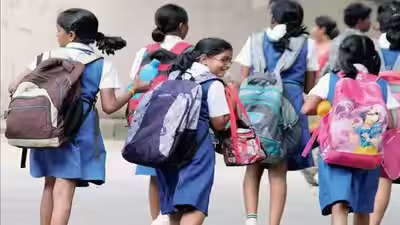
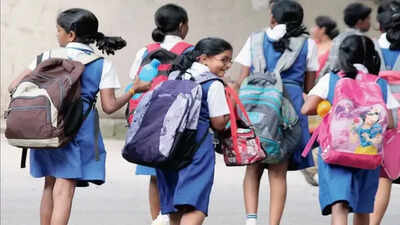
The Gujarat government has directed schools across the state to tighten entry regulations, restrict unauthorised photography and videography, and prevent the collection or circulation of students’ personal information without prior approval. The instructions aim to strengthen school security and safeguard the privacy, dignity and welfare of children on campus.According to a circular issued by the Office of the Commissioner of Schools on October 21, school authorities have been empowered to deny entry to outsiders if their presence is likely to compromise security, discipline, privacy or the academic environment. The directions were reported by the Press Trust of India (PTI).
Gujarat schools must obtain written permission before allowing outsiders
Under the new instructions, every external visitor must obtain prior written permission from the principal or head of the institution before entering the school premises. Government officials duly authorised to carry out their official duties have been exempted from this requirement, the circular stated.Schools have also been instructed to maintain a register recording visitor details to ensure that entry into the premises is documented.The circular authorises principals and heads of institutions to reject requests for entry if they believe a visitor’s presence could affect the safety and functioning of the school. The measures seek to establish clearer accountability over who enters school premises and the purpose of their visit.
Photography, videography and interviews require prior approval
The Education Department has also placed restrictions on photography, videography, interviews, audio recordings and live-streaming involving students, teachers or school activities.According to the circular, such activities cannot be undertaken without the principal’s prior written permission and may be allowed only for lawful purposes.The directions also prohibit visitors from collecting information about individual children or publishing their identities or photographs without written approval from the principal. Particular emphasis has been placed on preventing activities that could put a child’s safety, dignity or privacy at risk.The instructions apply to the collection and circulation of students’ personal information, as well as the use of photographs and videos in ways that could expose children to harm or compromise their privacy.
Access to classrooms, laboratories and other areas restricted
The circular specifies that access to areas frequently used by students will require prior written permission. These include classrooms, laboratories, libraries, hostels, playgrounds, toilets and other school facilities.Even when permission is granted, visitors must be accompanied by the principal, a teacher or another authorised school official while accessing these areas.The requirement is intended to ensure that visitors do not move through student areas without supervision and that school authorities remain aware of their activities on campus.
Unauthorised entry and disruption must be reported
The Gujarat government has directed school authorities to immediately report certain violations to the local police and education authorities.These include entering school premises without prior permission, refusing to leave when instructed, carrying out unauthorised photography or videography, and disrupting school activities.The circular places responsibility on school administrations to respond promptly to conduct that could threaten campus security or interfere with the functioning of the institution.
Circular cites children’s right to safety, dignity and privacy
The state government has cited the principle of in loco parentis, under which an institution or authority assumes responsibilities comparable to those of a parent in the care of children, to explain its duty to protect students in government schools.The circular also refers to Article 21 of the Constitution, which protects the right to life and personal liberty, in the context of children’s safety, dignity and privacy.It further cites the Supreme Court’s judgment in K S Puttaswamy (Retd) vs Union of India, which recognised the right to privacy as a fundamental right.By tightening visitor access and restricting the unauthorised use of students’ personal information, the Gujarat government has sought to reinforce safeguards around school premises and ensure that children’s privacy and well-being remain central to school administration.