









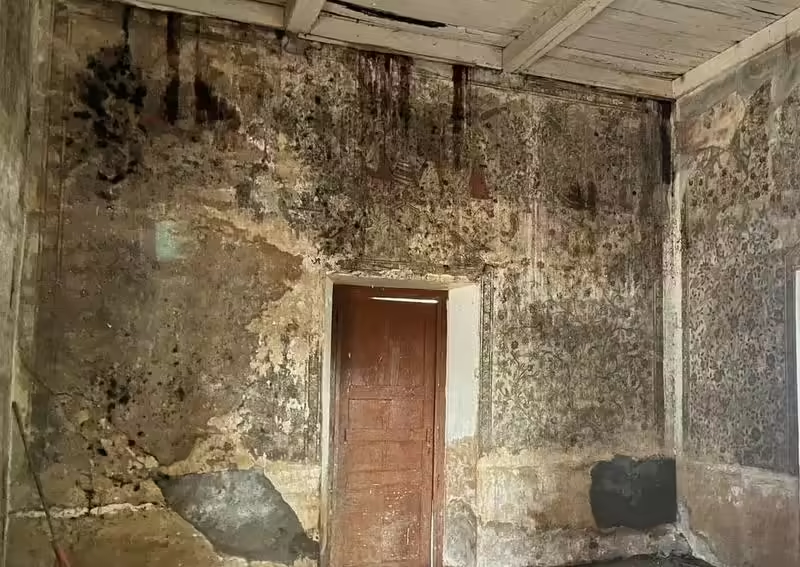
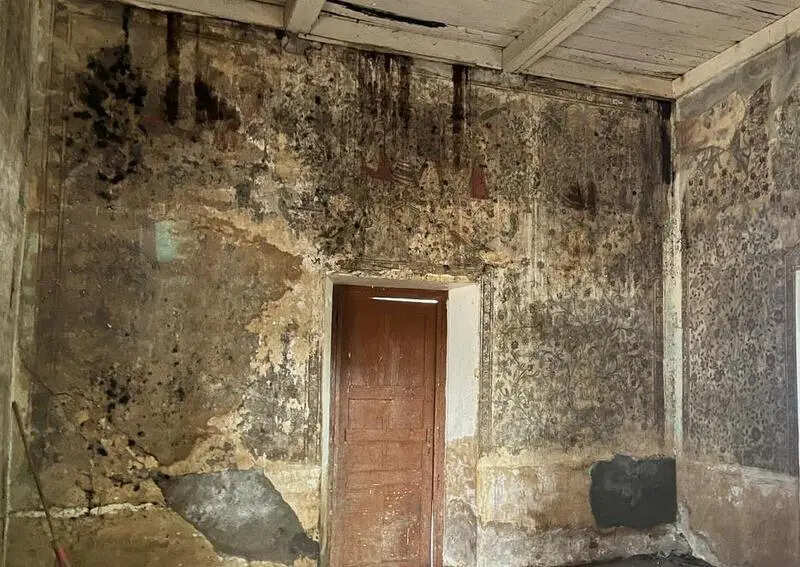
Ahmedabad: Perched atop a hill in Kutch’s Anjar, the historic bungalow of Captain James MacMurdo — the first British Resident of Kutch — stands as a crumbling testament to a forgotten era. Once a sanctuary for the rare Kamangari wall paintings, this place, which is today listed as a state-protected monument, is now a derelict shell, its doors, part of the walls, and part of the ceiling long gone.Historian Pradip Zaveri reveals the man behind the masonry: “Before his official appointment in 1816, MacMurdo lived in Anjar as ‘Bhuria Bawa’, a spy in the guise of an ascetic. He later built this bungalow to mirror his home in England, filling its walls with the soul of Kutch — Kamangari art.” These murals, depicting the Ramayana, royal processions, and intricate floral patterns called sint, were once the pinnacle of local decoration. “The Kamangar community — Muslim bow-makers from Sindh — used natural mineral dyes to bring mythology to life. Today, their art is extinct, and few in Anjar even know this site exists,” Zaveri laments.The bungalow also preserves MacMurdo’s legacy as a scholar. Dalpat Danidharia, a veteran archivist who leads the ‘I Will Look After My Monuments’ campaign, notes: “He mastered Kutchi and even documented the devastating 1819 earthquake. The Kamangari artists were given total freedom here, creating a style that once adorned the havelis of the wealthy. Now, most are lost.” Danidharia adds that the neglect extends to MacMurdo’s tomb in Varnu village, where he died of cholera in 1820. “Both the bungalow and the tomb are on the brink of collapse. We must act now to preserve what remains.”The call for revival is urgent. Artist couple Bhagyashree and Nikhil Nagda, who moved from Mumbai to Kutch to revive this art form, emphasize that restoration is only half the battle. “MacMurdo’s Bungalow is a masterpiece that needs immediate care. But the real challenge is sustainability. We must find ways to keep these monuments alive and protected for the future, or we will lose this artistic heritage forever,” they state.