










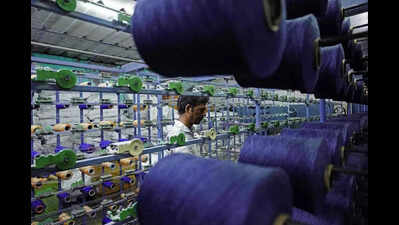
Ahmedabad: Cotton yarn prices have surged to a record high of Rs 300 per kg after nearly four years, driven by strong demand from China and Bangladesh, pushing up fabric prices across the textile value chain and creating shortages in the market.Industry players said fabric prices have increased by Rs 10 to Rs 25 per metre over the past one-and-a-half months. They added that higher textile processing charges and shutdowns of several powerloom units have further tightened supply. Rahul Shah, co-chairman of the textile taskforce of the Gujarat Chamber of Commerce and Industry (GCCI), said, “China has huge demand for cotton yarn this year and it has pushed prices up. Almost after four years, cotton yarn prices have reached the Rs 300 per kg level. This has affected the entire value chain.” The rise in yarn prices has had a cascading effect on fabric manufacturers, processors and retailers. Traders said the increase is now visible in the retail market as well, with consumers beginning to feel the impact of higher input costs. Gaurang Bhagat, president of Maskati Kapad Market Mahajan, said, “We have seen price rise in different types of fabrics in the range of Rs 10 to Rs 25 in the last one-and-a-half months. Fabric as well as textile processing charges have increased because fuel and chemical prices have increased. In the retail market too, the fabric price rise is seen now.” While industry stakeholders flagged pressure across the value chain, apparel makers said the timing of the price rise may cushion the impact on the domestic market, even as export margins remain vulnerable. Rahul Mehta, chief mentor at Clothing Manufacturers Association Of India (CMAI), said, “For the domestic market, any price rise is a potential risk, but this has come at a relatively less disruptive time. The current season’s inventory has largely reached stores or is in the pipeline, and festive season sampling is still underway with prices yet to be finalised. This gives manufacturers and brands some room to recalibrate pricing, and the impact on margins may not be as severe. We expect prices to rise by about 5%-8%. However, on the export front, margins will certainly be hit as contracts are already locked in and there is little scope to pass on the increased costs at this stage.” The industry has also raised concerns over cotton availability and pricing, urging the Centre to remove the 11% import duty on cotton to improve supply and bring domestic prices under control. Representatives of the powerloom sector warned that the ongoing West Asia crisis has worsened pressure on the textile chain by increasing freight costs and causing shipping delays. Powerloom Development and Export Promotion Council (PDEXCIL) has submitted a detailed representation to the central govt, seeking immediate intervention. The body said rising logistics costs, alternate shipping routes and elevated domestic cotton prices have eroded India’s competitiveness in global markets. Bharat Chhajer, former chairman of PDEXCIL, said, “Rising freight costs, shipping delays through alternate routes, and higher domestic cotton prices have sharply reduced competitiveness. Cotton textiles account for nearly 80% of India’s textile exports, with shipments to Middle East markets exceeding $3 billion annually. Domestic cotton prices are now above global benchmarks, while competing countries such as Bangladesh and Vietnam continue to enjoy duty-free cotton imports. Due to acute yarn shortages, many powerloom units have already shut down despite having orders in hand. It estimated a shortage of 50 lakh bales this season, which could lead to production cuts, export losses of $4 billion and major job losses.” Industry estimates suggest that if the shortage persists, production cuts and export losses could deepen, affecting employment across textile hubs.