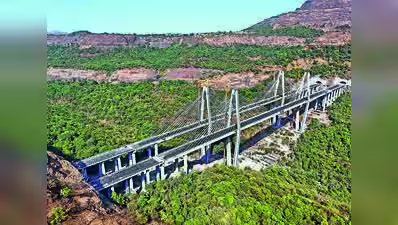









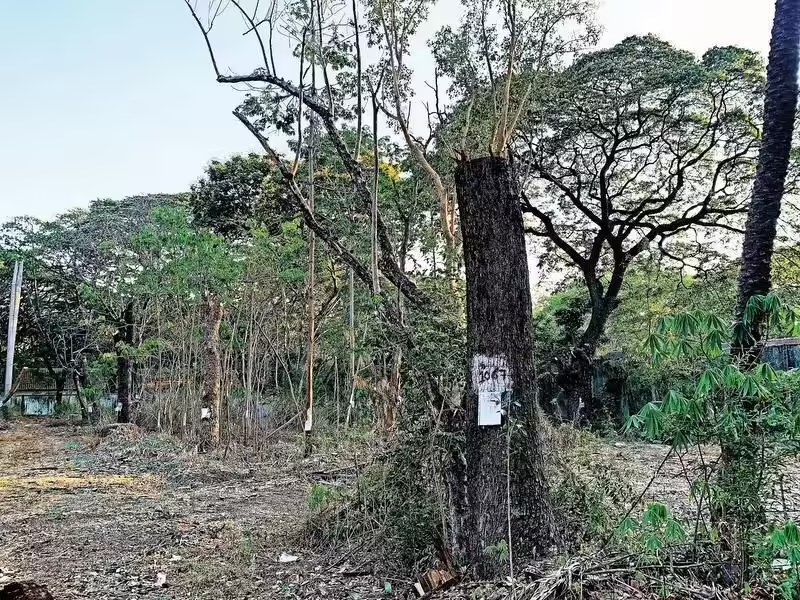
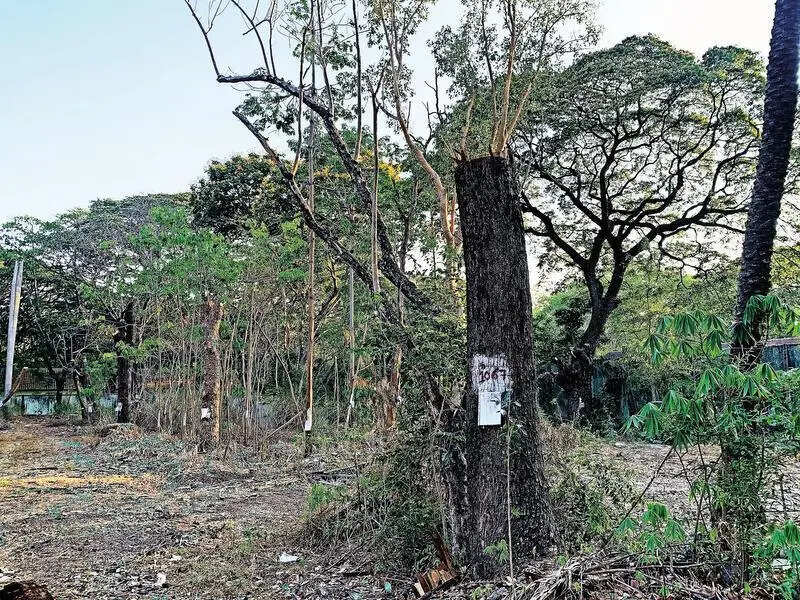
Lived for over a century, axed without warning for a bridgeOn a routine cycle ride in Koregaon Park on March 14 this year, civic activist Rupesh Kesekar was stunned when he passed by the ongoing Sadhu Vaswani Bridge construction. The new four-lane bridge is replacing the old, two-lane structure to ease traffic congestion in the bustling mixed-use zone. But the city resident’s attention was captured by a different sight.“Several visibly old banyan trees on the Cantonment side of the bridge had been chopped right down to the stump. I was astonished and furious as these trees were not even in the project docket we citizens had objected to earlier. Residents fighting for greenery at this location had no idea that Pune Municipal Corporation (PMC) was even thinking of cutting these particular trees,” Kesekar, a businessman, told TOI. According to him, PMC took advantage of the fact that these trees fall under the Pune Cantonment Board (PCB) jurisdiction, where the tree hearing process does not apply. “Six to seven century-old trees were hacked in an unscientific manner, meaning they cannot be transplanted and so, are gone forever. The site is about 100m from Koregaon Park police station. PMC and the public works department (PWD) are mandated to plant a number of trees equal to the age of one that is axed down. Since they simply estimate age with no scientific process followed, compensatory plantation is far from correct,” he said. Kesekar added, “Small dimension changes to the design of the bridge could have saved the trees. Objecting citizens, some of whom are architects and engineers, had even pointed this out to PMC during a joint site visit. But we were completely ignored.” If the age of each of the six axed trees is counted as 100 years, and if they had been in PMC limits, the civic body would have had to plant 600 new trees as compensation. However, the trees are 100m away and in PCB limits. Now, the board needs to plant only 5-10 new trees per axed tree — so a minimum of 30 and a maximum of 60 trees — as compensation, since cantonment authorities don’t follow the Maharashtra (Urban Areas) Protection and Preservation of Trees Act, 1975. Citizens TOI spoke to flagged that the number of trees marked for felling in the city is rising every month, leaving them battling on multiple fronts. Recent examples include over 5,000 trees marked for the riverfront development (RFD) project between Wakad and Sangvi and also different applications for tree felling from Koregaon Park to Magarpatta Road. “Five applicants have asked to axe over 1,000 trees in total from ABC Farms Chowk till Hotel Carnival on Magarpatta Road. Then, we have grade separators and flyovers coming up all over Pune, from Sinhagad Road to Nagar Road, for which heritage trees will once again be lost to insincere transplantation assurances. And let us not forget the new Metro stretches, from Katraj to Hadapsar. We fought to save every tree we could at Sadhu Vaswani Bridge, but in vain,” said Vijaya Suratkal, a Camp resident. On May 26, 2024, a few citizens along with lawyer Maitreya Ghorpade had filed an application in the National Green Tribunal (NGT) to quash the tree-felling docket for the bridge project dated Jan 4, 2024. Their premise was that it did not follow tree-felling process guidelines of the Tree Act of 1975. In an order dated July 27, 2024, NGT directed the chairman of the Maharashtra Tree Authority to conduct site visits with the applicants and submit a report to the tribunal within four weeks. Accordingly, the joint committee under the chairmanship of the principal secretary, state environment and climate change department, conducted a site visit at 3pm on Aug 14, 2024. In its report, the committee recommended that PMC remove the painted red serial numbers erroneously marked to identify trees to be felled. It said that since the civic body has not scientifically assessed the age of the targeted trees, it must quash and set aside the Jan 2024 docket of 61 trees — of which 19 were heritage trees — and submit a revised proposal of 18 trees that have been physically identified for felling, among other stipulations. However, according to citizens, not only did PMC ignore this, but also felled trees that weren’t even a part of the original docket. On April 8, 2026, the same band of citizens filed another petition in NGT, highlighting PMC’s non-compliance with the tribunal’s July 2024 order. “Numerous trees were felled in brazen violation of the NGT’s order. We have taken the matter back to the green court, which has now admitted the case and put PMC on notice to respond within four weeks,” said advocate Ghorpade. “It is very frustrating. We work so hard to visit the location, take copious notes and ensure that we follow the law while putting forth objections, as is our right. Why do the same rules not apply to the civic body?” asked Gangotree Chanda, a member of citizens’ group ChaloPMC. “Once a heritage tree is cut, the loss is irreversible. The cutting is done in a way that even transplantation is not an option. There is just no thought to the consequences of felling so many trees. Pune needs a centralised system for tree felling applications to ensure that data is available, and that those who don’t follow the law can easily be held accountable. The city needs to go back to being known for its cool climate and tree-lined roads,” Chanda added. When contacted for comment on the issue by TOI, PMC projects department executive engineer Sandip Patil said, “We have only cut the trees that we have permission for. Even those cut within cantonment limits were axed following due process. After hearings and site visits, we even adjusted the alignment of the bridge to save as many trees as we could.” British-era trees in the crosshairs at Yerawada Regional Mental Hospital The sprawling Regional Mental Hospital (RMH) in Yerawada, built in 1915 by the British, is the biggest public mental healthcare institution in Maharashtra — in fact, it is one of Asia’s largest. Spread across 74 acres, it is home to innumerable heritage trees, planted by the colonial authorities over a century ago.In Aug 2025, Pune Municipal Corporation (PMC) released a docket to fell 269 trees here, with the public works department (PWD) set to construct 14 new buildings to upgrade several British-era structures. In the mandatory tree hearing that followed, citizens raised pertinent objections to the axing plans, requesting that a site visit be conducted to comply with various Bombay high court judgements and provisions of the Maharashtra (Urban Areas) Protection and Preservation of Trees Act, 1975, before approval to fell trees is granted by the tree officer. But frustrated citizens said that despite multiple meetings with senior PMC and PWD officials and the member-secretary of the Tree Authority, the Yerawada ward office tree officer went ahead and issued felling permission while ignoring due process. “There are a couple of reasons why this docket is problematic and should be scrapped,” explained Rekha Joshi, a retired IRS officer, “The tree officer needed to wait for the outcome of an interdepartmental meeting organised by the member-secretary of the Tree Authority after a site visit, which was ignored. PMC commissioner Naval Kishore Ram, who is also the chairman of the Tree Authority, approved PWD’s proposal on Nov 27, 2025, with the stipulation that the nod was subject to the submission of a report to the tree officer detailing the new plantation to be done by PWD. It was only after this report was submitted that the tree officer could approve the docket. However, on Feb 18 this year, without fulfillment of the compensatory plantation clause, the tree officer issued permission to fell the trees. This is an act of insubordination.” “Also, the upgradation proposal mentions construction of 14 buildings, for which 269 trees are proposed to be axed. At present, state govt has given permission for only five buildings — three for men and two for women patients. If close to 300 trees were to be felled for 14 buildings and only five have been approved, why has the permission order been issued for the full docket? Should it not only be for the trees affected by the sanctioned buildings?” she added. City resident Ameet Singh, an economist who has been fighting to save these trees, said, “There are a lot of banyan, ficus and peepal trees on this campus, among others that are in the crosshairs. Even after more than half-a-dozen meetings with various officials, the docket was still passed. PWD might have given us the assurance that they will not damage the trees, do compensatory plantation or even transplant the trees, but after previous failed promises, we don’t trust the authorities anymore.” He alleged, “PWD has become a habitual offender in assuring one thing and going ahead with another. In the last two-three years, they should have planted around 20,000 trees for compensatory plantation efforts, but not one has been planted. Also, almost none of their transplanted trees have survived. Now, over a century-old trees are at stake.” According to architect Meghna Bhandari, small changes to the design of the new building could easily incorporate and save many trees. “PWD’s design is almost like a cluster of square buildings, with a courtyard in the middle. If they turn them into buildings shaped like a ‘C’, several trees could simply be incorporated into the design. The passages around the courtyard can also incorporate trees just by increasing the width. This alone saves approximately 100 trees,” she explained. Responding to the outrage, PWD executive engineer Prashant S Khairmode refuted, “We have already got permission for the felling. We have ensured that we save as many trees as possible. It is usually the brief given to the architects we hire. So, the initial plan is likely made keeping the trees in mind. However, say for example there are four to five trees in a line, to save four of them, we might have to cut one. Such instances are unavoidable.” “In the new design, we have left the courtyard empty to accommodate the trees. We have already given money to the forest department for this project, for them to plant and ensure the survival of the saplings in compensatory plantation,” he added.