









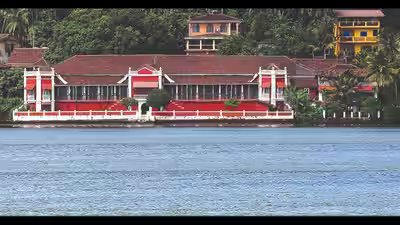
Built on the Ribandar riverbank in the 1700s, Solar dos Colacos is a home where baroque splendour, heirlooms, faith and history still endure

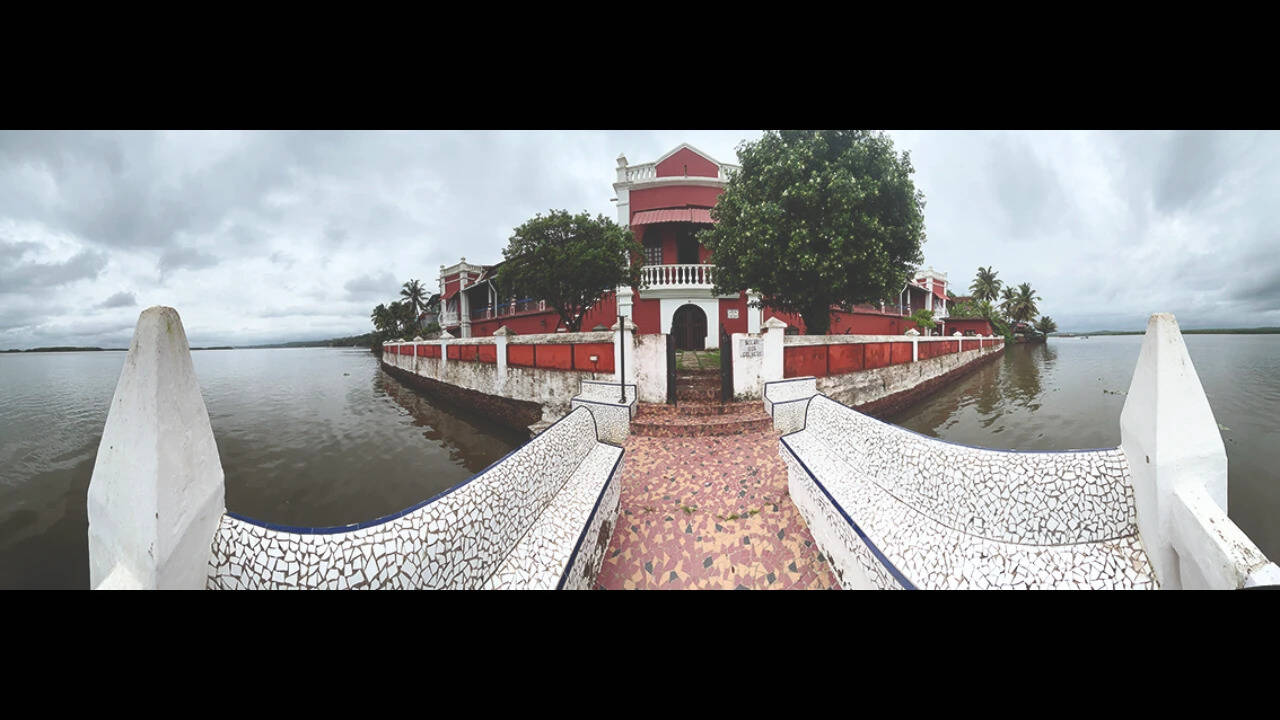
Anyone taking a ferry ride from Divar island to Ribandar cannot miss the architectural grandeur of Solar dos Colacos. The stunning mansion stands on the southern bank of River Mandovi, draped in a deep, earthy red with details highlighted in chalk white.Nestled at the foot of Ribandar’s green hills, work on the Solar dos Colacos mansion was started in 1730 by Joao Colaco, has been a part of the landscape ever since the west wing was completed in 1745 by his son, Nazario.The mansion’s location was not accidental. The Colacos built it at Ribandar for convenience of access to the church and the then Portuguese capital of Old Goa. It began as a practical night resting place, but, in 1759, the shift became permanent, with 18 family members all moving in and making this their home.
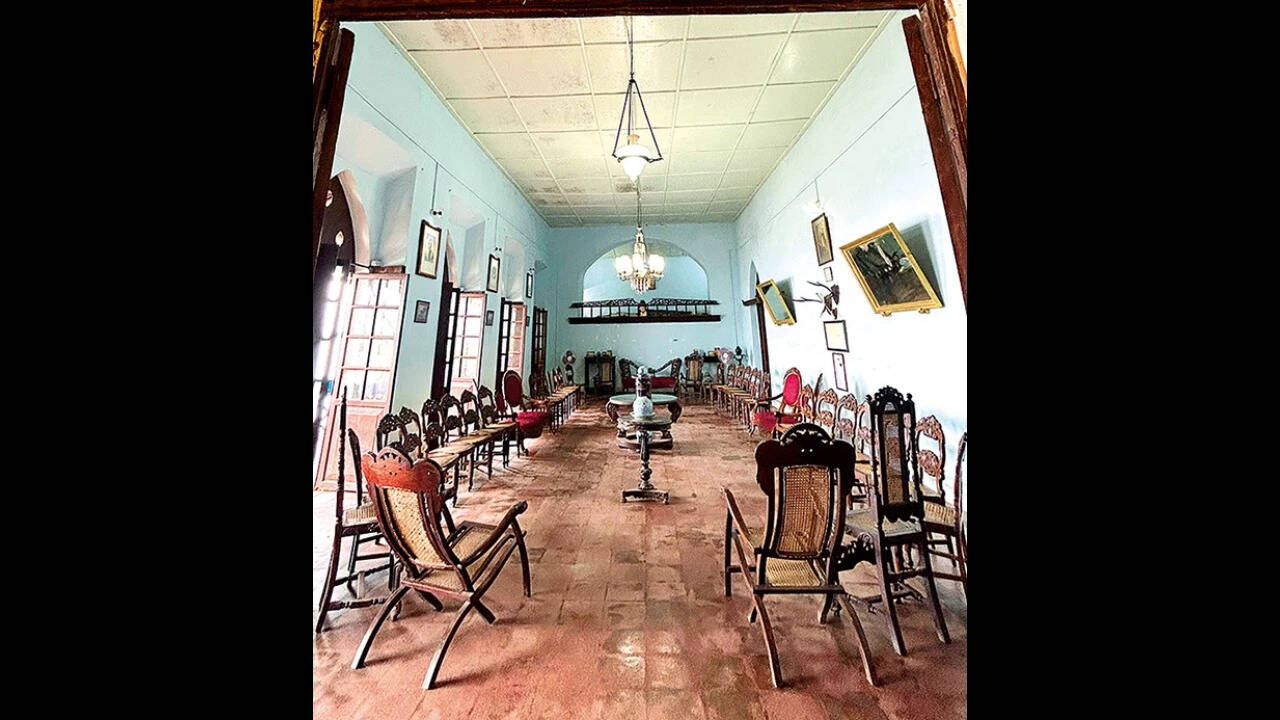
Its name, too, carries a specific meaning tied to status, not scenery. Antonio Botelho, who passed away just last month, had previously told TOI that the name ‘Solar ‘ has nothing to do with the sun. His aunt Maria Tereza Colaco had been the last full-time resident of the mansion. “Solar, in Portuguese, means the residence of a nobleman,” he had said.That noble association was sealed when Nazario Colaco II — the grandson of a judge posted in Diu, and later mayor of Pangim city, Jose Bernardo Colaco — was granted the title of ‘Fidalgo Cavalheiro’ by the king of Portugal on Jan 4, 1890. Thereafter, the house came to be known as Solar dos Colacos.Inside, the mansion’s grand Baroque character is most dramatic in the ballroom — built in wood of 16 different types — filled with intricately carved Goan furniture, chandeliers and mirrors. Family legacy is cut into the very doors: Nazario Colaco II himself was a craftsman, and his hand is visible on the doors of the ballroom, the hall, and the adjoining bedrooms. The ‘oratorio’ or oratory, too, reflects his skills in carving doors and statues.
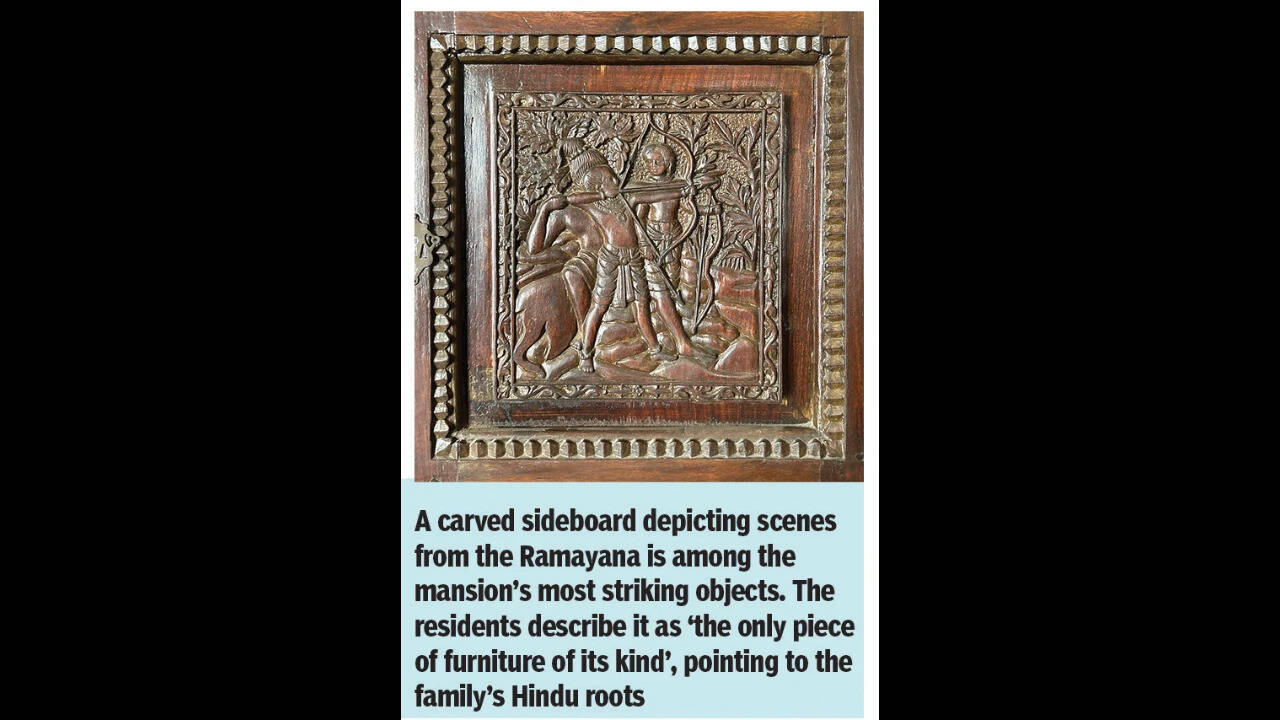
Among the standout pieces is a carved sideboard depicting scenes from the Ramayana — described as “the only piece of furniture of its kind” — which portrays the links the family has with its Hindu origins. “The Colacos were originally from Rachol. The son of a Hindu, Anta Poi from Margao, was baptised at the Loutolim church, converted to Christianity as Pero Colaco, and sought refuge at Rachol. Later, Lopo Heredia from Divar island married Ana Colaco. Since Ana was the only child, a prenuptial agreement was made that a male child of every generation would bear the Colaco surname. Thus began the history of Colacos of Divar,” Botelho said.For a mansion of its size, it has only four rooms, with the rest of the home being full of common areas for the large family to mingle and bond. At the centre of that togetherness is an unusually long dining table that seats 24. As heir, Botelho recalled the house in 1960, when the table was filled with relatives, “one of them playing a tune on a harmonica, the house ringing with music and laughter over sumptuous food”.
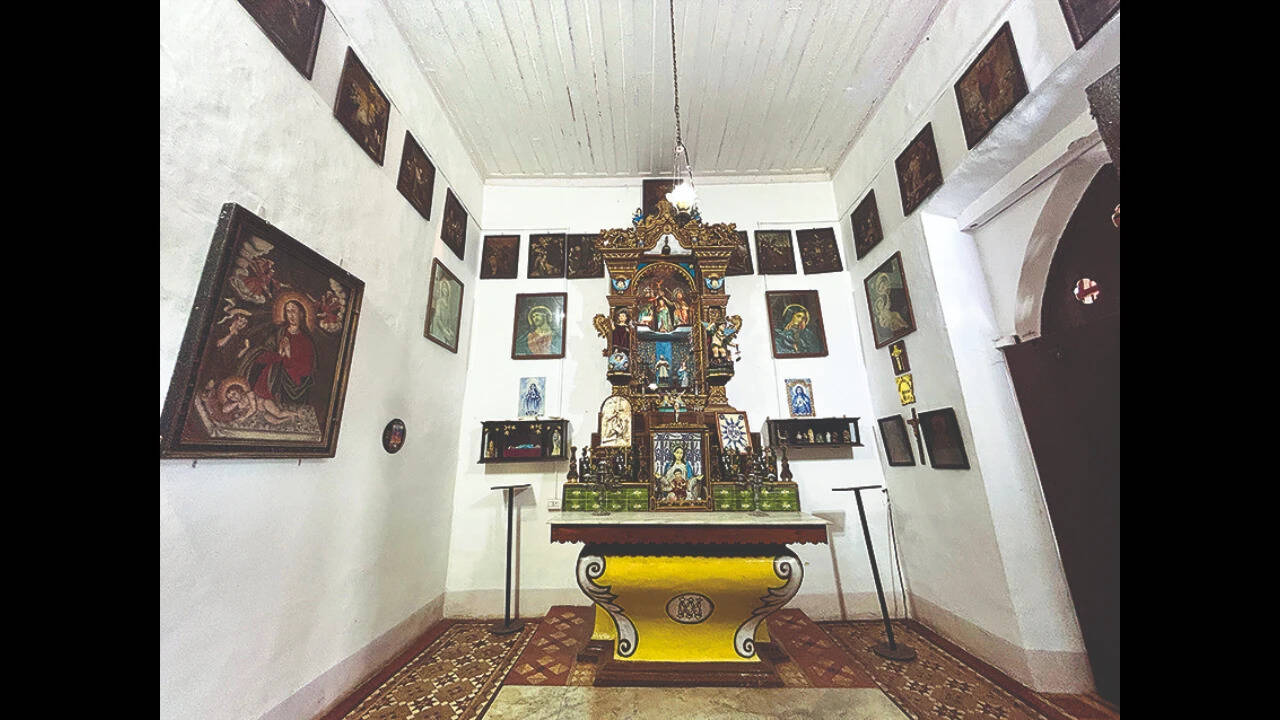
The mansion’s spiritual heart is its private chapel. The altar is dedicated to Our Lady of the Rosary. Botelho recalled the family story behind it. “Legend has it that Jose Bernardo Colaco found a statue of Our Lady and Infant Jesus in the seas off Aguada, at the mouth of the Mandovi (perhaps from an earlier shipwreck) when he himself was drowning after the ship on which he was sailing back from Diu capsized. Jose Bernardo brought the statue home, and as a token of gratitude for having survived, began the tradition of having public prayers in the house from Aug 1 to 15.”Beyond the chapel, Solar dos Colacos reads like a carefully tended archive. The ballroom has a gallery for musicians to play live, with a wooden frame and a bust taken from a ship. A wooden palanquin that used to carry the women of the house still rests in the corridors. Porcelain from China sits on display throughout the mansion.
Botelho’s wife Jyoti said the family has received several offers to purchase the mansion, but the answer has stayed the same. “People have offered us blank cheques, but we tell them that this will only be an acquisition for them. For us, it is home,” said Jyoti.