






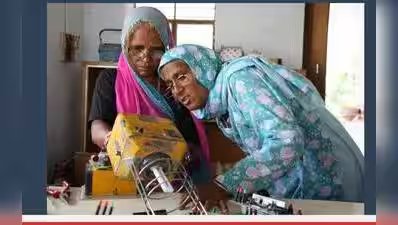
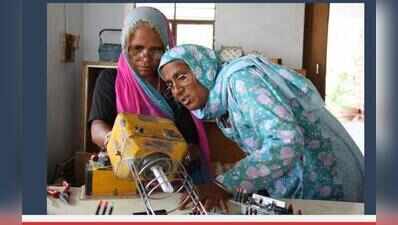
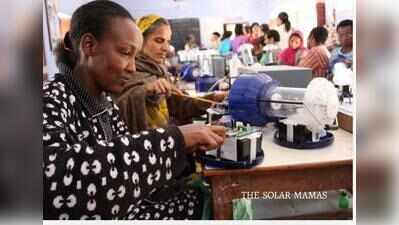
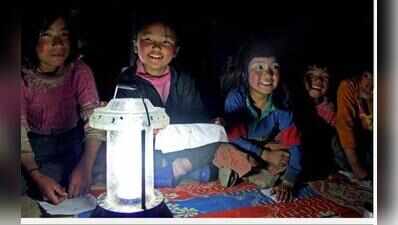
For Cathy, a Solar Mama from Papua New Guinea, the impact of her training at Barefoot College in Rajasthan is visible in a local library where children can now study after dark. The solar lights she learnt to assemble have also reached several homes in her community.“It has changed our lives by providing safety, security and livelihood means. Several homes also benefited after I train them with support of local govt,” Cathy said in a video message to TOI shared by Barefoot College staff.“I live in the darkest region of my country. Electricity for a couple of hours is also a luxury meant for the few in power or the powerful. The only source of light is kerosene, which has been pushing families into extreme poverty and severe health hazards,” she said in a testimonial to the Barefoot team.Ateqa hopes to take solar lighting to her village and earn a livelihood by selling solar lights, batteries and cookers.Their experiences reflect the idea behind the Solar Mamas programme, launched by Sanjit Bunker Roy in 2000 — that women with little or no formal education could be trained to become solar engineers and bring electricity to communities beyond the reach of conventional power networks.Women from 96 countries have been part of its international network.In a two-hall workshop at Barefoot College in Tilonia, rural women work with colourful wires, electronic components, batteries, LED bulbs and soldering irons. Many had never handled an electrical testing device before arriving here. Instead of textbooks and complicated equations, trainers use colour-coded diagrams and hands-on demonstrations to teach them to assemble, install and repair solar lights.Over six months, women selected from remote, non-electrified villages learn to identify electrical components, connect circuits, test batteries and troubleshoot faults. Technical trainers and counsellors use practical exercises to explain the workings of solar systems.The training also extends beyond solar technology. Women learn stitching, basic health awareness, water harvesting and conservation, including traditional Indian techniques for collecting and managing rainwater. The idea is to equip them with skills they can use and pass on after returning home.