









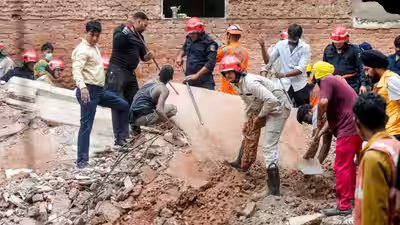
NEW DELHI: Satya Niketan, a resettlement colony in south Delhi, has undergone a dramatic transformation from a low-rise neighbourhood meant to house displaced families and labourers to one of the capital’s most densely built hubs to accommodate students.Developed by Delhi Development Authority (DDA) during the 1970s and ’80s, the colony was planned as modest housing for families with limited means. Its original layout was markedly different from that of neighbouring Shanti Niketan and Anand Niketan, which were built in the 1960s as upscale cooperative housing societies, largely for senior govt officials and affluent people.
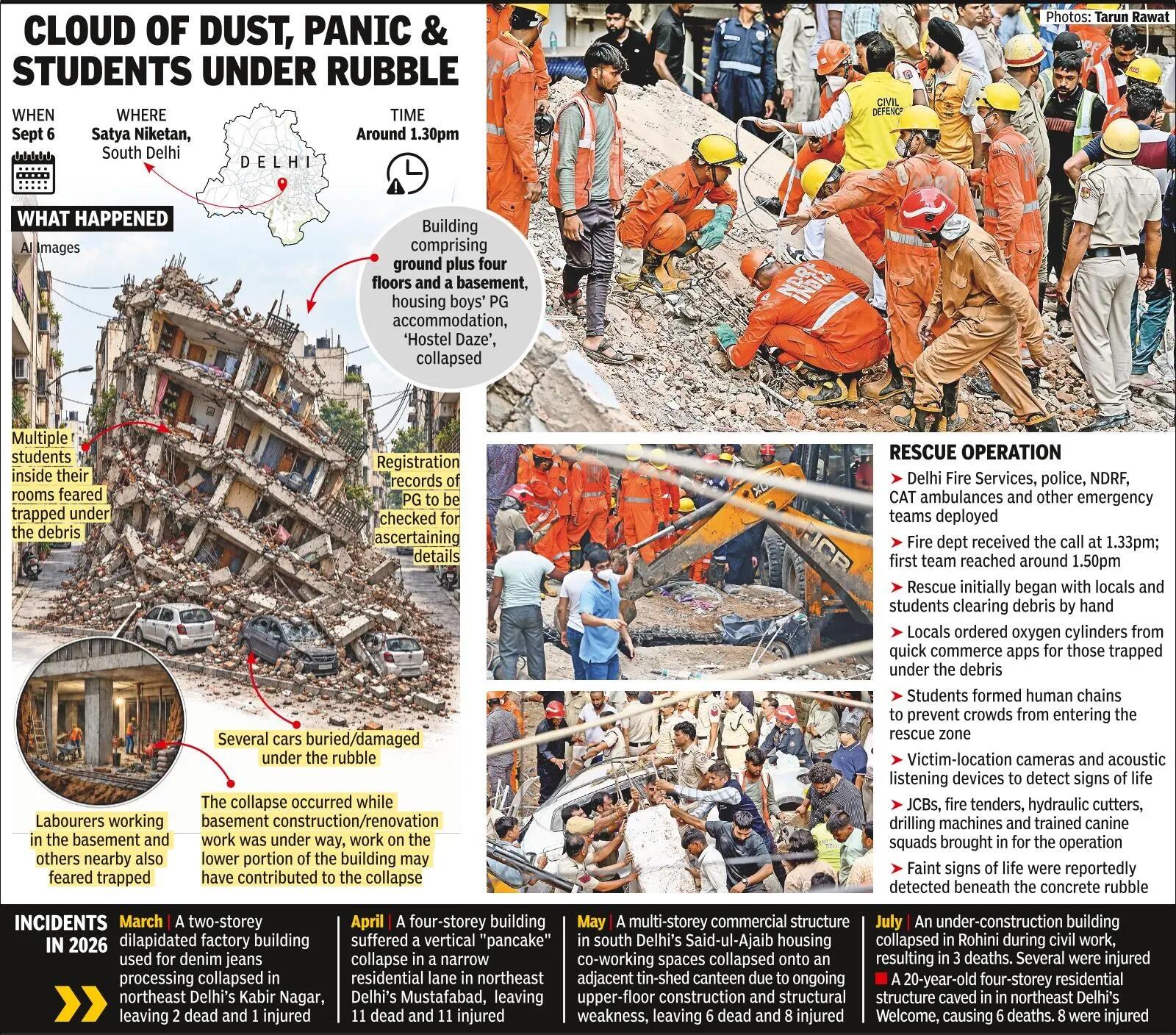
Satya Niketan and neighbouring Arakpur Bagh Mochi, in contrast, comprised much smaller plots and low-rise residential structures.According to former DDA planning commissioner Sabyasachi Das, the original building norms allowed the construction of only ground and first floors in Satya Niketan and such colonies. This restriction was also linked to the area’s proximity to the airport.“Instead of approving or sanctioning individual building layout plans, DDA gave a standard plan to each beneficiary in such colonies so that they would not have to hire an architect. But there were instances when people engaged local builders who tweaked the plans,” Das said.A DDA official said under an arrangement, such resettlement colonies were transferred to Municipal Corporation of Delhi (MCD) after about 90% of the construction had been completed.The character of Satya Niketan began significantly changing after 1973, when University of Delhi established its South Campus across the road. With institutes, including Sri Venkateswara College, Jesus and Mary College and Atma Ram Sanatan Dharma College expanding, the locality became an attractive and convenient option for students looking for accommodation close to their campuses.The shift began relatively gradually, with locals renting out rooms to students. Over time, however, the growing demand for accommodation turned houses into commercial rental properties. “It all started with accommodating students as tenants by adding beds, tables and other facilities, besides creating common toilets to meet the requirements,” Das said.The shift accelerated as properties were expanded both vertically and horizontally without necessary permissions. Family homes were converted into paying guest (PG) accommodation and rental units, while additional floors and rooms were added to accommodate more students on the same plot.While Master Plan for Delhi-2021 recognised the growing demand for such accommodation and permitted hostels and PG facilities in residential plots abutting roads that met specified right of way (ROW) requirements for mixed-use streets, residents said the prescribed norms, particularly those relating to road width, have often not been followed.The proposed Master Plan for Delhi-2047 has further simplified certain norms for PG accommodation, while retaining restrictions in A and B category colonies. Locals, however, allege that these restrictions are routinely flouted.The extent of the transformation has also raised questions about structural safety. While MCD said it was yet to ascertain whether construction or repair work was being carried out at the time of Sunday’s building collapse, locals said some work was allegedly underway in the basement.A senior MCD official said the building violated the prescribed height limit of 17.5 metres. “We are examining whether incessant rain and seepage weakened the structure or whether repair or other work may have contributed to the collapse,” the official added.Prof V K Paul, director, School of Planning and Architecture, Delhi, said, “The complete collapse with no tell-tale distress warning indicates it must have been a thoroughly unengineered building. Quite certainly, other nearby buildings must have been impacted due to the vibration triggered by the collapse. This wasn’t likely an isolated unsafe building, and safety audit of all such buildings must include whether emergency services have access to them. Let there be an instant compliance to a basic checklist before occupation is permitted.”The incident is not the first of its kind in Satya Niketan. In April 2022, two labourers were killed when a building undergoing renovation collapsed.In 2012, Delhi govt allowed residents of 45 resettlement colonies, including Satya Niketan, to obtain freehold rights by paying a prescribed percentage of the circle rate. The move gave property holders greater control over their properties and facilitated their sale, division of floors and access to bank loans.Experts say this put considerable pressure on the neighbourhood’s infrastructure. Narrow lanes now have to handle heavy pedestrian and vehicular movement, while old buildings have undergone repeated alterations and additions. Traffic congestion and waterlogging have further exposed the limitations of infrastructure designed for a much smaller population.The transformation of Satya Niketan raises concerns about other settlements in the vicinity. Areas like Kusum Pahadi, where forest and ridge land have witnessed encroachment, and Basant Gaon, located in the forest/ridge area, may face similar pressure as values of plots rise and urbanisation expands rapidly.