







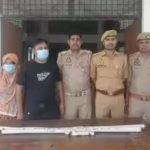



Jaipur: Jhalawar’s Kanjar settlements, once frequently figuring in police records for theft, burglary, robbery and dacoity, are witnessing a sharp decline in reported crime, with the police attributing the change to a rehabilitation programme focused on jobs, education, housing and counselling. Against an annual average of 150-200 cases involving residents of these settlements, only nine were registered between April 1 and Aug 15 this year, officials said.One of the prominent signs of change is Manoj Kumar, who has been selected for Rajasthan Home Guards and is reportedly the first person from the settlements to enter govt service. The change is being reported across 18 settlements inhabited by around 4,100 members of the community.District SP Amit Kumar attributed the decline to the “Naya Savera” Rehabilitation Programme, which seeks to address socio-economic conditions that officials say have sustained the cycle of crime.Police teams conducted door-to-door surveys in all 18 settlements, documenting families’ social and economic conditions, education, employment and criminal histories. Residents were subsequently counselled to abandon crime and seek regular employment. Around 2,000 people have so far pledged to give up criminal activities, police said.Employment has been central to the initiative. In March, Jhalawar police signed an MoU with Rajasthan Textile Mill and organised recruitment camps in the settlements. So far, 170 eligible men and women have completed recruitment and skills training, while around 100 families have secured permanent jobs at the mill.Education is another focus. “Around 165 children from the settlements were newly enrolled during the current academic session, while about 900 are now attending school regularly,” Kumar said. Families have also been counselled to use free uniforms, study material, nutritious meals and transport facilities.The programme has also addressed housing. Of 360 beneficiaries identified for residential land titles, 283 have received titles while 77 cases are under process.“The need for such intervention emerged from more than crime statistics. Poverty, poor access to education and the stigma attached to the community’s criminal image had made it difficult for youngsters to find regular employment and it also risked perpetuating the same cycle into the next generation,” Kumar said.