








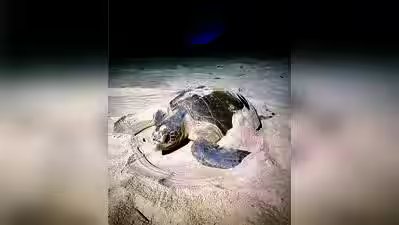
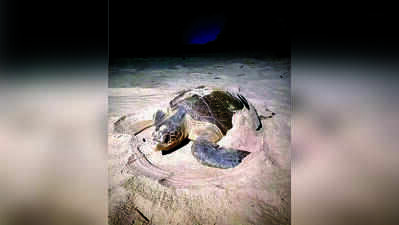
Panaji: The forest department has proposed declaring 24 beaches as turtle nesting sites, a move that could bring stricter regulations on beach tourism and coastal activities, particularly during the olive ridley turtle nesting season.In a letter to the department of environment and climate change, the forest department has sought the inclusion of 10 beaches in North Goa and 14 in South Goa as identified turtle nesting areas under the Coastal Regulation Zone (CRZ) Notification, 2019. The proposed designation could lead to tighter controls on lighting, beach shacks, events, vehicle movement and other nighttime activities during the nesting season.The beaches identified in North Goa are Morjim, Mandrem, Vagator, Calangute, Candolim, Keri, Miramar, Ashvem, Baga and Arambol. Those in South Goa are Rajbag, Mobor, Cabo de Rama, Patnem, Baina, Palolem, Cola, Carmona, Cavelossim, Varca, Talpona, Agonda and Galgibag.“It is requested that the department of environment and climate change include all the listed beaches as turtle nesting sites under the CRZ 2019 notification,” the assistant conservator of forests stated in the letter.The proposal comes amid concerns over a decline in olive ridley turtle nesting numbers. As reported by TOI in May 2026, the nesting season recorded fewer nests and eggs than in 2025, which itself had followed a strong season in 2024.According to forest department data, Morjim beach, one of North Goa’s most important turtle nesting sites, recorded 83 olive ridley nests this season, yielding 8,599 eggs and 7,578 hatchlings so far. In comparison, North Goa recorded approximately 18,000 eggs until May 2025, of which 12,857 hatchlings had been released into the sea at the time.A senior forest department officer said the CRZ notification, 2019, classifies ecologically sensitive areas and their geomorphological features under CRZ-I, recognising their role in maintaining the integrity of the coast.These include mangroves, corals and coral reefs, sand dunes, biologically active mudflats, national and marine parks, sanctuaries, reserve forests and wildlife habitats. Other protected areas are covered under the Wildlife (Protection) Act, the Forest (Conservation) Act and the Environment (Protection) Act.The notification also provides that mangrove areas exceeding 1,000 sqm must have a 50m buffer, which will also be classified as CRZ-I.Other areas recognised under the notification include salt marshes, turtle nesting grounds, horseshoe crab habitats, seagrass beds, bird nesting grounds, areas or structures of archaeological importance and heritage sites.The officer said a detailed environment management plan must be formulated by the respective state govts and Union territories for such ecologically sensitive areas, based on maps prepared by the National Centre for Sustainable Coastal Management, Chennai.