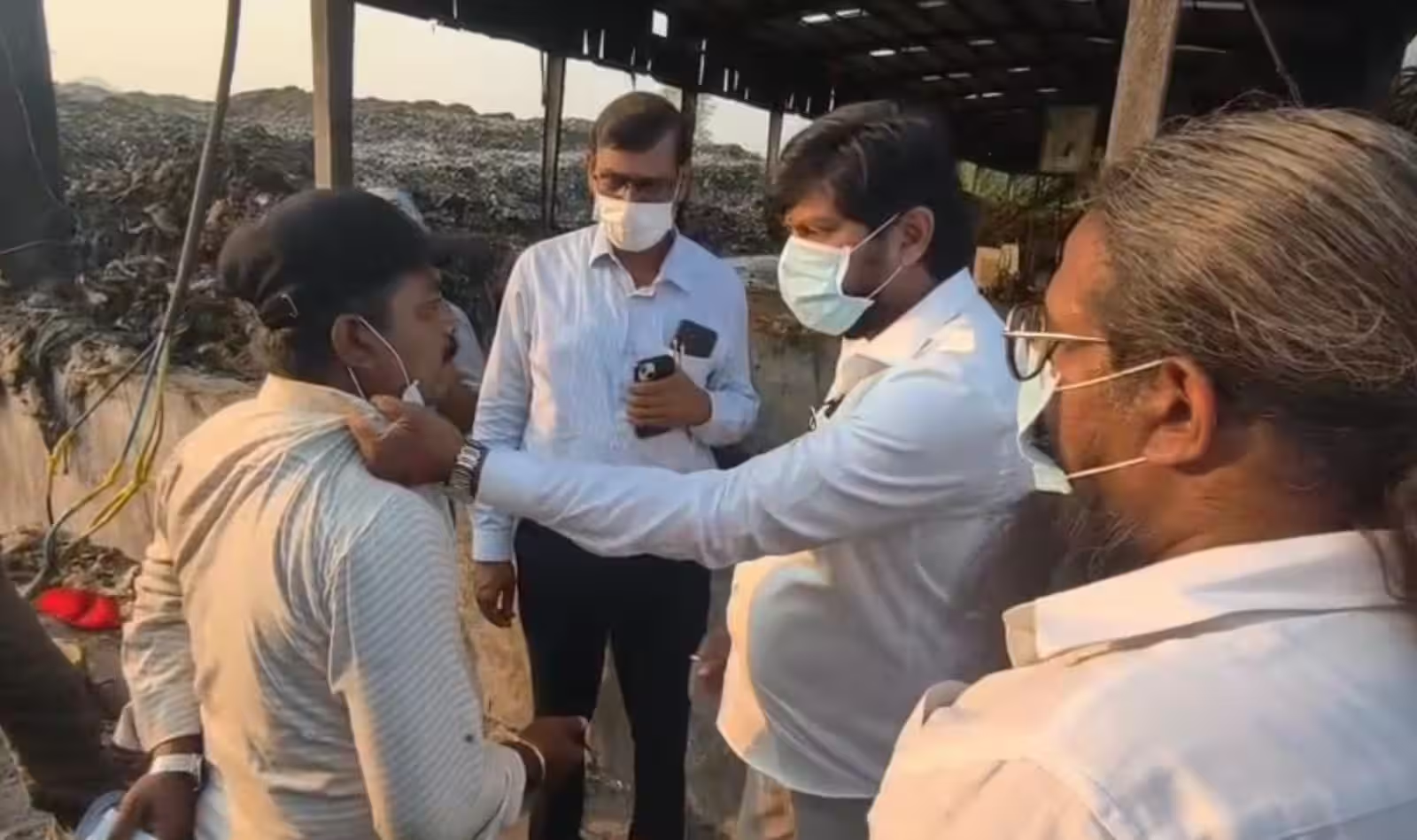











Actor Imran Khan’s presence last week at a Mumbai protest saw BJP ex-MP Kirit Somaiya raise questions over his citizenship. Somaiya’s query has triggered a discussion on what the law provides for as rights to Indians, foreigners, and Overseas Citizens of India (OCIs) in relation to free speech, assembly, and protest.Rights of citizensIndian citizens have fundamental rights under the Indian Constitution and some constitutional guarantees are exclusively only for citizens of India. The fundamental rights exclusively for Indian citizens include:*Articles 15 (prohibition of discrimination on grounds of religion, race, race, caste, sex, place of birth etc)*Article 16 (equal opportunity in public employment)*Article 19 (protection of six freedoms including free speech, right to assemble peacefully sans arms, form associations, move freely across India, right to residence in any part, and right to carry on any trade, business or profession)*Articles 29 and 30 which protect minority culture, language and script and right to establish and run educational institutionsWhat applies to ‘all’*Article 21 (right to life and personal liberty) and Article 14 (equality before law) however apply to all ‘persons’ which would include foreigners and OCIs in certain contexts*Foreigners do not enjoy fundamental rights meant exclusively for Indian citizens, lawyers sayWhat rights do OCIs have? Is Article 19 one of them?*Senior counsel Mahesh Jethmalani says, “the simple answer is, Article 19 is not applicable to foreigners and OCIs.” He adds, “Article 19 (1) (b)—the right to assemble peacefully and without arms is not available to foreign citizens and OCIs, unless they renounce their foreign citizenship and become Indian Citizens.”*Advocate Niteen Pradhan adds, “A foreigner sitting abroad may have an opinion which he can share, but neither he nor an OCI card holder, even if residing in India, can claim to have a fundamental right to participate in an agitation against the Indian govt.”*Ex-Additional Solicitor General of India, senior advocate Indira Jaisingh says, “An OCI includes citizen and fundamental right to free speech is confirmed on citizens. Hence OCIs too have a right to free speech with no prior restraint. The danger is to freedom of movement and the right to enter the country. If OCI status is taken away the unrestricted right to enter the country is taken away.”*The right to peaceful assembly allows citizens to hold dharnas, protests, demonstrations, and processions to voice dissent or share opinions. It must be balanced with public right of access, the SC has ruled in 2020 in the Shaheen Bagh caseGenesis of OCI*The Indian Constitution doesn’t allow dual citizenship or simultaneously holding Indian and a foreign citizenship. Based on recommendations of a high-level committee on Indian diaspora, Centre brought in the OCI category under the Citizenship Act of 1955Who is an OCI?*A foreign national holding passport of a foreign country and is not a citizen of India, but was or was eligible to be one, earlier when Constitution commenced; or is a child or grandchild of such citizen*In an answer to a question in the Lok Sabha last Dec, MEA stated: Govt of India launched the Persons of Indian Origin (PIO) Card Scheme in 1999 and revised it in 2002. Govt introduced OCI card scheme in 2005. On Jan 9, 2015, the PIO card scheme was withdrawn, and all existing PIO cardholders were deemed OCI cardholders. Eligible foreigner can apply online through the OCI portalRights of an OCIThe Ministry of Home Affairs in March 2021 set out the rights an OCI has:*Multiple entry lifelong Indian visa, except for certain specific purposes, a special permit is needed. The specific activities are: to undertake research; any missionary or mountaineering or journalistic activities; any internship in foreign diplomatic missions or foreign govt organisation or employment in foreign diplomatic missions in India; visit any place within areas protected, prohibited or restricted by Centre*Exemption from registering with FRROs, OCI residing in India must email changes of address or occupation though they can purchase land other than agricultural, plantation or a farm house; have parity with Indian nationals over domestic air fares in India, entry fee to national parks and monuments, museums; parity with NRIs for inter-country adoptions of Indian children; appearing for all-India entrance tests for NEET, JEE*OCI not eligible for admission against seats reserved exclusively for Indians*Can works as: Doctors, dentists, nurses, pharmacists, advocates, architects, CAsProhibitions on an OCIAn OCI is not entitled to register as voter in India or vote or stand for election in the assembly, council or Lok Sabha, or as President, VP or for appointment as judge of HC or SC; rights under Article 16 (equality in public employment); prohibited from appointment to public services and Central or state posts except where specially permitted by CentreWhat SC saidIn a 1964 ruling, SC said, “The plain truth is that certain rights guaranteed to the citizens of India under Article 19 are not available to foreigners and pleas which may successfully be raised by the citizens on the strength of the said rights guaranteed under Article 19 would, therefore, not be available to foreigners”Cancellation of OCI status*OCI can be cancelled for various reasons including if Centre finds him/her showing “disaffection towards Constitution of India”