






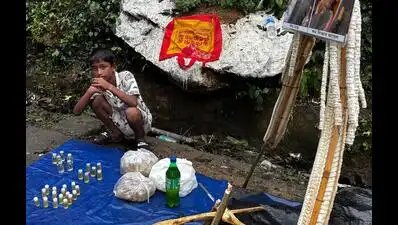
Guwahati: The annual Ambubachi Mahayog attracts lakhs of pilgrims. For many traders arriving at the annual congregation at the Kamakhya Temple, it is not just a spiritual gathering but a key source of income sustained through generations.Among them is 34-year-old Heena, from Rajasthan. She is from a family that has been travelling across religious fairs throughout India selling rudraksh products for decades. From Ambubachi and Khatu Shyam to Ambarnath, Kumbh Mela and Jagannath Puri, her family follows a yearly circuit of pilgrimage destinations to continue its ancestral trade. At her temporary stall near the temple, Heena displays rudraksh beads carved into figures of Hindu deities such as Lord Ganesh, Shiva and other religious symbols. “My father and grandfather also used to come to Ambubachi to sell rudraksh,” she said. Like many traders at the mela, she spends nights at the temporary camps around the Nilachal Hills, made for devotees.Another trader, Sajjan from Kolkata, has been attending the mela for the last five years. Accompanied by his son, he sells spinal discs and oils derived from the cod fish sourced from Odisha at melas across Assam, West Bengal, Bihar and Jharkhand. According to Sajjan, wearing the spinal discs as rings and rubbing the oil helps alleviate body aches. Staying at a relative’s house in Jalukbari during the mela, he said earnings have fluctuated significantly over the years. “In 2023, I sold products worth around Rs one and half lakh. Last year it dropped to around Rs 55,000,” he said.Every year, the Ambubachi mela attracts hundreds of wandering traders from different parts of the country, many of whom depend heavily on such religious gatherings for a substantial part of their annual income.