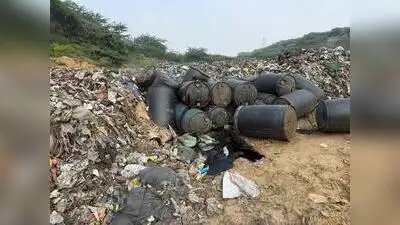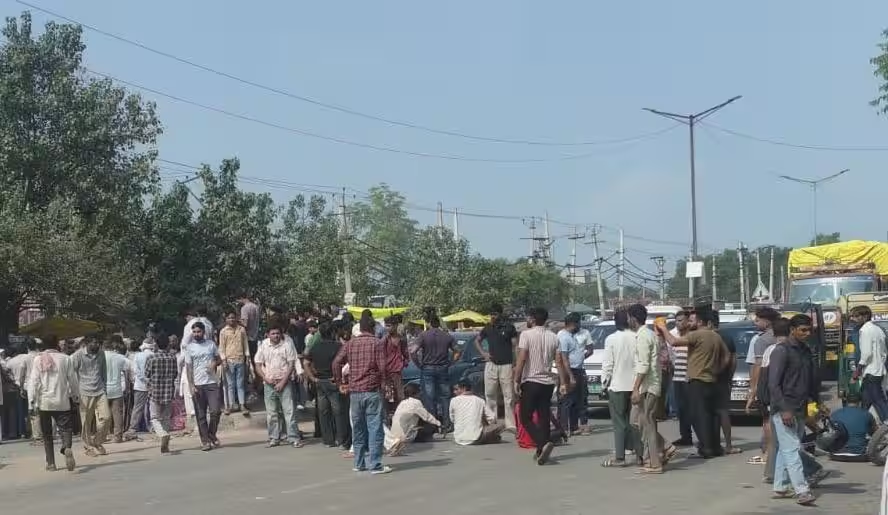









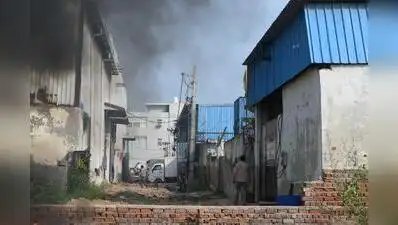
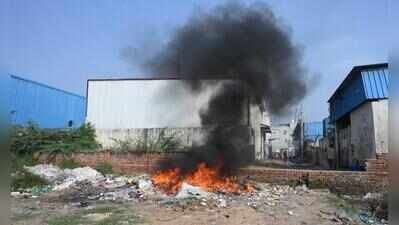
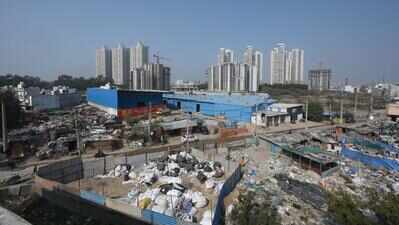
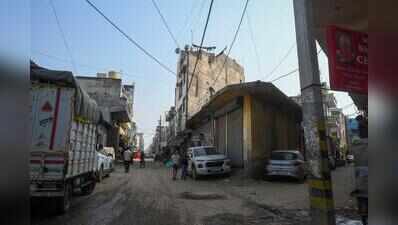
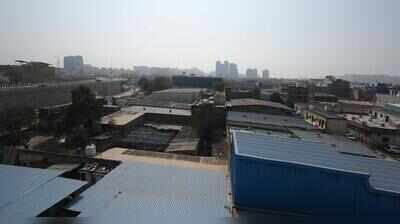
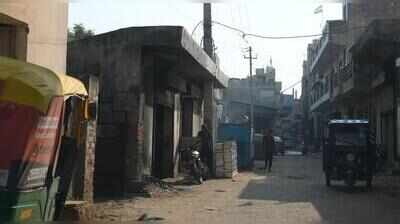
Gurgaon: At a time when the city ranked fifth with the highest average PM2.5 levels in Aug — among 257 Indian cities — factories and other industrial units are operating alongside homes in Daultabad, Basai and Kadipur.Haryana State Pollution Control Board (HSPCB) records show 47 consented units across the eight areas, but the ground reality appears different. During a visit to Basai, Kadipur and Daultabad, TOI found several industrial units operating beyond the establishments identified in the board’s list. Several units were functioning across the three areas, including stretches where industrial activity is mixed with village settlements.During the TOI ground visit, residents in Daultabad, Basai and Kadipur complained of pungent smells, dust and smoke. The ground situation comes against the backdrop of conflicting information in HSPCB records about industrial units in these areas. This also comes amid a study by Centre for Research on Energy and Clean Air (CREA) that said the city recorded an average PM2.5 concentration of 76 micrograms per cubic metre in Aug. RTI activist Varun Gulati told TOI, “These industries are a major pollution source in the city as they are not on the pollution board’s radar. There are more units operating on the ground than what is reflected in the records.”In Daultabad, TOI found industrial sheds along roads lined with homes and other establishments. At one spot, waste was being burnt in the open outside industrial sheds, sending thick black smoke into the air. Residents said the pollution from the area was affecting them. “The smell from these units often spreads into the nearby homes and at times it becomes very difficult to stay here. We also see dust and smoke around the area. There are several units here that do not appear to have proper electricity connections, so we are also concerned about how they are running their operations,” said Krishna Bhambri, a Daultabad resident.An RTI filed by Gulati sought details of industries given consent to operate (CTO), including their addresses, activities, consent validity and category. HSPCB’s north regional office provided an area-specific annexure covering Basai Industrial Area, Sarai Alawardi, Masani village, Badshapur, Daultabad, Kadipur, Dhanwapur and Rahaka. According to data from HSPCB, 47 units in the city have consent to operate. These include electroplating, dyeing, auto parts, plastic products, digital block printing, rubber products and C&D waste processing units.In Daultabad, the list includes Sahil Auto Components, an electroplating unit classified as Red; JPM Automobiles, an auto parts unit classified as Red; Together Trading, a plastic products unit classified as Orange; Capital Vehicles Sales, an authorised service station; and Symphony Prints, a digital block printing unit.A separate HSPCB inspection had earlier found a jeans washing unit in Basai operating without consent and without an effluent treatment plant. When asked specifically about Basai Industrial Area and Kadipur, HSPCB said, “No consent issued in Basai Industrial Area, Kadipur area.” This response is at odds with the presence of industrial activity documented in the board’s wider records.Residents also complained about poor civic infrastructure around the industrial stretches. “The basic infrastructure around these industrial stretches is poor. There is very little separation between these units and the areas where we live,” said Balram Yadav, a Basai resident.HSPCB has recorded different pollution sources from these units. “Electroplating and dyeing generate industrial wastewater and can involve chemical emissions, while rubber and automobile activities can generate dust, fumes and waste. C&D processing can generate dust. The open burning seen in Daultabad was another visible source of smoke,” said HSPCB. “There are some units which operate illegally and we take action,” an official said.