









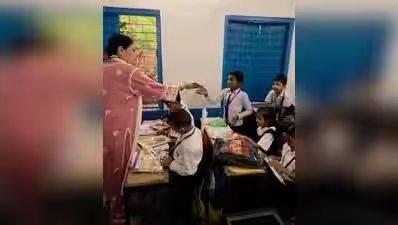

Kolkata: Echoing the views expressed by urban development and municipal affairs minister Agnimitra Paul, heads of prominent schools across Kolkata have underscored the urgent need for immersive English instruction in Bengali-medium classrooms.The discussion gained momentum following Paul’s visit to a Kolkata Municipal Corporation school located at 48 C G Bose Road on Friday. During her visit, she interacted directly with young learners and listened to primary students recite English rhymes. Following the interaction, she met with the teaching faculty and urged them to converse with students in English while conducting English classes.Highlighting the importance of habits outside formal lesson plans, the minister encouraged students to read a storybook every day and assigned them a project asking how they envision India’s future. Addressing a class 4 section, she emphasized: “The more you speak in English, the more comfortable you will become. Children have strong learning capacity at a young age, so if they start now, they will gain mastery over the language.”Several teachers and heads of state-aided schools echoed her sentiment, acknowledging that despite possessing strong subject knowledge, vernacular-medium students frequently lag behind in higher education and professional spheres due to weak English communication skills.Sarbani Sen, headmistress of Santoshpur Rishi Aurobindo Vidyaniketan, stated that her school has already introduced dedicated communicative English sessions for students in classes 5 to 8. “We introduced weekly communicative English classes for these students. This enables our students to showcase their potential, and we are already seeing positive outcomes. Our students are now competing with schools across different platforms and winning prizes as well,” she said.Sarbari Sengupta, headmistress of Children Welfare Association High School, shared that her institution conducted weekly communicative English sessions over the past three months for class 10 students with an English language expert, running parallel sessions for classes 11 and 12. “It is crucial to prepare our students to face real-world challenges, that is why we are trying to introduce communicative English classes from the primary level. We also recently started an English-medium wing where communicating in English is mandatory,” Sengupta noted.Leading educators point out that dual-medium schools provide clear evidence of the difference active conversation makes. Jadavpur Vidyapith headmaster Partha Pratim Baidya observed: “We have both English and Bengali-medium wings. While students in the English-medium wing converse in English in their classrooms, we also try to enhance the speaking abilities of Bengali-medium students. Today, every student needs good understanding and communication skills in English to pursue higher studies and work in any field. I appreciate that she raised this matter, and I hope the govt formulates a plan to enhance the speaking skills of students studying in their mother tongue.”Bhowanipore Mitra Institution headmaster Raja Dey advocated for mandatory English speaking in primary Bengali-medium classrooms to build natural fluency. “English communication is about understanding the rhythm of the language and practicing accordingly. We have made English conversation mandatory in the English wing, but I feel the same should apply to the Bengali medium as well.” However, he added that a formal policy directive is needed to bring about systemic change. Several school administrators urged the education department to allocate dedicated slots in regular routines and implement teacher training for this purpose.