










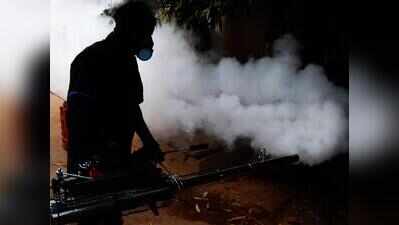
Hyderabad: With the onset of the dengue season, health authorities have placed Hyderabad on alert, warning that changing mosquito breeding patterns and erratic monsoon conditions are turning dengue into a year-round public health concern.Officials said intermittent rainfall followed by dry spells is creating ideal breeding conditions for Aedes aegypti mosquitoes in clean stagnant water. Unlike continuous heavy rain, which washes away larvae, scattered showers leave behind numerous breeding sites in residential neighbourhoods.Public health experts estimate that nearly 80% of dengue infections are asymptomatic, allowing infected individuals to unknowingly contribute to the spread of the virus when mosquitoes feeding on them transmit the infection to others.Health officials also noted that Aedes aegypti mosquitoes have increasingly adapted to urban environments and are now breeding inside homes. Common breeding spots include refrigerator drip trays, air cooler tanks, flower pots, overhead water storage containers and AC condensate pipes. Since these mosquitoes bite primarily during the daytime, the risk of transmission is higher in schools, offices and other public places.“We are seeing a shift in mosquito breeding behaviour, with more breeding taking place inside homes rather than in open areas. This makes community participation critical in preventing dengue,” said Dr Ravinder Naik, director of public health.Another health official urged residents not to ignore even small collections of clean stagnant water. “People should inspect their homes every week, empty and scrub water containers, and ensure there is no stagnant water where mosquitoes can breed. Early medical consultation for fever can help in timely diagnosis and treatment,” the official said.Officials appealed to the public to maintain cleanliness in and around their homes, use mosquito repellents and wear protective clothing, particularly during the daytime. They stressed that sustained public awareness and eliminating mosquito breeding sites at the household level remain the most effective measures to curb dengue transmission during the monsoon.