






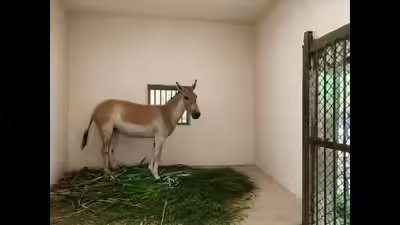
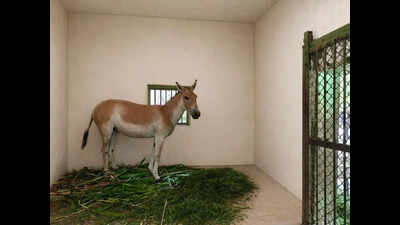
Chennai: For three years, the enclosure at Arignar Anna Zoological Park housed a solitary presence — a male Indian wild ass that had outlived its companions. Visitors passed by, often unaware that the animal’s quiet pacing marked a longer story of loss and waiting. That stretch of isolation has now ended. Earlier this month, zoo authorities brought a female from Sakkarbaug Zoo in Gujarat as part of an exchange that included mouse deer, white peafowl, yellow anacondas. The transfer, routine on paper, has altered the rhythm of the enclosure, offering the male company and the possibility of breeding again. The male’s solitude dates to 2022, when the zoo lost its two females in quick succession — one to illness, the other during childbirth the following year. Since then, the animal has remained alone and it’s role in the zoo’s conservation programme effectively paused.The Indian wild ass, or khur (Equus hemionus khur), is an animal shaped by extremes. The species is listed as “near threatened” by the International Union for Conservation of Nature and is protected under Schedule I of India’s Wildlife Protection Act.Captive breeding has offered a quieter counterpoint to those pressures. A quarter century ago, only about 10 Indian wild asses lived across four zoos in India, with Sakkarbaug being the sole centre where breeding had taken hold. Since then, numbers have inched upward.At Vandalur, the focus is now on rebuilding that trajectory. Zoo officials say the new pairing could help revive breeding prospects.