







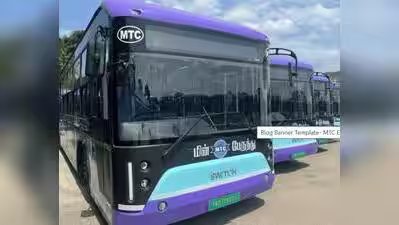
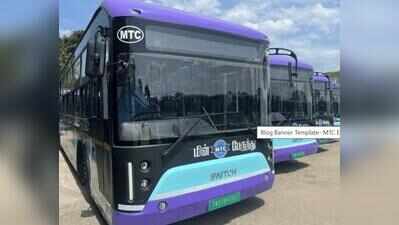
Chennai: India’s electric-bus market is entering a more decisive phase, with favourable operating economics, stronger payment-security mechanisms and rising replacement demand from public transport authorities (PTAs) expected to lift electric-bus penetration from about 7% currently to around 30% by FY30, according to ICRA.E-bus sales in the medium and heavy vehicle category have climbed from just 37 units in 2017-18 to 5,412 units in 2025-26. More than 2,000 units were sold in the first four months of FY27, indicating further acceleration in demand.ICRA said the growth is being supported by a succession of government programmes, including FAME-I and II, the National Electric Bus Programme, PM-eBus Sewa and PM E-Drive. Together, these schemes target the deployment of more than 80,000 e-buses, with cumulative budgetary allocations of around Rs 1 trillion through 2027-28.The economics of electrification are increasingly strengthening the case for adoption. Although a 12-metre air-conditioned e-bus costs around Rs 1 crore upfront, more than twice the Rs 40-45 lakh cost of a comparable diesel or CNG bus, its lower running costs result in a 15-25% advantage in total cost of ownership (TCO) over a 10-year period, according to ICRA.ICRA estimates the TCO of a 12-metre AC e-bus at around Rs 39 per kilometre, compared with Rs 51 per km for a diesel bus and Rs 48 per km for a CNG bus. The lower cost of electricity more than offsets the higher initial capital expenditure, particularly after accounting for subsidies, making e-buses increasingly attractive to fleet operators.The improvement in economics is beginning to translate into a broader deployment pipeline. The expanding capital base is helping support the development of an industry spanning bus manufacturing, fleet operations, charging infrastructure and financing.However, adoption remains concentrated. Public Transport Authorities in Delhi, Maharashtra, Karnataka, Gujarat and Telangana account for around 75% of e-buses deployed so far, highlighting both the scale of the opportunity and the industry’s dependence on government-led procurement.“The e-bus segment presents a large market opportunity for original equipment manufacturers, operators, and investors, anchored on strong policy support and favourable cost economics,” said Jitin Makkar, Senior Vice President & Group Head – Corporate Ratings, ICRA.The preferred operating structure has emerged as the Gross Cost Contract (GCC) model, under which an operator owns and runs the buses while the PTA pays a fixed fee per kilometre. ICRA said the operating performance of its rated e-bus projects has so far been satisfactory, with daily scheduled running generally exceeding contracted kilometres, energy consumption broadly in line with expectations and cost overruns contained below 10% of initial project costs.The greater concern has been PTAs’ ability to make timely payments. Several authorities have delayed clearing operator dues, while the creation of escrow accounts and the handover of depots have also been delayed. Commercial operations in several projects have been pushed back by six months to a year, while delays in the release of central subsidies have put additional pressure on project cash flows.The introduction of the Payment Security Mechanism (PSM), however, could reduce one of the industry’s biggest risks. Routed through Convergence Energy Services Ltd, the mechanism is backed by a Direct Debit Mandate arrangement that allows recovery of dues from state accounts in the event of a default. A dedicated PSM fund has also been capitalised to support timely payments to operators.