









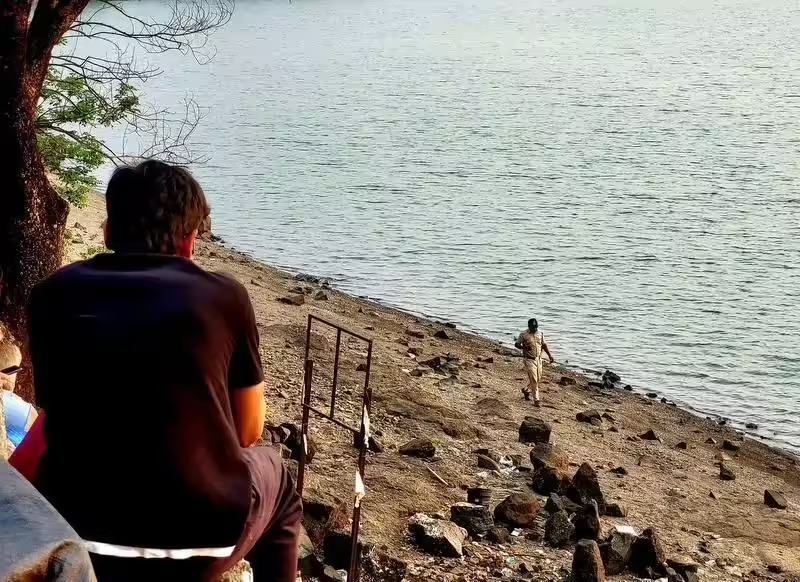
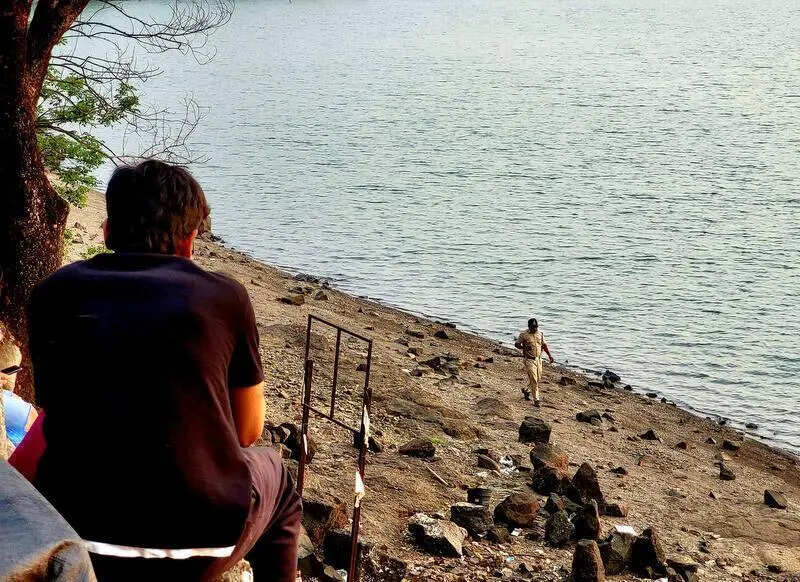
Pune:Taking a plunge into a water body to beat the heat is not always a good idea, especially to perform stunts to impress peers or followers on social media without proven swimming skills.Over 10 drowning deaths have been reported across the state in the past 20 days. Most of the victims were youngsters and children. They went to take a dip in a water body or waterfall and drowned.Vitthal Banote, the district disaster management officer for Pune, said lack of depth perception, overestimation of swimming capabilities and the tendency to perform stunts in water for peers or social media triggered most of these tragedies. The influence of alcohol or other substances also lead to drowning, he said.According to the Wildlife Rescuer of Maval group, which helps in rescue operations in and around the area, there have been 16 drowning cases in Maval alone in the past three months and five in April till now. “The water bodies’ depth has increased because of sand mining and people are not used to swimming in deep waters. They easily get exhausted and drown. Many places have boards warning people from stepping into water, but some visitors ignore these,” said Nilesh Garade, the founder of the group.“Live water rescues are almost impossible because by the time we get the call and reach the place, life is gone. We can only fish out the body. My only advice to people is, don’t think the water-level is low because it is summer. Don’t enter unfamiliar or even familiar water bodies to avoid mishap and never do stunts in water,” said Garade.Not just the district’s rural areas, Pune city witnessed many drowning or near-drowning incidents this year. The Pune Municipal Corporation (PMC)’s fire brigade received 27 calls of drowning, including suicides, till March this year.Doctors said the brain and lungs take the biggest hit in near-drowning incidents. Those who survive drowning suffer from short- and long-term effects because the brain goes without oxygen for an extended period. Everything, from how long the brain went without oxygen to water temperature and how fast the CPR (cardiopulmonary resuscitation) was started, affects the health of a person.“The main cause of long-term problems is hypoxic-ischemic brain injury — the brain not getting oxygen while under water. Submersion time is the number one predictor. If it is less than 5-6 minutes, it means much better outcomes; if it is more than 10 minutes, the outcomes are significantly worse; and anything above 25 minutes is usually fatal,” said Dr Danish Memon, the head of the department of internal medicine at Noble Hospitals & Research Centre.“Aspiration causes pulmonary edema, pneumonia or ARDS (acute respiratory distress syndrome). Most survivors without neurologic impairment recover respiratory function well with treatment,” he said.While short-term effects are coughing, wheezing, ARDS, need for ventilation, neurological effects include confusion, agitation, seizures and coma if brain injury occurs.“In these cases, ICU management focuses on brain resuscitation and lung support. The long-term cognitive effects differ. Children mostly do okay but deficits can be subtle/delayed. Memory, learning and thinking problems may not show up until years later, when the child is older. Even with normal MRI/MEG scans, neuropsych testing can show global cognitive difficulties and memory impairment,” Dr Memon said.In adults data is more limited, but outcomes also hinge on submersion duration. “Surviving without neurologic impairment is common if CPR starts quickly. With brain injury, you can see memory/cognition disorders, motor/psychomotor deficits and in severe cases, persistent vegetative state,” he said.An autopsy-based study was published in the Indian Journal of Forensic and Community Medicine journal in 2021, examining the socio-demographic patterns of 85 drowning deaths over five years from 2014 to 2018. Conducted at the Swami Ramanand Teerth Rural Government Medical College and Hospital, Beed, the study suggested that deaths peaked during the summer (38.8%), particularly in April and May.According to it, the most vulnerable group was individuals aged 11–20 years (23.5%), followed by the 01–10 and 21–30 age groups. The report attributed the high drowning rate among teenagers and young adults to carelessness and adventurous behavior while swimming.