









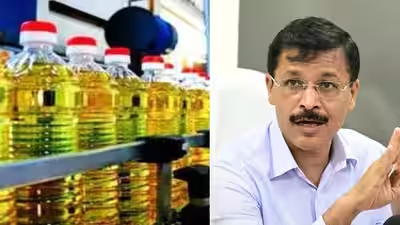
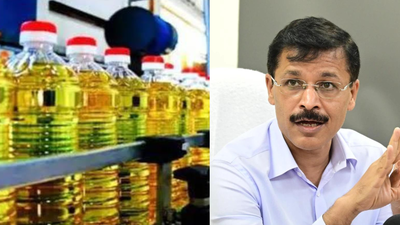
MUMBAI: Maharashtra food and drug administration commissioner Tukaram Mundhe on Thursday urged consumers not to purchase loose or unsealed edible oil.The commissioner called the products unsafe, and said a compliance order had been issued for the sector after violations, including adulteration, were detected, news agency PTI reported.Mundhe said the FDA had issued a compliance order for the edible oil sector on Thursday, citing violations such as adulteration, unsafe packaging and improper storage and transportation.He has launched an intensive state-wide enforcement campaign targeting food safety and hygiene violations since taking charge in May.“Loose or unsealed oil is unsafe. It does not have a batch number or information about its source, making it difficult to trace and take action. Do not buy loose edible oil. If you buy packed oil, check the label, manufacturing and expiry dates and ensure that the package is properly sealed. Do not buy oil packed in old or reused packaging,” he added.The compliance order applies to all food business operators dealing with edible oil, including oil expellers, solvent extraction units, blenders, packaging units, importers, supermarkets, e-commerce platforms and retail shops, he said.Mundhe said the order covers oils including groundnut, mustard, sunflower, rice bran, palm, coconut and maize. He described the measure as necessary as edible oil is widely consumed and is an essential part of food, PTI reprted.Maharashtra has 212 centrally licensed edible oil producers and 285 operators with state licences, Mundhe said.During the financial year 2025-26, the FDA collected 1,247 edible oil samples, of which 1,142 were analysed. Inspections found 77 substandard samples and 15 cases of misbranding, the IAS officer said.The department also seized 3.20 lakh kg of stock valued at Rs 5.31 crore during the year, he said.According to Mundhe, inspections across the edible oil industry detected around 12 types of violations, including unlicensed operations, adulteration, high acidic value and high trans-fat levels.“Everyone involved in the food business must have a licence. We found cases of adulteration, including the mixing of mustard oil with other oils, which is not permitted. In some cases, the original source of the oil could not be established and proper packaging was not used,” he said.The FDA commissioner said the sale of loose edible oil was prohibited.Retailers who find unsealed oil should reject it for sale and report the matter to the food safety regulator.“Mustard oil cannot be mixed with other edible oils. This requirement has been in place since June 8, 2021,” Mundhe pointed out.The FDA also found used and rusted tins being used to pack edible oil, he said.“Used or rusted tins cannot be used for packing edible oil. Such packaging is prohibited and can make the oil unsafe,” he stated.Mundhe said edible oil had also previously been transported in tankers that had been used for non-edible oil or other hazardous materials.“Tankers used for non-edible oil or other hazardous materials cannot be used to transport edible oil. During storage and transportation, edible oil must also be protected from direct sunlight and strong odours,” he opined.The commissioner also cautioned against repeatedly heating and reusing edible oil, saying it could lead to the formation of aldehydes and trans-fatty acids and pose health risks.“Repeatedly heating and reusing edible oil can generate aldehydes and trans-fatty acids. This can have serious health consequences, including effects on the liver and kidneys, and may be linked to cancer,” he cautioned.Mundhe said violations under food safety laws could result in stringent punishment, including imprisonment ranging from seven years to life imprisonment in applicable cases.Operating without a licence could attract a fine of up to Rs 10 lakh, he said.The FDA commissioner said the department had earlier issued compliance orders covering food establishments, restaurants, milk and schools under its “safe food, safe drugs, safe Maharashtra” initiative.“Regulations have been in place since 2011 under the Food Safety and Standards Act and related rules, requiring registration and licensing for the production and sale of food products. Compliance with these regulations is necessary to protect public health,” he added.(With agency inputs)