








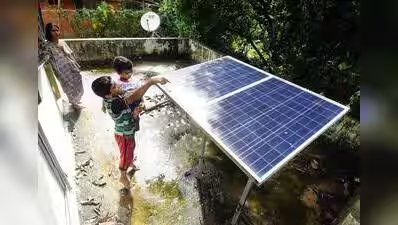
Gurgaon: Planning to install rooftop solar but worried about upfront expenses? DHBVN has allowed applicants under the PM Surya Ghar Muft Bijli Yojana to pay net-meter and auto-load enhancement charges in their first electricity bill after the solar plant is commissioned, instead of paying them upfront. Applicants can still choose to pay the charges at the application stage.The move comes amid a sharp rise in rooftop solar demand in the city, where around 13,000 applications were received in five months and more than 4,200 systems had become operational, according to the latest figures.The new arrangement is aimed at reducing the initial financial burden on households installing rooftop solar systems. “The move is aimed at making the rooftop solar installation process simpler and reducing the possibility of delays caused by payment-related formalities,” said a DHBVN spokesperson.Earlier, applicants had to arrange the applicable net-meter and auto-load enhancement charges while processing the rooftop solar connection. Under the revised arrangement, they have two options: pay the charges at the application stage or have them included in the first bill after commissioning.A net meter records the electricity a rooftop solar system sends to and draws from the power grid, while auto-load enhancement refers to the process of increasing the sanctioned electricity load when required for the solar connection.The change is particularly relevant for households already bearing the cost of panels, inverters, installation and other equipment. A typical 1kW rooftop solar system costs around Rs 60,000-70,000, while a 3kW system can cost roughly Rs 1.5 lakh-1.8 lakh before subsidy, depending on the vendor, technology and system specifications.The Centre’s PM Surya Ghar scheme reduces this cost through a subsidy of Rs 30,000 per kW for the first 2kW and Rs 18,000 for the additional 1kW. The maximum subsidy is capped at Rs 78,000 for systems of 3kW or above. Thus, a 3kW system attracting the maximum Rs 78,000 subsidy can have a substantially lower effective cost for the consumer, depending on the vendor’s quoted price.Under the new arrangement, the concerned operation sub-division officer will prepare details of the net-meter and auto-load enhancement charges and forward them to the superintending engineer, CBO office. The commercial wing will monitor the cases to ensure the charges are billed correctly and within the prescribed timeframe.DHBVN will ensure that the applicable charges are reflected in the applicant’s first electricity bill after the rooftop solar plant is commissioned.The change is limited to connections released under PM Surya Ghar Muft Bijli Yojana. DHBVN clarified that the new arrangement does not apply to other rooftop solar connections, for which the existing payment system will continue.The scheme has also seen growing adoption across Haryana. The state had released 81,735 rooftop solar connections under PM Surya Ghar by May, including 36,130 through DHBVN and 45,605 through UHBVN.